← New Orleans St. Louis Cemetery No. 1
St. Louis Cemetery No. 1
History, Marie Laveau and ghost stories
New Orleans, Louisiana
New Orleans' oldest surviving cemetery, founded in 1789 and known for its above-ground tombs.
What do we know about St. Louis Cemetery No. 1?
The ghost stories are another matter. Sightings of Laveau, of a sailor called Henry Vignes and of other figures appear on ghost-lore websites that name no witnesses, give no dates and cite tour companies rather than records. We found no early, traceable account of an experience in the cemetery.

Our rating of the reports about St. Louis Cemetery No. 1: Unverified. A haunted reputation or legend, but no traceable account of an experience so far. The rating describes the evidence for the reports, not whether the place is haunted.
- Reported account
- 1
- Counted for the rating
- 0
- Research sources
- 8
Counted for the rating: independent accounts we could trace to a witness. Retellings of the same story count once, and staff passing on what visitors said aren’t counted. How we count
Reported experiences don’t establish a supernatural cause.
Read our evidence assessment →The hauntings
Accounts, encounters and stories associated with St. Louis Cemetery No. 1.
What has been reported?
- Being touched
- Apparitions
- Voices
Phenomena described in accounts associated with this location — not independently verified events.
Reported experiences
1 published and reported account, each assessed by its source.
Account 01 · 2026
Legends of America, 2026
Ghost websites say Marie Laveau's apparition, wearing a turban, walks among the tombs, and that a 19th-century sailor called Henry Vignes appears asking visitors where his family tomb is. Other tales describe a weeping man named Alphonse, soldiers and yellow-fever victims.[5]
- Being touched
- Apparitions
- Voices
No traceable witnessReported by Unnamed visitors, as retold on ghost-lore websitesNote: No named witness, date or early source was found for any of these stories, and no record of a Henry Vignes was checked.
Read full account ›
Ghost websites say Marie Laveau's apparition, wearing a turban, walks among the tombs, and that a 19th-century sailor called Henry Vignes appears asking visitors where his family tomb is. Other tales describe a weeping man named Alphonse, soldiers and yellow-fever victims.[5]
Legends & disputed stories
Stories told about the place that the records don’t confirm.

- Legend
Folk belief holds that Laveau's spirit grants wishes to people who mark her tomb, knock on it or leave offerings, and that she still advises her followers after death.[5][2][6]
What the research shows: Recorded as belief and folklore since at least the 1930s. The 1938 guide attaches the 'converses through the walls' belief to a different, unmarked tomb in St. Louis No. 2.
Before you go

Planning a visit?
Location
Square bounded by Basin, St. Louis, Conti and Tremé streets, New Orleans, LA 70112
Get directionsTours only
Visits are by guided tour or organized event.
Access details ›
An active Catholic cemetery owned by the Archdiocese of New Orleans. Since 2015 entry has been limited to visitors with an Archdiocese-approved guided tour, plus relatives of people buried there; check the Archdiocese's cemeteries office before visiting. Please do not mark, touch or leave items on tombs: marking damages them.
Entry
Cost not confirmed
Access last checked November 16, 2026. Confirm times and prices before you travel.
Approximate location, within about 1 km.
The history of St. Louis Cemetery No. 1
New Orleans' oldest surviving cemetery, founded in 1789 and known for its above-ground tombs. Marie Laveau, the Vodou priestess who died in 1881, is recorded as buried in a family tomb there, though writers long disagreed about where she lay; visitors have long marked the tomb for luck. Ghost stories about her and a lost sailor circulate online without named witnesses. Since 2015 entry has been limited to approved guided tours and families.
- Established
- 1789
- Also known as
- St. Louis No. 1
The oldest cemetery in the city
St. Louis Cemetery No. 1 was established by Spanish royal decree in 1789. New Orleans' swampy ground made burial in the earth impractical, so the block filled with above-ground brick tombs and, later, marble ones, ringed by wall vaults. In 1819 the architect Benjamin Latrobe noted Catholic and Protestant sections, with a burial ground for Black people at the rear. The cemetery is owned by the Archdiocese of New Orleans and was listed on the National Register of Historic Places in 1975. Among those buried there are Étienne de Boré, the city's first mayor, the historian Charles Gayarré and the chess player Paul Morphy.
Marie Laveau
Marie Laveau, the Vodou priestess, was born in 1801 and died at home on June 15, 1881. Cemetery records show she was interred in the Widow Paris family tomb here, although for decades writers disagreed about where she lay. Visitors have long left offerings and marked the tomb with crosses and X's. A 1938 WPA guide described people leaving coins and making petitions, and folk belief holds that her spirit grants wishes. That belief is folklore, and the marking harms the old plaster.
Vandalism and new rules
In December 2013 someone covered the tomb in pink latex paint. The Archdiocese and Save Our Cemeteries restored it in 2014. In 2015, citing vandalism and disrespect, the Archdiocese limited entry to visitors with a registered guide, family members and a few other groups.
Through the years
1789
Cemetery established
St. Louis Cemetery No. 1 was established by Spanish royal decree in 1789 and is the oldest surviving cemetery in New Orleans.[1]
1819
Latrobe describes the cemetery
Because the swampy ground made in-ground burial impractical, the cemetery is filled with above-ground brick and, later, marble tombs, with wall vaults around its edges. In 1819 Benjamin Latrobe recorded Catholic and Protestant sections, with a burial ground…
Read more ›
Because the swampy ground made in-ground burial impractical, the cemetery is filled with above-ground brick and, later, marble tombs, with wall vaults around its edges. In 1819 Benjamin Latrobe recorded Catholic and Protestant sections, with a burial ground for Black people at the rear; the Protestant graves were moved after Tremé Street was extended in 1822.[1]
Caveat: The form's word for the rear burial ground reflects its period; what became of those burials is not described.
1881
Marie Laveau buried
Marie Laveau, the New Orleans Vodou priestess, was born in 1801 and died at home on June 15, 1881. Cemetery records show she was interred in the Widow Paris (Laveau–Glapion) family tomb in St. Louis Cemetery No. 1.[3][4]
Caveat: For decades writers disagreed about where she lay: the 1938 WPA guide says only that she is 'thought by some' to be in this tomb, and Gumbo Ya-Ya (1945) lists claims for several cemeteries.
1938
Wishing customs recorded
Visitors have long left offerings at the Laveau tomb and marked it with crosses and X's. By 1938 people were reported leaving coins and making petitions there, and the 1975 Register form describes the tomb as marked with…
Read more ›
Visitors have long left offerings at the Laveau tomb and marked it with crosses and X's. By 1938 people were reported leaving coins and making petitions there, and the 1975 Register form describes the tomb as marked with chalked X's for good luck. Preservationists say the marking damages the old plaster.[1][3][2]
2013
Tomb vandalized and restored
2015
Access restricted
In 2015 the Archdiocese limited entry to visitors with a licensed tour guide registered with its cemeteries office, family members and historians with proof, and Louisiana residents on All Saints' and All Souls' days, citing vandalism, people taking…
Read more ›
In 2015 the Archdiocese limited entry to visitors with a licensed tour guide registered with its cemeteries office, family members and historians with proof, and Louisiana residents on All Saints' and All Souls' days, citing vandalism, people taking selfies inside tombs and a tomb whose remains had been scattered.[3][8]
Caveat: Rules may have changed since; the Archdiocese's own cemetery pages could not be accessed to confirm today's rules.
The research conclusion

Why it has this rating
No traceable account of an experience: the ghost stories, including Marie Laveau's apparition, appear only on websites without named witnesses or early sources. The folk customs at her tomb are recorded by 1938 and are documented as customs, not as hauntings.
Read the full written assessment ›
The cemetery's history is well recorded in its 1975 National Register nomination, and Marie Laveau's life and burial are documented in archival research. The wishing customs at her tomb are recorded as folk belief from at least the 1930s, and the damage they cause, along with the 2013 paint attack and the 2015 access limits, is reported by public radio and local historians.
The ghost stories are another matter. Sightings of Laveau, of a sailor called Henry Vignes and of other figures appear on ghost-lore websites that name no witnesses, give no dates and cite tour companies rather than records. We found no early, traceable account of an experience in the cemetery.
The sources behind the story
8 research references support this entry.

1National Park Service, NPGallerySt. Louis Cemetery No. 1, National Register of Historic Places Inventory–Nomination Form (NRIS 75000855) Register or nomination · Reference 01
Mary Louise Christovich, Save Our Cemeteries, St. Louis Cemetery No. 1, National Register of Historic Places Inventory–Nomination Form (NRIS 75000855). National Park Service, NPGallery, 1975.
1975 nomination prepared by Save Our Cemeteries: founding by Spanish royal decree in 1789, layout, tomb architecture, notable burials and the Laveau tomb 'reputedly' marked with chalked X's. Read as OCR text of the scanned form; published to the Register 7/30/1975.
Accessed November 16, 2026.
2Houghton Mifflin, BostonNew Orleans City Guide (American Guide Series) Book · Reference 02
Federal Writers' Project of the Works Progress Administration, New Orleans City Guide (American Guide Series). Houghton Mifflin, Boston, 1938.
Government-sponsored 1938 guidebook, read in the Internet Archive scan. Useful as a dated snapshot of 1930s uses and of the lore then in circulation; it mixes history with retold 'legends' and cites no sources for the ghost stories.
Accessed November 16, 2026.
3New Orleans Historical (University of New Orleans)The Ancestors: Marie Laveau's Tomb Website · Reference 03
August Darbonne, The Ancestors: Marie Laveau's Tomb. New Orleans Historical (University of New Orleans), 2020-07-10.
University-run local history site citing archives and WPA interviews. Covers the burial record, offering and marking customs, the 2013 vandalism and current tour-only access. Updated 2026.
Accessed November 16, 2026.
464 Parishes (Louisiana Endowment for the Humanities)Marie Laveau Website · Reference 04
Carolyn Morrow Long, Marie Laveau. 64 Parishes (Louisiana Endowment for the Humanities), 2017-10-03.
Encyclopedia entry by the author of a scholarly biography of Laveau. Gives her birth and death dates, says cemetery records prove she was interred in the Widow Paris tomb, and separates documented life from legend.
Accessed November 16, 2026.
5Legends of AmericaHaunted Cities of the Dead in New Orleans, Louisiana Website · Reference 05
Kathy Alexander, Haunted Cities of the Dead in New Orleans, Louisiana. Legends of America, 2026-02.
Ghost-lore compilation that lists ghost-tour companies and websites as its sources without tying claims to them; names no witnesses and contains date errors. Used only as a place where the cemetery ghost stories are published.
Accessed November 16, 2026.
6Houghton Mifflin, BostonGumbo Ya-Ya: A Collection of Louisiana Folk Tales Book · Reference 06
Lyle Saxon, Edward Dreyer and Robert Tallant (Louisiana Writers' Project), Gumbo Ya-Ya: A Collection of Louisiana Folk Tales. Houghton Mifflin, Boston, 1945.
Folklore collection. Records the Widow Paris tomb inscription, wishing rituals at the tomb and the many competing claims about where Laveau lies. Folk belief, not evidence.
Accessed November 16, 2026.
7WWNO New Orleans Public RadioRefurbished Tomb of Voodoo Queen Marie Laveau to Be Unveiled on Halloween Television or radio · Reference 07
WWNO staff, Refurbished Tomb of Voodoo Queen Marie Laveau to Be Unveiled on Halloween. WWNO New Orleans Public Radio, 2014-10-29.
Short public radio news item, partly relying on NOLA.com, on the pink-paint vandalism and the 2014 restoration.
Accessed November 16, 2026.
8NPR / WWNO (via Public Radio East)Archdiocese Of New Orleans Restricts Access To St. Louis No. 1 Cemetery Television or radio · Reference 08
Eve Troeh, Archdiocese Of New Orleans Restricts Access To St. Louis No. 1 Cemetery. NPR / WWNO (via Public Radio East), 2015-11-02.
Public radio report on the 2015 access rules and the vandalism that prompted them, with named interviewees including Amanda Walker of Save Our Cemeteries. Does not mention fees.
Accessed November 16, 2026.
More haunted places
Explore nearby
Museum
Hermann-Grima House
New Orleans, Louisiana · under 1 mile away · Tours only
Hotel
Bourbon Orleans Hotel
New Orleans, Louisiana · under 1 mile away · Open to visitors
Museum
New Orleans Pharmacy Museum
New Orleans, Louisiana · under 1 mile away · Open to visitors
Museum
The Cabildo
New Orleans, Louisiana · under 1 mile away · Open to visitors
Similar places
Also a cemetery · also reported: being touched
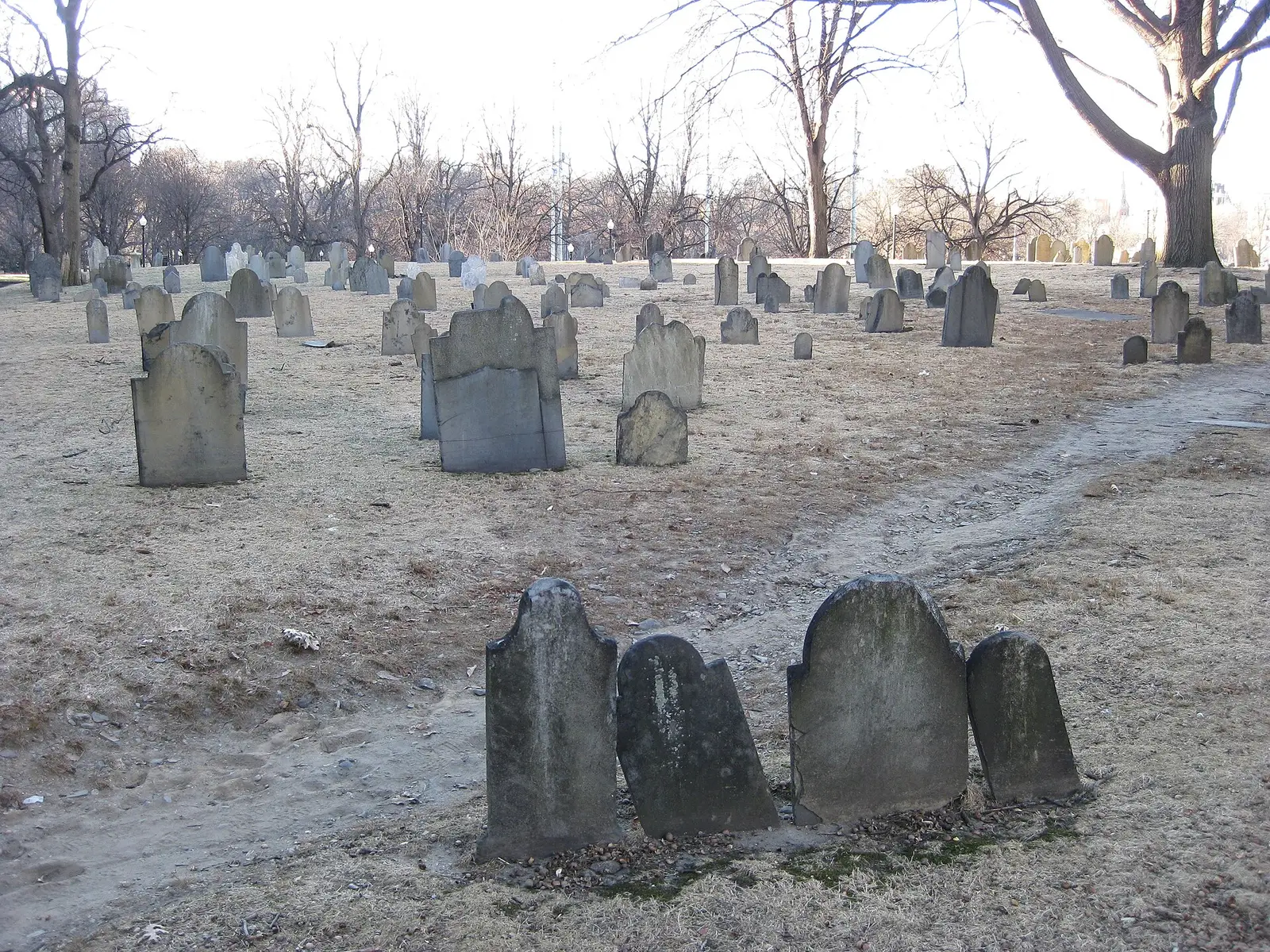
Cemetery · Boston, MA
Boston Common and the Central Burying Ground
The Central Burying Ground is the 1756 graveyard on the Boylston Street edge of Boston Common, the city's oldest park and once a place of public hangings.
UnverifiedOutside onlyAlso a cemetery · also reported: being touched
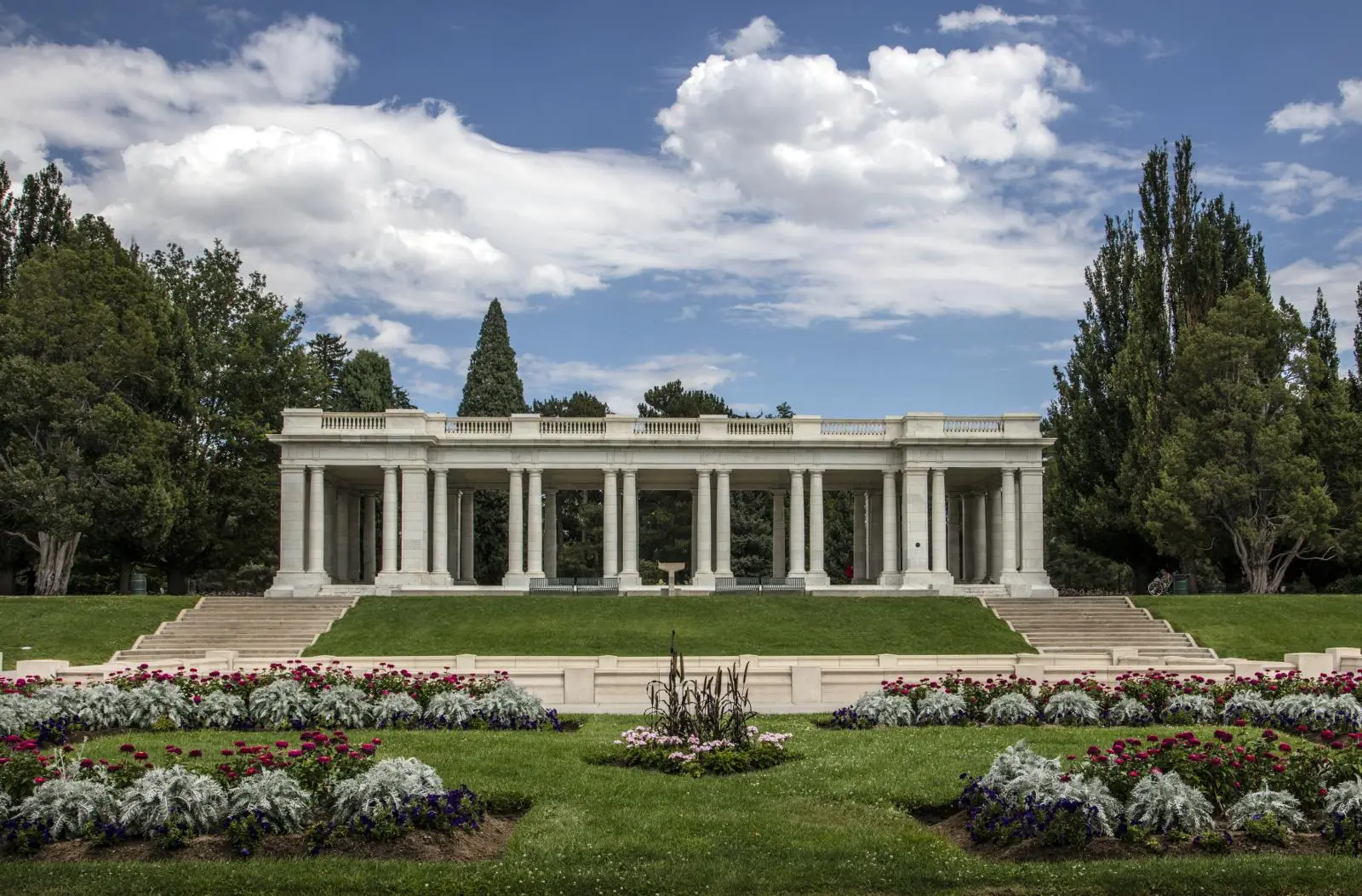
Cemetery · Denver, CO
Cheesman Park
Cheesman Park is a Denver city park laid out over the city's first cemetery.
Documented AccountsOutside onlyAlso a cemetery
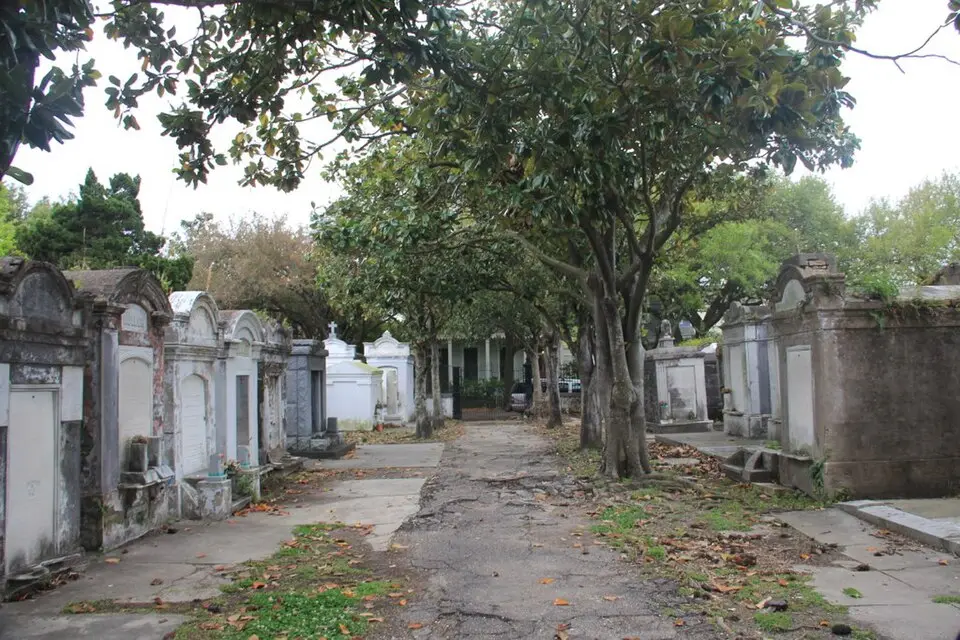
Cemetery · New Orleans, LA
Lafayette Cemetery No. 1
Lafayette Cemetery No. 1 is an above-ground cemetery in the Garden District, founded in 1833, where many yellow fever victims were buried.
UnverifiedTours onlyAlso a cemetery · also reported: being touched
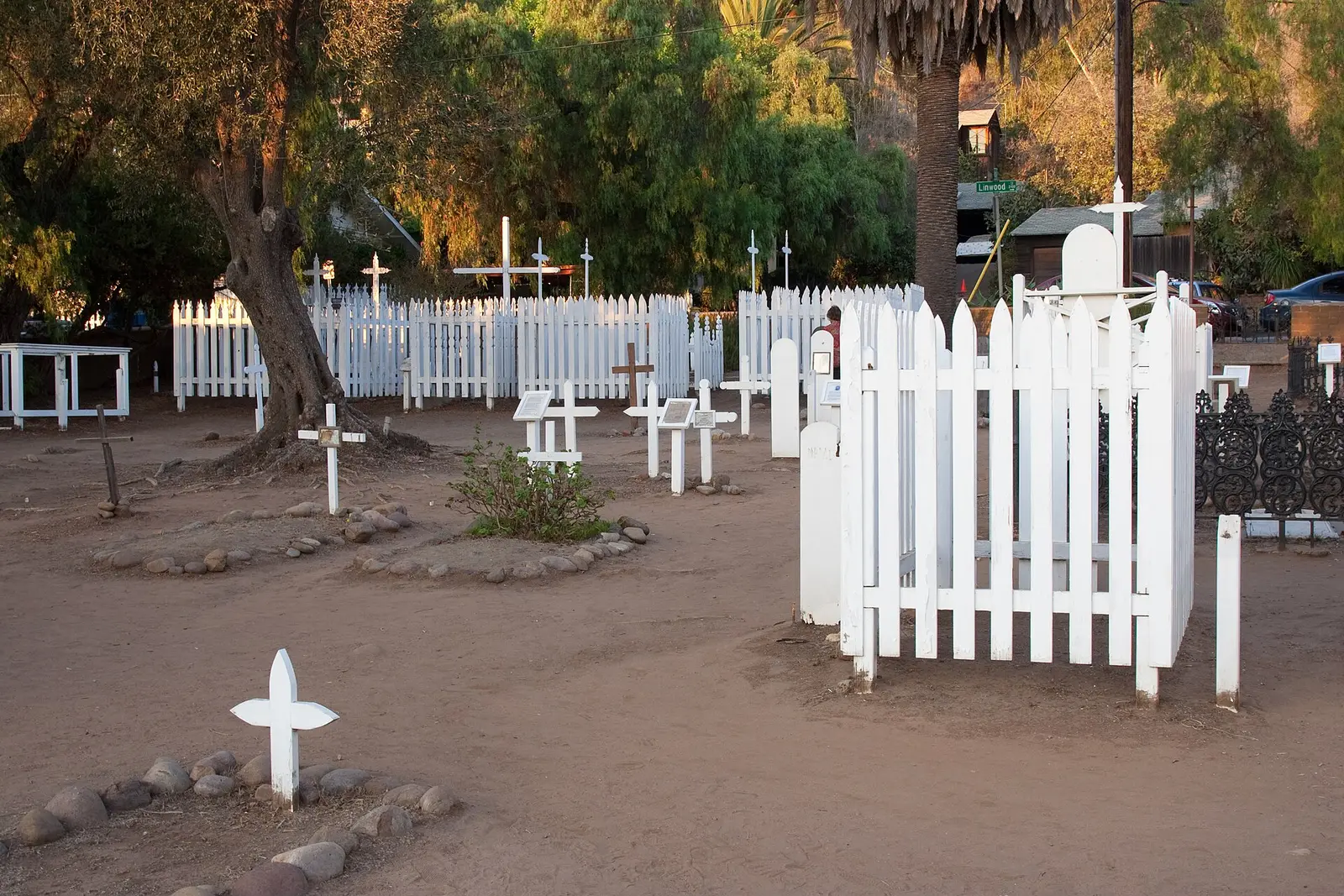
Cemetery · San Diego, CA
El Campo Santo Cemetery
El Campo Santo is Old Town San Diego's Catholic cemetery, opened in 1849, where about 477 people were buried, including many Native Americans and Yankee Jim Robinson.
UnverifiedOutside only