← Hampton Fort Monroe
Fort Monroe
National Monument
Hampton, Virginia
Fort Monroe in Hampton stands at Point Comfort, where enslaved Africans were brought ashore in 1619, and became Freedom's Fortress in 1861 when General Butler refused to return three freedom seekers.
Decorative engraving of a fort.
What do we know about Fort Monroe?
The ghost evidence is two first-person accounts reported in a 2009 Army magazine article: Jane Polonsky's 1960s sighting, from the author who later collected residents' stories, and an anonymous resident's experiences. The famous figures, Davis on the ramparts, Lincoln and the white lady, are legends, and the investigators' recordings and photographs are not evidence of anything beyond what the devices recorded.
Our rating of the reports about Fort Monroe: Documented Accounts. At least one traceable published or first-hand account of an unexplained experience. We check that the reports exist, not the supernatural. The rating describes the evidence for the reports, not whether the place is haunted.
- Reported accounts
- 3
- Counted for the rating
- 2
- Research sources
- 5
Counted for the rating: independent accounts we could trace to a witness. Retellings of the same story count once, and staff passing on what visitors said aren’t counted. How we count
Reported experiences don’t establish a supernatural cause.
Read our evidence assessment →The hauntings
Accounts, encounters and stories associated with Fort Monroe.
What has been reported?
- Apparitions
- Knocking
- Doors
- Voices
- Footsteps
- Moving objects
- Being touched
- Phantom lights

Phenomena described in accounts associated with this location — not independently verified events.
Reported experiences
3 published and reported accounts, each assessed by its source.
Account 01 · 2009
Jane Polonsky, 2009
Jane Polonsky, who compiled the 1972 book The Ghosts of Fort Monroe, said that in the 1960s, while living in a house across from the Casemate Museum, she heard knocking at the back door one night and then saw a man in an old-fashioned uniform shirt…
- Apparitions
- Knocking
Published accountReported by Jane Polonsky, author of The Ghosts of Fort Monroe (1972)Note: Told decades later in an interview; we have not consulted her book.
Read full account ›
Jane Polonsky, who compiled the 1972 book The Ghosts of Fort Monroe, said that in the 1960s, while living in a house across from the Casemate Museum, she heard knocking at the back door one night and then saw a man in an old-fashioned uniform shirt leaning on the dining-room mantel, who looked at her and vanished; her son later saw a mist in his bedroom.[5]
Account 02 · 2009
U.S. Army ; first published in Soldiers Magazine, 2009
A resident of a 1900s house on the post, who asked not to be named, told the Army in 2009 that a camera vanished and reappeared under a sink, that he and his wife heard a door close, footsteps and voices, and that he glimpsed a…
- Doors
- Apparitions
- Voices
- Footsteps
- Moving objects
Published accountReported by An anonymous Fort Monroe resident (via Soldiers Magazine)Note: Anonymous, though published by a named outlet.
Read full account ›
A resident of a 1900s house on the post, who asked not to be named, told the Army in 2009 that a camera vanished and reappeared under a sink, that he and his wife heard a door close, footsteps and voices, and that he glimpsed a woman in maroon, Victorian-style dress tending a crib.[5]
Account 03 · 2009
U.S. Army ; first published in Soldiers Magazine, 2009
The 2009 article also describes paranormal investigators' recordings and orb photographs at Quarters No. 1 and the casemates, the deputy public affairs officer feeling a touch she thought might be a bug, and a photographer seeing an unexplained flash on the ramparts.[5]
- Being touched
- Voices
- Phantom lights
No traceable witnessNote: Device output and vague sensations, recorded but not counted as accounts of an experience.
Read full account ›
The 2009 article also describes paranormal investigators' recordings and orb photographs at Quarters No. 1 and the casemates, the deputy public affairs officer feeling a touch she thought might be a bug, and a photographer seeing an unexplained flash on the ramparts.[5]
Legends & disputed stories
Stories told about the place that the records don’t confirm.
- Legend
Fort Monroe's legends include Jefferson Davis's ghost walking the ramparts, a window vibrating in the house where his wife watched for him, Abraham Lincoln at Quarters No. 1, and a 'white lady' said to have been shot by her officer husband who still roams the fort in a nightdress.[5]
What the research shows: We found no record of the 'white lady' killing.
Before you go
Planning a visit?
Open to visitors
Parts of the inside are open to the public.
Access details ›
National monument open daily with no entrance fee; the Casemate Museum inside the fort is free and self-guided with a timed ticket from the Visitor & Education Center. Many historic buildings, including some named in ghost stories, are leased as private homes: don't open gates or look in windows.
Entry
Free (checked)
Access last checked November 17, 2026. Confirm times and prices before you travel.
Approximate location, within about 1 km.
The history of Fort Monroe
Fort Monroe in Hampton stands at Point Comfort, where enslaved Africans were brought ashore in 1619, and became Freedom's Fortress in 1861 when General Butler refused to return three freedom seekers. Its ghost stories were collected by resident Jane Polonsky, who described seeing a uniformed man vanish in her house in the 1960s; an anonymous resident described footsteps and a woman by a crib in 2009. The monument is free to visit.
- Established
- 1819–1834
- Also known as
- Fortress Monroe
Point Comfort, 1619
Fort Monroe stands at Old Point Comfort, at the tip of the peninsula where Hampton Roads meets the Chesapeake Bay. In late August 1619 the English privateer White Lion arrived here with Africans taken from the kingdom of Ndongo, in present-day Angola, whom it had seized from a Spanish slave ship. It traded them to English colonists for food: 15 women and 17 men, according to the National Park Service, though John Rolfe recorded '20. and odd'. Their legal status was unclear under the colony's laws, but they were captives forced into servitude. Two of them, Isabella and Antoney, appear in a later census with their son William, the first known child of African descent born in English North America. The National Park Service marks their arrival as the start of 246 years of slavery in what became the United States.
Freedom's Fortress
The moated stone fort was built from 1819. When Virginia seceded in 1861 it stayed in Union hands. On May 23, 1861, three enslaved men, Frank Baker, Shepard Mallory and James Townsend, escaped to the fort. General Benjamin Butler refused to return them, reasoning that Confederates were using enslaved laborers on their fortifications, and they became known as 'contraband of war'. Congress backed him with the First Confiscation Act that August, and hundreds of people seeking freedom soon gathered at what they called Freedom's Fortress. After the war Jefferson Davis was imprisoned here for about two years.
Through the years
1619
First enslaved Africans arrive at Point Comfort
On August 25, 1619, the English privateer White Lion brought enslaved Africans to Old Point Comfort, now part of Fort Monroe. They had been taken from the kingdom of Ndongo, in present-day Angola, and seized from a Spanish…
Read more ›
On August 25, 1619, the English privateer White Lion brought enslaved Africans to Old Point Comfort, now part of Fort Monroe. They had been taken from the kingdom of Ndongo, in present-day Angola, and seized from a Spanish slave ship; the privateer traded them to English colonists for food: 15 women and 17 men, according to the National Park Service, though John Rolfe recorded '20. and odd'.[1]
1819
Fort construction begins
The moated, six-sided stone fort, designed by Simon Bernard after the War of 1812, was built from 1819 for about 25 years and first garrisoned in 1823.[2]
1861
Three freedom seekers reach the fort
On May 23, 1861, three enslaved men, Frank Baker, Shepard Mallory and James Townsend, escaped to Fort Monroe. General Benjamin Butler, knowing that Confederates were using enslaved laborers on nearby fortifications, refused to return them, and they became known as 'contraband of war'.[3][2]
Caveat: NPS notes that Butler himself did not use the phrase 'contraband of war'; other accounts date the escape to May 24 or 27.
1865
Jefferson Davis imprisoned
After his capture in May 1865, Confederate president Jefferson Davis was imprisoned at Fort Monroe for about two years, until his bail was accepted.[2]
Also recorded
Two of those who arrived, Isabella and Antoney, appear in a later census with their son William in what became Hampton; William is the first known child of African descent born in English North America. Their arrival began 246 years of slavery in what became the United States.[1]
Caveat: NPS does not give the year of the census.
Fort Monroe is now a national monument managed by the National Park Service and the Fort Monroe Authority; many of its historic buildings are leased to private residents.[4]
The research conclusion

Why it has this rating
Two accounts in a 2009 Soldiers Magazine article: a writer's own 1960s sighting and an anonymous resident's experiences. The arrival of enslaved Africans at Point Comfort in 1619 and the 'contraband' decision of 1861 are documented history and are kept apart from the ghost stories.
Read the full written assessment ›
The 1619 arrival, the 1861 'contraband' decision and Jefferson Davis's imprisonment are documented by the National Park Service and Encyclopedia Virginia.
The ghost evidence is two first-person accounts reported in a 2009 Army magazine article: Jane Polonsky's 1960s sighting, from the author who later collected residents' stories, and an anonymous resident's experiences. The famous figures, Davis on the ramparts, Lincoln and the white lady, are legends, and the investigators' recordings and photographs are not evidence of anything beyond what the devices recorded.
The sources behind the story
5 research references support this entry.
1National Park Service (Fort Monroe National Monument)Arrival of the First Africans in 1619 Official or site history · Reference 01
Arrival of the First Africans in 1619. National Park Service (Fort Monroe National Monument), 2024-08-02.
NPS article (last updated August 2, 2024): the White Lion brought enslaved Africans from Ndongo, taken from the Spanish slave ship São João Bautista, to Old Point Comfort on August 25, 1619, and traded 15 women and 17 men for food; Isabella, Antoney and their son William, the first known child of African descent born in English North America.
Accessed November 17, 2026.
2Encyclopedia Virginia (Virginia Humanities)Fort Monroe during the Civil War Website · Reference 02
Brian Matthew Jordan, Fort Monroe during the Civil War. Encyclopedia Virginia (Virginia Humanities).
Scholarly encyclopedia entry: construction from 1819, garrisoned 1823; on May 23, 1861, three enslaved men escaped to the fort and Butler declared them 'contraband of war'; First Confiscation Act August 6, 1861; 'Freedom's Fortress'; Jefferson Davis imprisoned there from May 1865 for two years.
Accessed November 17, 2026.
3National Park ServiceFort Monroe and the "Contrabands of War" Official or site history · Reference 03
Fort Monroe and the "Contrabands of War". National Park Service, 2024-08-02.
NPS article on General Benjamin Butler's refusal to return three freedom seekers (named in the photo caption as Frank Baker, Shepard Mallory and James Townsend), the term 'contraband of war' (which Butler himself did not use), the First Confiscation Act and the hundreds who soon sheltered at the fort. Gives no exact date.
Accessed November 17, 2026.
4National Park Service (Fort Monroe National Monument)Basic Information Official or site history · Reference 04
Basic Information. National Park Service (Fort Monroe National Monument), 2024-07-17.
NPS visitor page: managed by NPS and the Fort Monroe Authority; open daily; many historic buildings are leased to private residents, whose privacy visitors must respect.
Accessed November 17, 2026.
5U.S. Army (army.mil); first published in Soldiers Magazine, 2009The haunting of Fort Monroe Magazine · Reference 05
Jacqueline M. Hames, The haunting of Fort Monroe. U.S. Army (army.mil); first published in Soldiers Magazine, 2009, 2011-11-01.
Army feature (originally Soldiers Magazine, 2009) on a night tour with the fort's deputy public affairs officer. Quotes Jane Polonsky, author of The Ghosts of Fort Monroe (1972), on her own 1960s sighting and the fort's legends, and an anonymous resident's 2009 experiences. Also reports paranormal investigators' EVP recordings and orb photos.
Accessed November 17, 2026.
More haunted places
Explore nearby
Historic house
Ferry Plantation House
Virginia Beach, Virginia · 14 miles away · Tours only
Historic house
Bacon's Castle
Virginia · 24 miles away · Tours only
Historic house
Peyton Randolph House
Williamsburg, Virginia · 28 miles away · Open to visitors
Historic house
George Wythe House
Williamsburg, Virginia · 28 miles away · Open to visitors
Similar places
Also a fort · also reported: knocking, phantom lights
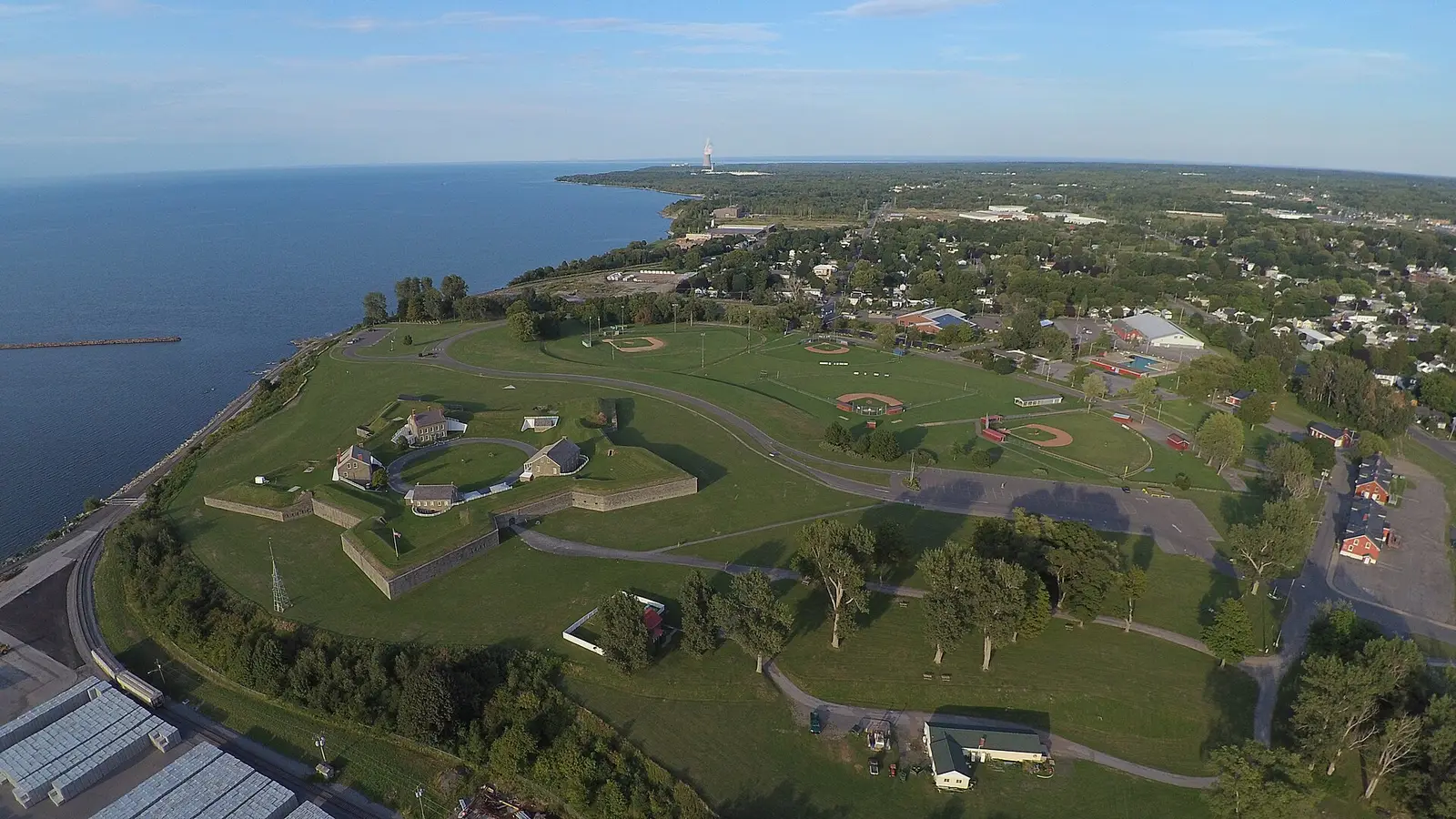
Fort · Oswego, NY
Fort Ontario State Historic Site
Fort Ontario in Oswego guarded the mouth of the Oswego River from 1755 and, in 1944–46, sheltered 982 refugees fleeing the Holocaust.
Documented AccountsOpen to visitorsAlso a fort · also reported: knocking, doors
Fort · NY
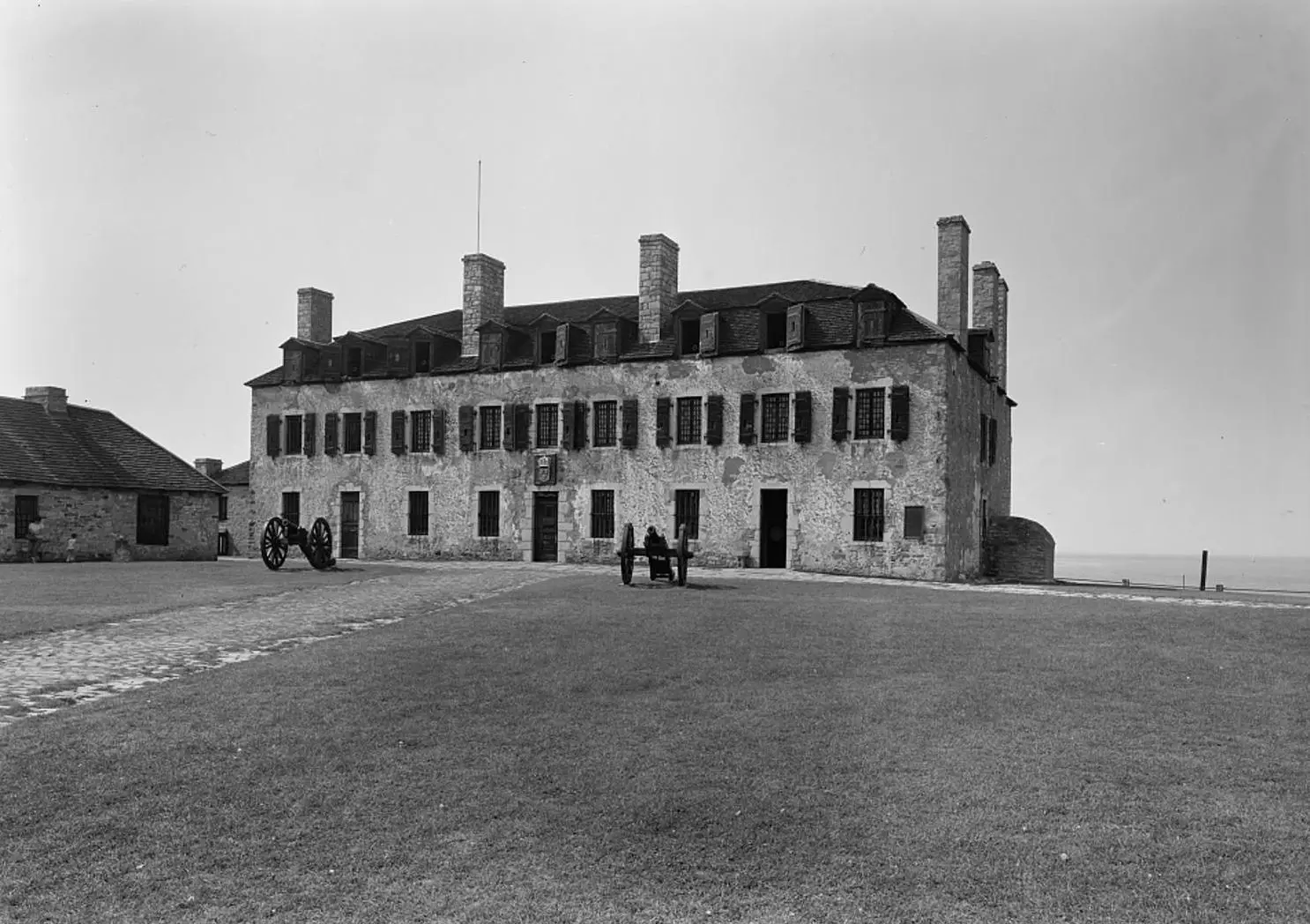
Old Fort Niagara
Old Fort Niagara guards the mouth of the Niagara River; its French Castle, built in 1726–27, is the oldest masonry building in the Great Lakes basin.
Documented AccountsOpen to visitorsAlso a fort · also reported: doors, phantom lights
Fort · San Angelo, TX
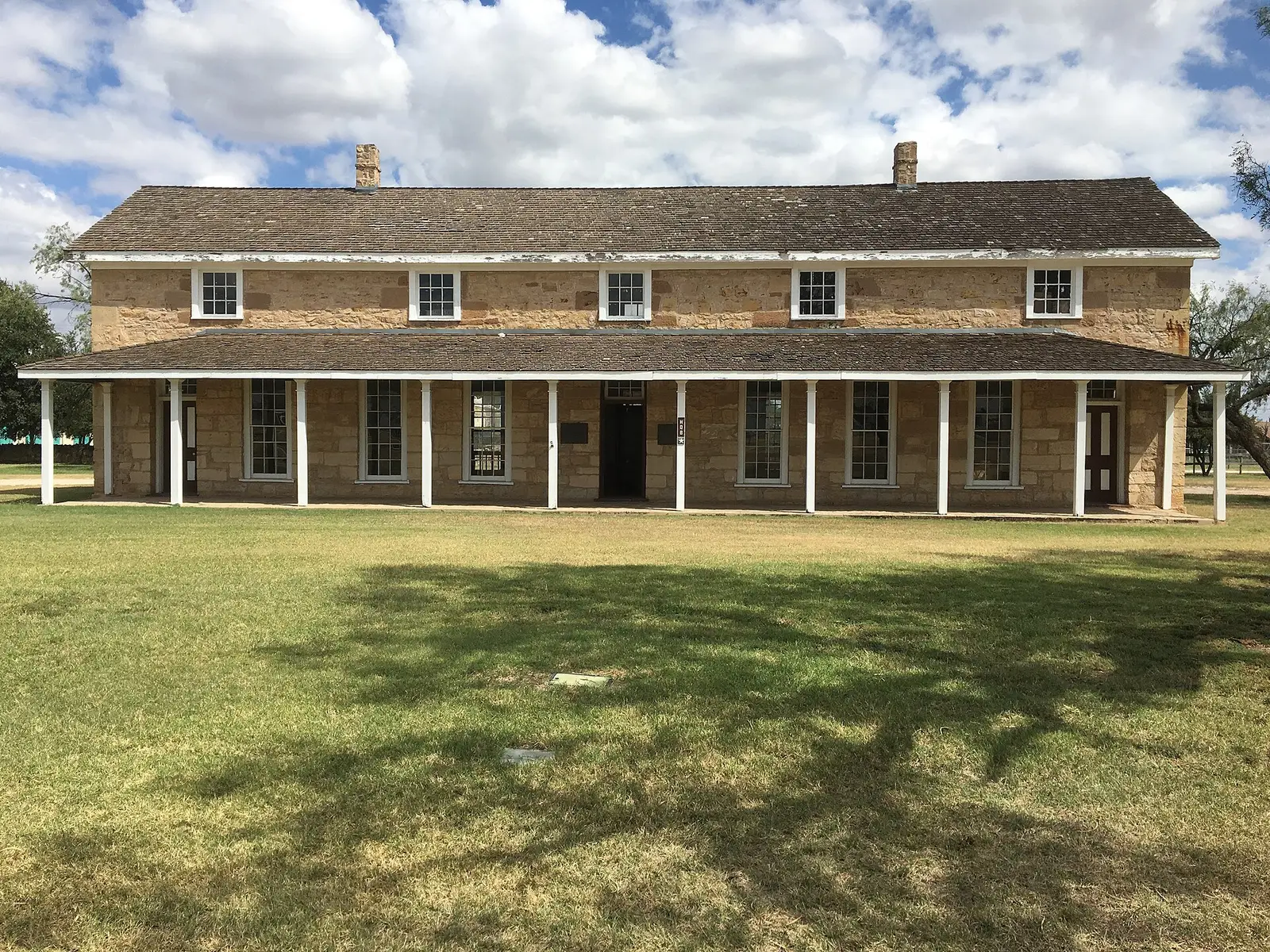
Fort Concho National Historic Landmark
Fort Concho is a frontier army post in San Angelo, founded in 1867 and home to the Buffalo Soldiers of the Tenth Cavalry.
Documented AccountsOpen to visitorsAlso a fort · also reported: footsteps, being touched
Fort · Detroit, MI
Historic Fort Wayne
Historic Fort Wayne is an 1840s star fort on the Detroit River, used by the U.S. Army from the Civil War to the Vietnam era and now a city park with a Native American burial mound.
Documented AccountsOutside only