← Detroit Historic Fort Wayne
Historic Fort Wayne
Detroit, Michigan
Historic Fort Wayne is an 1840s star fort on the Detroit River, used by the U. S.
Decorative engraving of a fort.
What do we know about Historic Fort Wayne?
The ghost material is recent. Two independent, traceable accounts were found: a CBS Detroit staff writer on a 2016 Coalition ghost walk who felt something brush her ankle, and members of Haunt Investigators of Michigan describing a falling camera and a 'black mass'. The guides' and Coalition's stories count as one origin. Meter and recorder output is not counted, and the accounts do not describe the same thing.

Our rating of the reports about Historic Fort Wayne: Documented Accounts. At least one traceable published or first-hand account of an unexplained experience. We check that the reports exist, not the supernatural. The rating describes the evidence for the reports, not whether the place is haunted.
- Reported accounts
- 4
- Counted for the rating
- 2
- Research sources
- 8
Counted for the rating: independent accounts we could trace to a witness. Retellings of the same story count once, and staff passing on what visitors said aren’t counted. How we count
Reported experiences don’t establish a supernatural cause.
Read our evidence assessment →The hauntings
Accounts, encounters and stories associated with Historic Fort Wayne.

What has been reported?
- Being touched
- Moving objects
- Apparitions
- Voices
- Footsteps
- Shadow figures




Phenomena described in accounts associated with this location — not independently verified events.
Reported experiences
4 published and reported accounts, each assessed by its source.
Account 01 · June 29, 2016
Kris Kelly, 2016
CBS Detroit writer Kris Kelly, on a 2016 Coalition ghost walk, felt something brush her bare ankle while sitting in the headquarters building as her friend said something had pushed her chair, and felt something soft brush her face in a dark casemate just before a…
- Being touched
- Moving objects
Published accountReported by Kris Kelly, CBS 62/CW50 (2016)Note: She suggests the bat may explain the second touch. Experienced on a fundraising ghost walk; the guide's EMF readings are device output and not counted.
Read full account ›
CBS Detroit writer Kris Kelly, on a 2016 Coalition ghost walk, felt something brush her bare ankle while sitting in the headquarters building as her friend said something had pushed her chair, and felt something soft brush her face in a dark casemate just before a bat flew into the group.[5]
Account 02 · June 29, 2016
CBS Detroit, 2016
On the same walk, Historic Fort Wayne Coalition chairman Tom Berlucchi said he had never seen a ghost but had had unexplained encounters, and the guide retold reports of voices in the gymnasium, footsteps in a tunnel, figures at a house window and black mist in…
- Apparitions
- Voices
- Footsteps
- Shadow figures
Published accountReported by Tom Berlucchi and an unnamed guide, Historic Fort Wayne Coalition (CBS Detroit, 2016)Note: The Coalition runs the ghost tours; its chairman's and guides' stories count as one origin, and the guide's sources are not named.
Read full account ›
Account 03 · October 24, 2024
Two members of Haunt Investigators of Michigan, 2024
Two members of Haunt Investigators of Michigan told WRIF that a camera fell from a table in the schoolhouse hallway in a way they could not reproduce, and that one of them chased a "black mass" around a room there; he also said women had had…
- Being touched
- Moving objects
- Shadow figures
Published accountReported by Two members of Haunt Investigators of Michigan (WRIF, 2024)Note: Their EVP recordings are device output and not counted; the hair-pulling claim names no one.
Read full account ›
Two members of Haunt Investigators of Michigan told WRIF that a camera fell from a table in the schoolhouse hallway in a way they could not reproduce, and that one of them chased a "black mass" around a room there; he also said women had had their hair pulled.[7]
Account 04 · April 17, 2013
Haunted Collector, 2013
Syfy's Haunted Collector investigated visitors' claims of aggressive paranormal activity at Fort Wayne in an episode first aired April 17, 2013.[8]
No traceable witnessReported by Haunted Collector (Syfy, 2013)Note: Listing only; the visitors and their claims are not identified.
Read full account ›
Syfy's Haunted Collector investigated visitors' claims of aggressive paranormal activity at Fort Wayne in an episode first aired April 17, 2013.[8]
Before you go

Planning a visit?
Outside only
You can see it from public land; the inside isn’t open.
Access details ›
A City of Detroit park and historic site on the Detroit River; the city says it is open daily. Building interiors are seen on tours and events, including the Historic Fort Wayne Coalition's evening 'Tours After Dark' with ghost stories, which are fundraising entertainment, not evidence. Part of the site is a U.S. Army Corps of Engineers facility that is closed to the public. The burial mound is sacred to the descendants of the people buried there; treat it with respect.
Entry
Cost not confirmed
Access last checked November 19, 2026. Confirm times and prices before you travel.
Approximate location, within about 1 km.
The history of Historic Fort Wayne
Historic Fort Wayne is an 1840s star fort on the Detroit River, used by the U.S. Army from the Civil War to the Vietnam era and now a city park with a Native American burial mound. A TV station's community writer and a local ghost-hunting group have described touches, a falling camera and a dark shape on ghost walks. The grounds are open; ghost tours raise money for restoration.
- Established
- 1842–1851
- Also known as
- Fort Wayne (Detroit)
Before the fort
Around a thousand years ago, Late Woodland people built burial mounds at Springwells on the Detroit River. One mound survives at Fort Wayne, the last of the Springwells Mound Group, and the City of Detroit works with the Nottawaseppi Huron Band of the Potawatomi on its care. A Potawatomi village stood here by 1710. On August 16, 1812, British and allied Native forces under Isaac Brock and Tecumseh crossed here to invade, and the Treaty of Springwells was signed here in 1815. Before the fort, the land belonged to fur trader John Askin, an enslaver; the 2019 National Register documentation notes that enslaved people's labor may have contributed to developing the site.
The star fort
Congress authorized the fort on August 4, 1841, and Lieutenant Montgomery C. Meigs designed it. A date stone of 1845 marks the sally port and the barracks cornerstone reads 1848. The fort was named for General Anthony Wayne in January 1849; sources give its completion as 1849 or 1851.
A working post
In the Civil War Fort Wayne was Michigan's main camp of instruction, first used by the 1st Michigan Infantry in April 1861. In World War I it housed segregated African American troops, and in World War II the Fort Wayne Ordnance Depot employed about 2,000 civilians preparing vehicles and parts for shipment overseas. It later served as an induction center during the Korean and Vietnam wars and as a Nike missile support site, and the last uniformed soldiers left in 1965. After July 1967 some buildings housed people displaced by the unrest.
A city museum
The city received the star fort in 1949 and has run it as a museum since 1950, gaining more land in 1971 and 1976. It was listed on the National Register in 1971.
The stories
In 2016 CBS Detroit writer Kris Kelly joined a Coalition ghost walk. She felt something brush her ankle in the headquarters building and something soft touch her face in a dark casemate, just before a bat flew into the group. The Coalition's chairman said he had never seen a ghost but had had unexplained encounters. In 2024 members of Haunt Investigators of Michigan told WRIF that a camera fell from a table in the schoolhouse and that one of them chased a "black mass" around a room there. These are personal reports; recordings and meter readings are the groups' interpretation.
Through the years
1841
Fort authorized
Congress authorized the fort on August 4, 1841; Lt. Montgomery C. Meigs designed it, a date stone of 1845 marks the sally port and the barracks cornerstone is dated 1848, and the fort was named for Gen. Anthony Wayne on January 31, 1849.[2][3]
Caveat: The 1971 nomination says the fort was completed in 1849 at a cost of $150,000; the 2019 documentation and the Coalition give 1851.
1918–1945
1918–1945
In World War I the fort housed segregated African American troops, and in World War II the Fort Wayne Ordnance Depot employed about 2,000 civilians preparing military vehicles and parts for shipment overseas.[1][4][2]
Caveat: The NPS and the Coalition say 500 African American troops; the 2019 documentation says about 1,300.
1965
Last soldiers leave
The fort later served as an induction center during the Korean and Vietnam wars and as a Nike missile support and repair site; the last uniformed military personnel left in 1965, and after July 1967 some buildings were…
1971
National Register listing
The City of Detroit received the star fort in 1949 and has operated it as a museum since 1950, gaining more of the site in 1971 and 1976; Fort Wayne was designated a Michigan State Historic Site in…
Read more ›
The City of Detroit received the star fort in 1949 and has operated it as a museum since 1950, gaining more of the site in 1971 and 1976; Fort Wayne was designated a Michigan State Historic Site in 1958 and listed on the National Register of Historic Places on May 6, 1971 (reference 71000425), with additional documentation accepted in 2019.[2][3]
Also recorded
Before the fort was built, the land was owned by fur trader John Askin, who enslaved people; the 2019 National Register documentation says this raises the possibility that African American forced labor contributed to developing the site.[2]
Caveat: The nomination presents the forced-labor point as a possibility, not a documented fact.
The research conclusion

Why it has this rating
Two independent accounts: a CBS Detroit writer touched on a 2016 ghost walk, and a paranormal team's falling camera and dark mass (2024). They don't describe the same thing; the tour operator's own stories are vague. Device recordings aren't counted.
Read the full written assessment ›
The history is unusually well recorded: the 1971 National Register nomination and its 2019 update, the National Park Service and the City of Detroit agree on the main events, though they differ on completion dates and some numbers.
The ghost material is recent. Two independent, traceable accounts were found: a CBS Detroit staff writer on a 2016 Coalition ghost walk who felt something brush her ankle, and members of Haunt Investigators of Michigan describing a falling camera and a 'black mass'. The guides' and Coalition's stories count as one origin. Meter and recorder output is not counted, and the accounts do not describe the same thing.
The sources behind the story
8 research references support this entry.

1National Park ServiceFort Wayne, Detroit Official or site history · Reference 01
Fort Wayne, Detroit. National Park Service.
NPS place page. Source for the Potawatomi village by 1710, the August 16, 1812 invasion under Brock and Tecumseh, the 1815 Treaty of Springwells, 500 segregated African American troops in WWI and the WWII ordnance depot with about 2,000 civilians. Gives the address as 6053 West Jefferson Ave.
Accessed November 16, 2026.
2National Park Service (NPGallery)Fort Wayne: National Register of Historic Places Inventory–Nomination Form Register or nomination · Reference 02
Fort Wayne: National Register of Historic Places Inventory–Nomination Form. National Park Service (NPGallery), 1971-05-06.
Original 1971 nomination, read in full in the combined PDF. Authoritative for the 1841 authorization, Meigs, the 1845 and 1848 date stones, 1849 completion and naming, Civil War use, the 1949 transfer, museum use from 1950 and 1967 emergency housing. No ghost content.
Accessed November 16, 2026.
3Historic Fort Wayne (City of Detroit)History Official or site history · Reference 03
History. Historic Fort Wayne (City of Detroit).
City-run site's history page, checked 2026-11-16 with the homepage (open daily; 6325 West Jefferson Ave.). Source for the burial mound (c. AD 750–1200), the stewardship partnership with the Nottawaseppi Huron Band of the Potawatomi, 1958 and 1971 designations and the 1989 Tuskegee Airmen museum. Mentions an Underground Railroad station role not verified elsewhere.
Accessed November 16, 2026.
4Historic Fort Wayne Coalition10 Key Events Website · Reference 04
10 Key Events. Historic Fort Wayne Coalition.
Volunteer support group's timeline. Gives 1842–1851 construction, 1861–1865 camp of instruction, June 1918 African American troops and 1987 for the Tuskegee Airmen museum (the city and 2019 nomination say 1989). The Coalition also runs ghost tours.
Accessed November 16, 2026.
5CBS Detroit (CBS 62/CW50)Tales of the supernatural in Detroit Television or radio · Reference 05
Kris Kelly, Tales of the supernatural in Detroit. CBS Detroit (CBS 62/CW50), 2016-06-29.
First-person piece by the stations' community affairs manager about a Coalition ghost walk. Gives her own experiences, her friend's, the guide's retold stories and Coalition chairman Tom Berlucchi's comments. The guide's EMF meter readings are device output.
Accessed November 16, 2026.
6Michigan PublicFeeling brave? Check out one of Michigan's spooky spaces or haunted places Television or radio · Reference 06
Paulette Parker, Feeling brave? Check out one of Michigan's spooky spaces or haunted places. Michigan Public, 2019-10-25.
Public radio roundup: says some people believe wandering souls remain at the fort and mentions the Tours After Dark. No witnesses.
Accessed November 16, 2026.
7WRIF 101.1Ed and Marc of Haunt Investigators of Michigan on this episode of Haunted Michigan Television or radio · Reference 07
Meltdown, Ed and Marc of Haunt Investigators of Michigan on this episode of Haunted Michigan. WRIF 101.1, 2024-10-24.
Commercial rock station's podcast write-up quoting two ghost-hunting group members (initials only for surnames). Cited only as where their accounts were published.
Accessed November 16, 2026.
8TheTVDB (listing for Syfy)Haunted Collector, season 3, episode 7: Ghosts of Geneva / Fort Fear Website · Reference 08
Haunted Collector, season 3, episode 7: Ghosts of Geneva / Fort Fear. TheTVDB (listing for Syfy), 2013-04-17.
Episode listing only: says the team investigated visitors' claims of 'aggressive' activity at Fort Wayne. No details of who reported what.
Accessed November 16, 2026.
More haunted places
Explore nearby
Similar places
Also a fort · also reported: footsteps, being touched
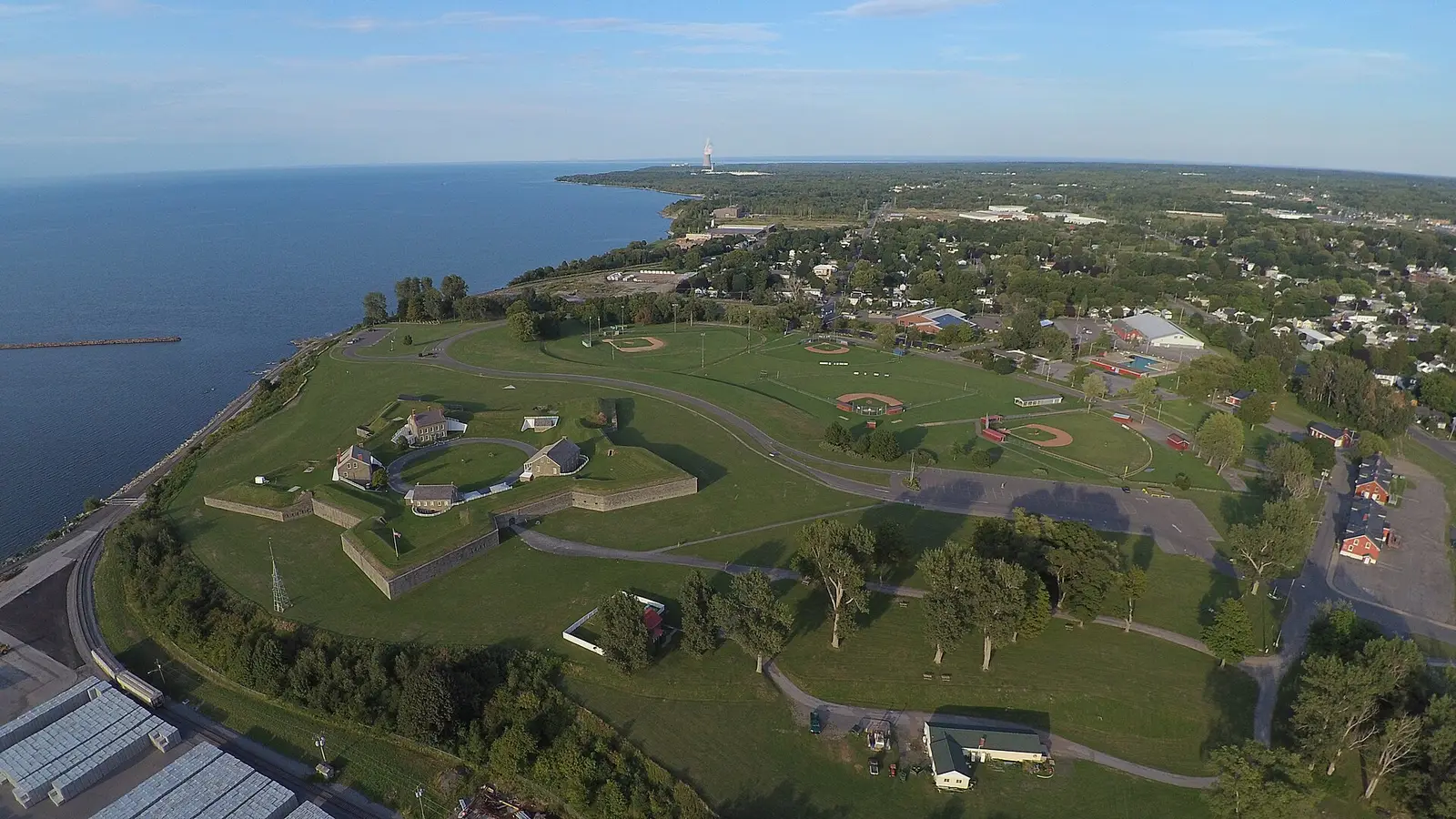
Fort · Oswego, NY
Fort Ontario State Historic Site
Fort Ontario in Oswego guarded the mouth of the Oswego River from 1755 and, in 1944–46, sheltered 982 refugees fleeing the Holocaust.
Documented AccountsOpen to visitorsAlso a fort · also reported: footsteps, being touched
Fort · Hampton, VA
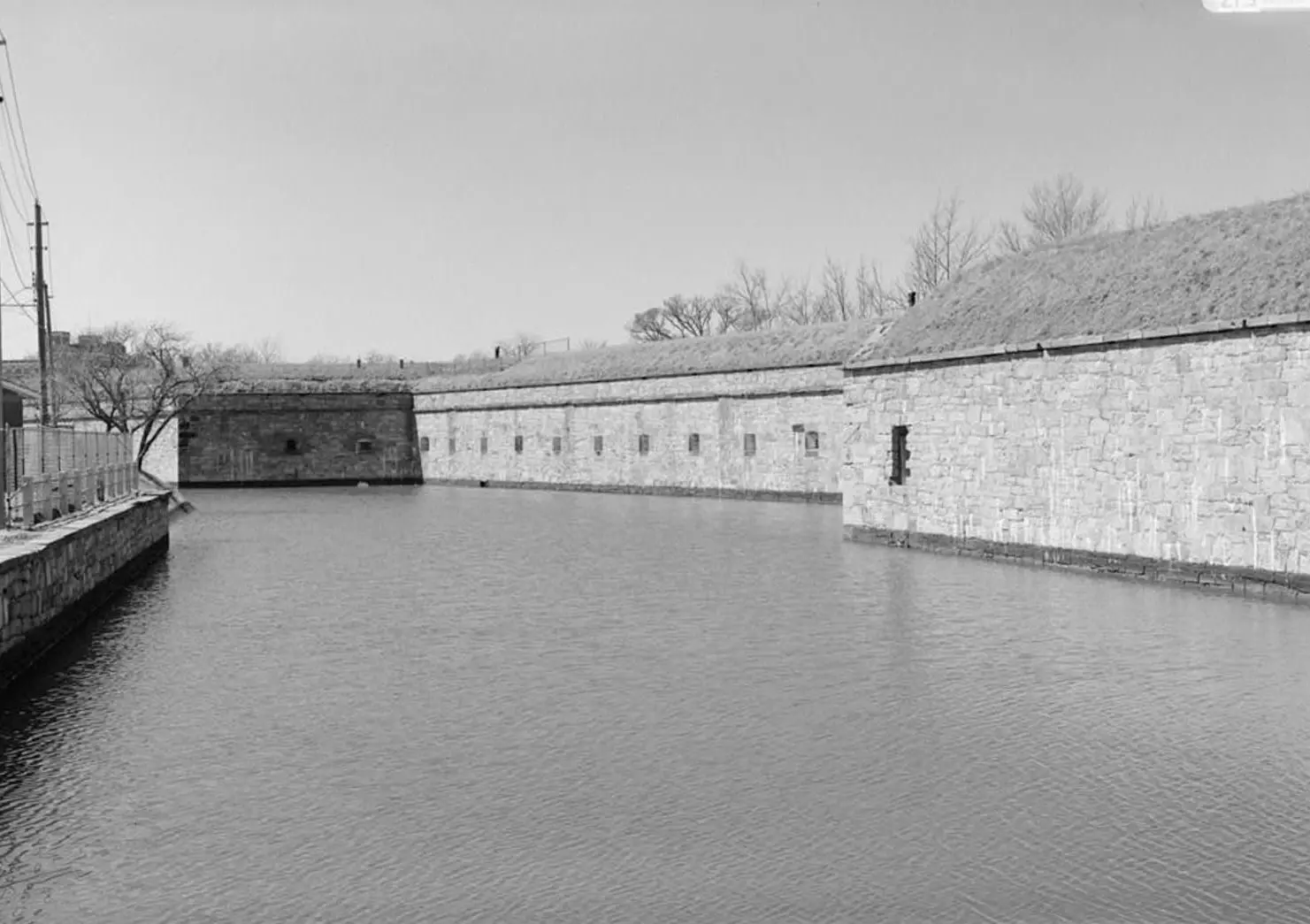
Fort Monroe National Monument
Fort Monroe in Hampton stands at Point Comfort, where enslaved Africans were brought ashore in 1619, and became Freedom's Fortress in 1861 when General Butler refused to return three freedom seekers.
Documented AccountsOpen to visitorsAlso a fort · also reported: shadow figures, footsteps
Fort · Port Townsend, WA
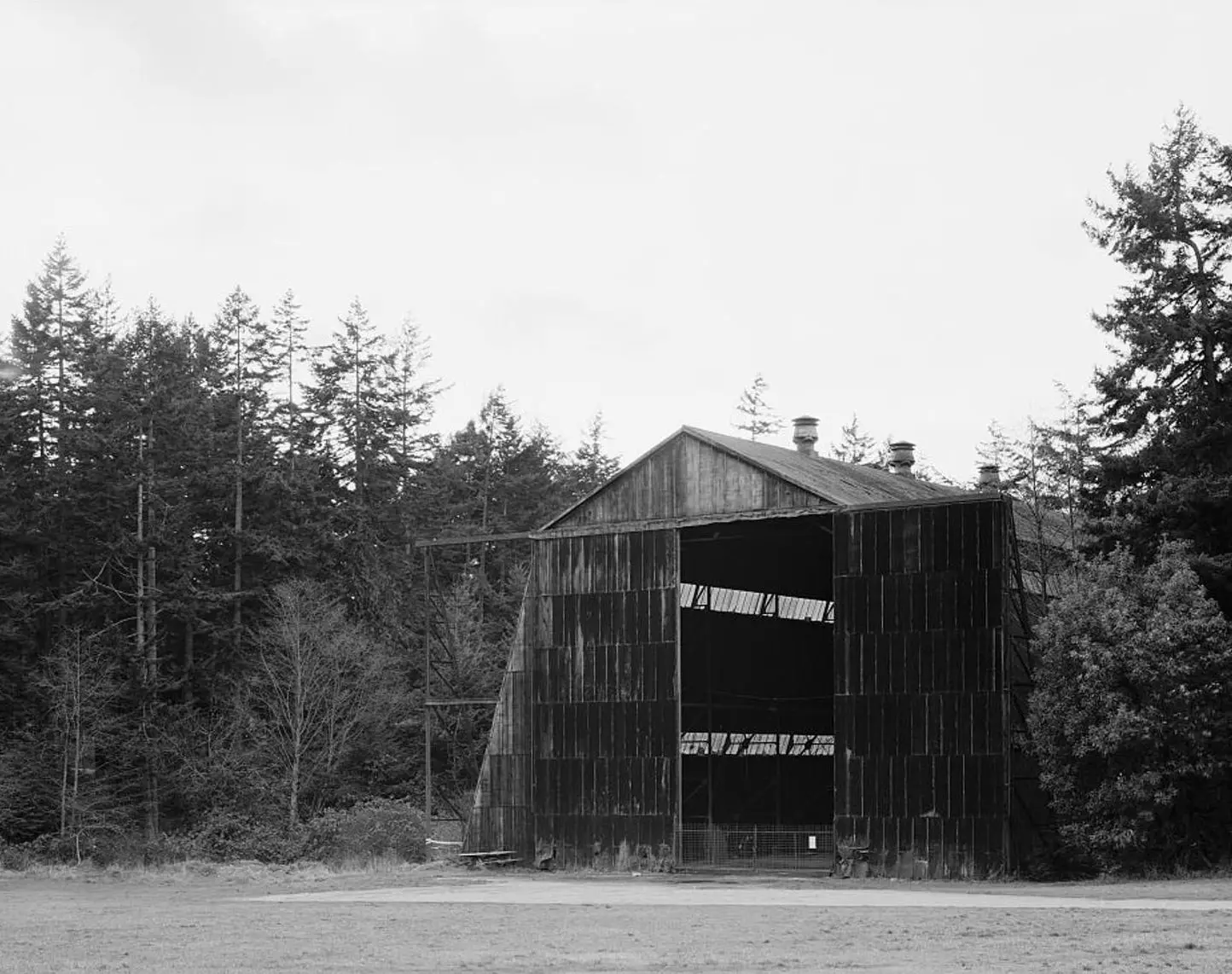
Fort Worden Historical State Park
Fort Worden is a 1902 coast artillery fort at Port Townsend, later a state juvenile treatment center and, since 1973, a state park.
Documented AccountsOutside onlyAlso a fort · also reported: shadow figures, being touched
Fort · NY
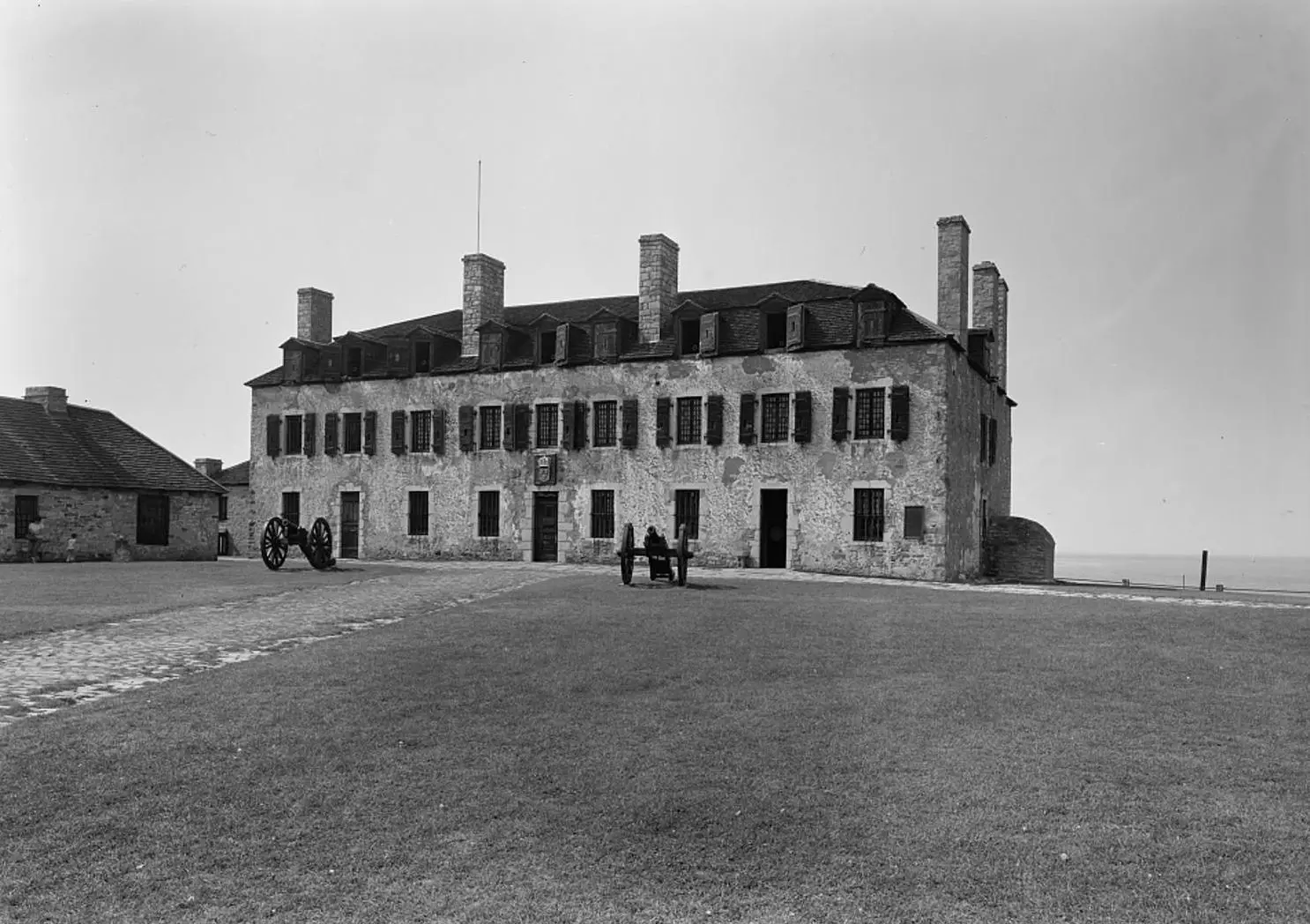
Old Fort Niagara
Old Fort Niagara guards the mouth of the Niagara River; its French Castle, built in 1726–27, is the oldest masonry building in the Great Lakes basin.
Documented AccountsOpen to visitors