← Franklin Carnton
Carnton
Field hospital, cemetery and ghost stories
Franklin, Tennessee
Carnton is the McGavock family house in Franklin, built about 1826 and worked by enslaved people.
What do we know about Carnton?
The ghost stories are widely repeated, by the state archives' legends page, a ghost-story book, tourism writers and a paranormal group's press release, but we found no named person describing an experience of their own. Photographs said to show figures are not accounts of experiences.
Our rating of the reports about Carnton: Unverified. A haunted reputation or legend, but no traceable account of an experience so far. The rating describes the evidence for the reports, not whether the place is haunted.
- Reported account
- 1
- Counted for the rating
- 0
- Research sources
- 9
Counted for the rating: independent accounts we could trace to a witness. Retellings of the same story count once, and staff passing on what visitors said aren’t counted. How we count
Reported experiences don’t establish a supernatural cause.
Read our evidence assessment →The hauntings
Accounts, encounters and stories associated with Carnton.
What has been reported?
- Apparitions
- Voices
- Footsteps
- Phantom lights
Phenomena described in accounts associated with this location — not independently verified events.
Reported experiences
1 published and reported account, each assessed by its source.
Account 01 · October 20, 2025
Tennessee Department of Tourist Development, 2025
The state archives' legends page lists Confederate generals pacing the porches, children at the windows, Carrie McGavock in a long pink gown gazing toward the cemetery, phantom gunfire and charging horses, moans from the graveyard and a soldier walking among the graves; a 2025 state tourism…
- Apparitions
- Voices
- Footsteps
No traceable witnessNote: No witness, date or original source is named in either.
Read full account ›
The state archives' legends page lists Confederate generals pacing the porches, children at the windows, Carrie McGavock in a long pink gown gazing toward the cemetery, phantom gunfire and charging horses, moans from the graveyard and a soldier walking among the graves; a 2025 state tourism feature repeats unnamed visitors' sightings of a woman on the back porch and a soldier on the front patio.[6][7]
Legends & disputed stories
Stories told about the place that the records don’t confirm.
- Legend
A book of Carnton ghost stories by Lochlainn Seabrook collects more than a dozen tales, among them a Lady in White and orbs of light, according to a Nashville Public Library review.[8]
What the research shows: We could not access the book, so we can't say whether any story names a witness.
- Disputed
A 2023 press release shared photographs by Nashville Ghost and Paranormal Investigators said to show a man on a bench and a woman in a large dress at Carnton, and claimed the generals were laid on the porch injured and died there.[9]
What the research shows: Photographs are not accounts of experiences and are not counted. The federal nominations say the generals were killed in the battle and their bodies brought to the house afterward.
Before you go
Planning a visit?
Tours only
Visits are by guided tour or organized event.
Access details ›
Historic house museum run by the Battle of Franklin Trust, with paid guided house, grounds and battlefield tours, including a tour on slavery and the people enslaved at Carnton. The Confederate cemetery is a burial ground for about 1,500 soldiers; please visit it respectfully. The official site does not mention ghost tours. Check the official site for current tours.
Entry
Paid entry
Access last checked November 17, 2026. Confirm times and prices before you travel.
Approximate location, within about 1 km.
The history of Carnton
Carnton is the McGavock family house in Franklin, built about 1826 and worked by enslaved people. After the Battle of Franklin in 1864 it was a Confederate field hospital, and the family later gave land for a cemetery of nearly 1,500 soldiers. It is said to be haunted by Carrie McGavock, soldiers and generals, but every report we found is anonymous or a photograph. You can tour it.
- Established
- 1825–1826
- Also known as
- Carnton Plantation
The McGavocks' farm
Randal McGavock, a former mayor of Nashville, built Carnton about 1826 and named it after his family's ancestral home in Ireland. His son John inherited the farm and in 1848 married Carrie Winder. By 1860 John and Carrie McGavock enslaved 44 people on about 700 acres.
The people enslaved at Carnton
The Battle of Franklin Trust researches and names the people the McGavocks enslaved. Among them was Mariah, born in Mississippi about 1834 and given to Carrie McGavock by Carrie's father in 1850, at about 16, as a 'slave for life'. In 1862, as Union troops arrived, the McGavocks sent the people they enslaved further south. After the war Mariah returned to Franklin, married Bolen Reddick, worked as a nurse and lived until 1922.
Field hospital
On November 30, 1864, the Battle of Franklin was fought on and around the farm. Carnton became the largest field hospital in the area: its National Register nomination says more than 300 wounded and dying soldiers were brought there that night. The next morning the bodies of Confederate generals killed in the battle lay on the back porch; the museum names four, and older federal nominations say five.
The Confederate cemetery
In 1866 John and Carrie McGavock set aside two acres beside the family cemetery, and the remains of about 1,481 Confederate soldiers were moved there from the battlefield.
Later history
The McGavocks sold Carnton in 1911. It was listed on the National Register in 1973, and in 1977 the house and ten acres were given to the Carnton Association. The Battle of Franklin Trust now runs it.
Through the years
1850
Mariah given to Carrie McGavock
Mariah, born in Mississippi about 1834, was enslaved by Van P. Winder, who in 1850 gave her, at about 16, to his daughter Carrie McGavock as a 'slave for life'. In 1862 the McGavocks sent the people they…
Read more ›
Mariah, born in Mississippi about 1834, was enslaved by Van P. Winder, who in 1850 gave her, at about 16, to his daughter Carrie McGavock as a 'slave for life'. In 1862 the McGavocks sent the people they enslaved south ahead of the Union army; after the war Mariah returned to Franklin, married Bolen Reddick in 1865, worked as a nurse and died in 1922.[4]
Caveat: The museum notes her recorded age varies between records.
1864
Field hospital after the Battle of Franklin
During and after the Battle of Franklin on November 30, 1864, Carnton was the largest field hospital in the area; the National Register nomination says more than 300 wounded and dying Confederate soldiers were brought to the house that night.[1][2]
Caveat: The museum gives no exact number, saying 'hundreds'.
1864
Generals' bodies on the back porch
On the morning of December 1, 1864, the bodies of Confederate generals killed in the battle lay on Carnton's back porch: the museum names Patrick Cleburne, Hiram Granbury, John Adams and Otho Strahl.[2]
Caveat: The 1972 and 1984 federal nominations say five and add States Rights Gist.
1866
McGavock Confederate Cemetery established
In 1866 John and Carrie McGavock set aside two acres beside their family cemetery as a burial ground for Confederate soldiers killed at Franklin, and the remains of about 1,481 men were moved there from the battlefield; the…
Read more ›
In 1866 John and Carrie McGavock set aside two acres beside their family cemetery as a burial ground for Confederate soldiers killed at Franklin, and the remains of about 1,481 men were moved there from the battlefield; the McGavocks looked after it for the rest of their lives.[1][2]
Caveat: The museum says 'nearly 1,500'.
The research conclusion

Why it has this rating
A strong reputation but no named person's account of an experience: every report is anonymous or a photograph. The people the McGavocks enslaved, the field hospital and the Confederate cemetery are documented history.
Read the full written assessment ›
The house, the McGavocks' enslavement of 44 people by 1860, its use as a field hospital and the Confederate cemetery are well recorded in National Register and museum sources, though they differ on how many generals' bodies lay on the back porch.
The ghost stories are widely repeated, by the state archives' legends page, a ghost-story book, tourism writers and a paranormal group's press release, but we found no named person describing an experience of their own. Photographs said to show figures are not accounts of experiences.
The sources behind the story
9 research references support this entry.
1National Park Service (National Archives catalog)National Register of Historic Places Inventory–Nomination Form: Carnton (ref. 73001857) Register or nomination · Reference 01
Herbert L. Harper, Tennessee Historical Commission, National Register of Historic Places Inventory–Nomination Form: Carnton (ref. 73001857). National Park Service (National Archives catalog), 1972-06-29.
Scanned nomination, read by OCR. Gives construction about 1825 by Randal McGavock, the name's Irish origin, over 300 wounded and dying brought there, five generals' bodies on the rear veranda, and 1,481 soldiers reburied in the two-acre cemetery in 1866. Says nothing about the enslaved people or ghosts.
Accessed November 17, 2026.
2Battle of Franklin TrustCarnton History Official or site history · Reference 02
Carnton History. Battle of Franklin Trust.
Museum's own history: built 1826, John and Carrie McGavock owning 44 enslaved people and about 700 acres in 1860, the field hospital, four generals' bodies on the back porch on December 1, 1864, two acres for nearly 1,500 soldiers in early 1866, sale in 1911, National Register 1973, gift of the house and ten acres in 1977. No ghost content.
Accessed November 17, 2026.
3Battle of Franklin TrustStories of the Enslaved Official or site history · Reference 03
Stories of the Enslaved. Battle of Franklin Trust.
Museum research project listing 14 named people enslaved at Carnton, with a biography PDF for each, and describing their work and treatment in general terms. Says 147 people were enslaved at Carnton, the Carter House and Rippa Villa combined in 1860.
Accessed November 17, 2026.
4Battle of Franklin TrustMariah McGavock Reddick, 1834-1922: Enslaved at Carnton Official or site history · Reference 04
Mariah McGavock Reddick, 1834-1922: Enslaved at Carnton. Battle of Franklin Trust, 2025.
Museum research timeline (2021, updated 2025) citing the 1850 deed of gift, censuses, slave schedules, court depositions and newspapers. Authoritative on the museum's research; some links (e.g., which census entry is her) are stated as probable.
Accessed November 17, 2026.
5National Park Service (NPGallery)National Register of Historic Places Inventory Nomination Form: Franklin Battlefield (National Historic Landmark, ref. 66000734) Register or nomination · Reference 05
National Register of Historic Places Inventory Nomination Form: Franklin Battlefield (National Historic Landmark, ref. 66000734). National Park Service (NPGallery), 1984.
Landmark nomination covering Carnton and the Confederate cemetery with three other sites. Says the bodies of five generals (Cleburne, Gist, Granbury, Adams and Strahl) were laid out on Carnton's back gallery the day after the battle. Date read from the form's continuation sheet.
Accessed November 17, 2026.
6Tennessee State Library and ArchivesTennessee Myths and Legends: Ghosts Official or site history · Reference 06
Tennessee Myths and Legends: Ghosts. Tennessee State Library and Archives.
State archives exhibit page that retells legends. Lists Carnton's reported ghosts without naming any witness or source, and calls it 'the most haunted building in Tennessee'. Evidence only that the stories circulate.
Accessed November 17, 2026.
7Tennessee Department of Tourist Development (tnvacation.com)POV: Real Experiences at Local Haunted Places in Tennessee Official or site history · Reference 07
Patrick Green, POV: Real Experiences at Local Haunted Places in Tennessee. Tennessee Department of Tourist Development (tnvacation.com), 2025-10-20.
State tourism feature. For Carnton it reports only unnamed visitors seeing a woman on the back porch, a soldier on the front patio and a young girl sweeping at dusk. Promotional.
Accessed November 17, 2026.
8Nashville Public Library (blog)Haunted House Fiction: Carnton Plantation Ghost Stories Website · Reference 08
Haunted House Fiction: Carnton Plantation Ghost Stories. Nashville Public Library (blog), 2017-10-29.
Library blog review of Lochlainn Seabrook's Carnton Plantation Ghost Stories, which it describes as a catalog of ghost accounts including a Lady in White and orbs. We could not access the book.
Accessed November 17, 2026.
9Williamson SourceHaunted Franklin: 3 Places That Will Give You Goosebumps Website · Reference 09
Haunted Franklin: 3 Places That Will Give You Goosebumps. Williamson Source, 2023-10-31.
Labeled a press release. Repeats unattributed sightings and shares photographs from Nashville Ghost and Paranormal Investigators said to show a man on a bench and a woman in a large dress. Wrongly says five injured generals died on the porch.
Accessed November 17, 2026.
More haunted places
Explore nearby
Similar places
Also a historic house · also reported: footsteps
IllustrationHistoric house · San Antonio, TX
Victoria's Black Swan Inn
Victoria's Black Swan Inn is a 19th-century house on Holbrook Road in northeast San Antonio, beside the site of the 1842 Battle of Salado Creek.
Documented AccountsTours onlyAlso a historic house · also reported: phantom lights, footsteps
Historic house · Trinway, OH
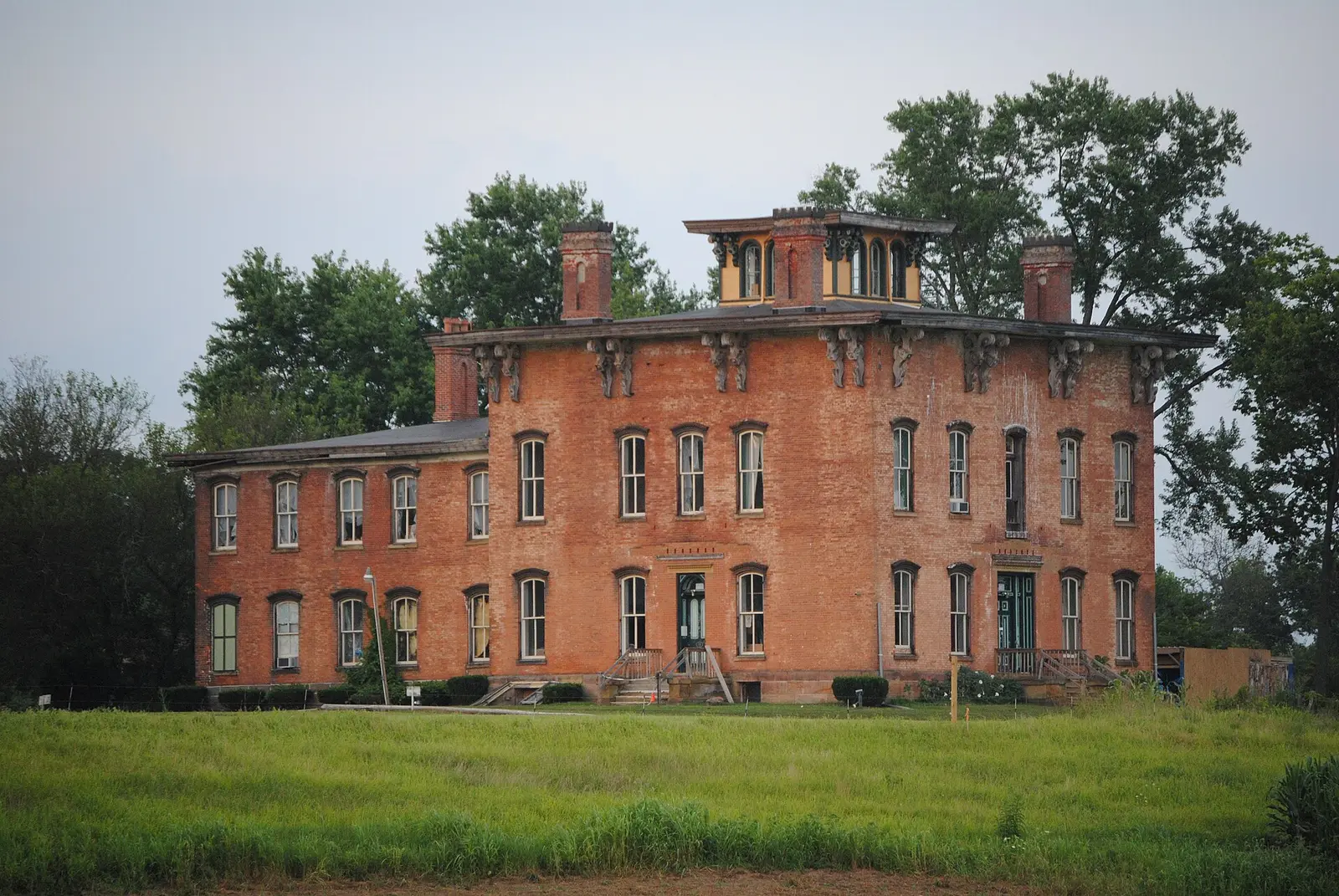
Prospect Place Mansion
Prospect Place is an 1856 Italian Villa-style mansion near Trinway built for George W. Adams, whose family left Virginia opposing slavery.
Documented AccountsOpen to visitorsAlso a historic house · also reported: phantom lights, footsteps
Historic house · KY
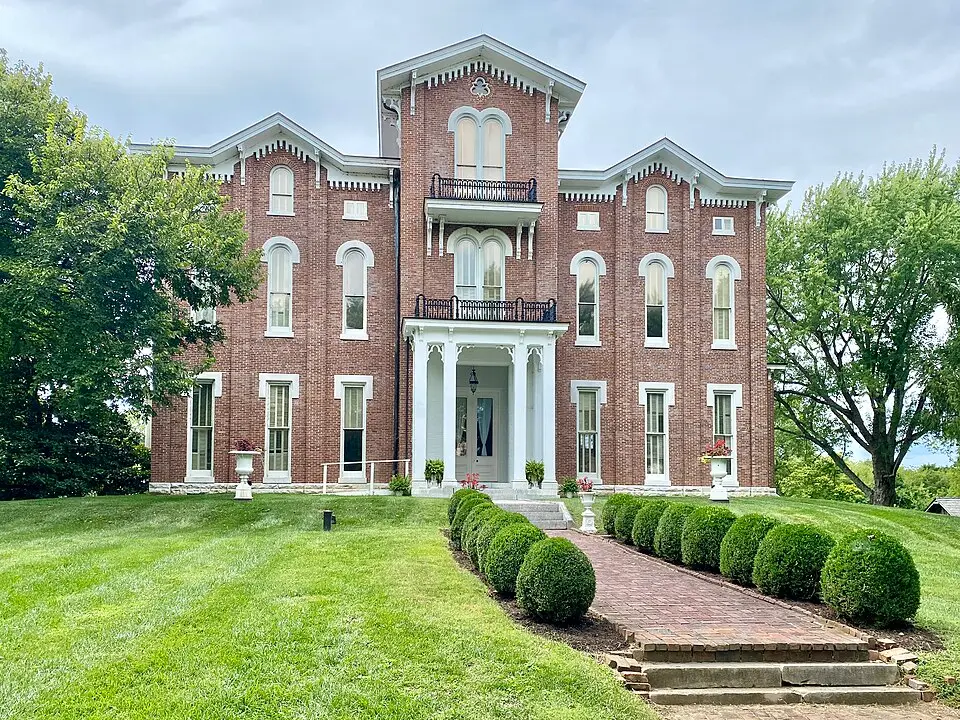
White Hall State Historic Site
White Hall, near Richmond, Kentucky, is the home of the antislavery politician Cassius Marcellus Clay, built on a house his father, a major enslaver, finished in 1799.
Documented AccountsTours onlyAlso a historic house · also reported: phantom lights, footsteps
Historic house · VA
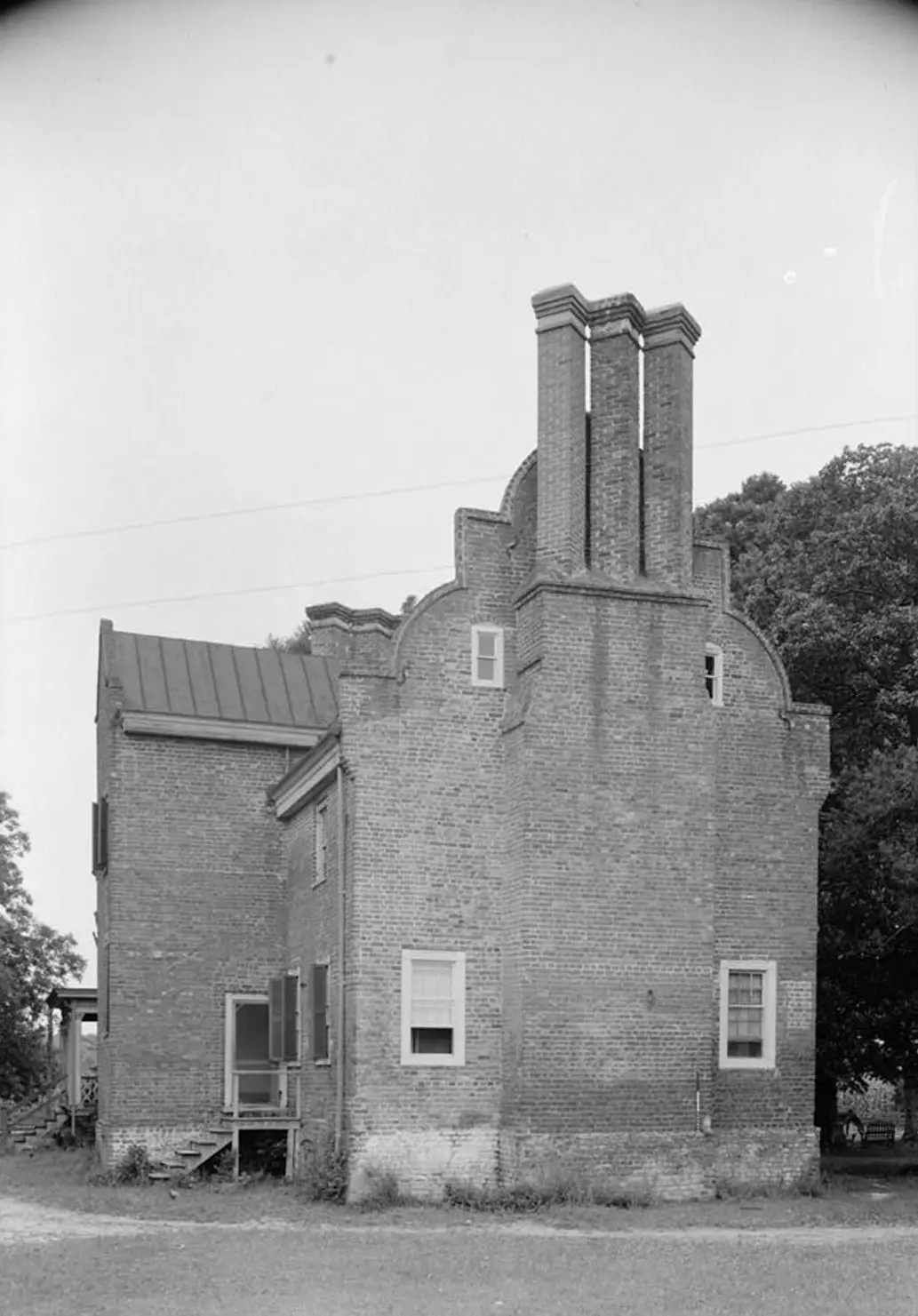
Bacon's Castle
Bacon's Castle is Virginia's oldest documented house, built in 1665 by current dating (older sources say about 1655) and seized by Bacon's rebels in 1676; its 19th-century owners, the Hankins family, enslaved people there.
Documented AccountsTours only