← Tennessee Bell Witch Cave
Bell Witch Cave
The legend and its earliest sources
Tennessee
Bell Witch Cave is a limestone cave near Adams on the old Bell farm, shown to visitors because of the Bell Witch legend about a spirit said to have tormented John Bell's family from 1817 until his death in 1820.
What do we know about Bell Witch Cave?
The cave's own ghost stories are much later and come from its owners and guides: a 1964 owner's story about broken lights, and today's tour stories. Neither 1886 nor 1894 text that we searched mentions a cave at all, so the cave's link to the witch looks like a later addition. None of this shows more than what people believed or reported.
Our rating of the reports about Bell Witch Cave: Documented Accounts. At least one traceable published or first-hand account of an unexplained experience. We check that the reports exist, not the supernatural. The rating describes the evidence for the reports, not whether the place is haunted.
- Reported accounts
- 2
- Counted for the rating
- 1
- Research sources
- 8
Counted for the rating: independent accounts we could trace to a witness. Retellings of the same story count once, and staff passing on what visitors said aren’t counted. How we count
Reported experiences don’t establish a supernatural cause.
Read our evidence assessment →The hauntings
Accounts, encounters and stories associated with Bell Witch Cave.

What has been reported?
- Being touched
- Voices
- Moving objects
- Knocking
- Electrical
Phenomena described in accounts associated with this location — not independently verified events.
Reported experiences
2 published and reported accounts, each assessed by its source.
Account 01 · 1894
Richard Williams Bell, 1894
In the memoir published by Ingram, Richard Williams Bell, John Bell's son, describes years of disturbances in the family home from 1817: knocking and gnawing noises, an unseen voice that spoke and sang, and blows and slaps, most of all against his sister Betsy. The account…
- Being touched
- Voices
- Knocking
Published accountReported by Richard Williams Bell (via M. V. Ingram, 1894)Note: Written down about 26 years after the events, by Ingram's account, and published 48 years later; we could not check the manuscript.
Read full account ›
In the memoir published by Ingram, Richard Williams Bell, John Bell's son, describes years of disturbances in the family home from 1817: knocking and gnawing noises, an unseen voice that spoke and sang, and blows and slaps, most of all against his sister Betsy. The account is set in the Bell house, not the cave.[2][4]
Account 02 · 1989 · 2 versions
Owner of the farm from 1964
The owner who bought the farm in 1964 put electric lights in the cave; according to a 1989 book summarized in the National Register nomination, colored lights he later installed kept breaking or disappearing, and he concluded the witch did not like them.[3]
- Electrical
Published accountReported by Owner of the farm from 1964 (via H. C. Brehm, 1989)Note: Known to us only through the nomination's summary of H. C. Brehm, Echoes of the Bell Witch in the Twentieth Century (1989), which we could not access. An owner of the attraction is not an independent witness.
Read full account ›
The owner who bought the farm in 1964 put electric lights in the cave; according to a 1989 book summarized in the National Register nomination, colored lights he later installed kept breaking or disappearing, and he concluded the witch did not like them.[3]
The present operators' guides tell visitors 'chilling stories of more recent activity in the cave', and a guide from the owners' family has described firsthand encounters and guests' experiences on a Nashville podcast; no specific incident is given in what we could read.[7][8]
Note: Staff of a paid attraction that sells paranormal investigations; counted with the earlier owner as one origin.
Legends & disputed stories
Stories told about the place that the records don’t confirm.
- Legend
In the legend the spirit, known as Kate and linked by some to a neighbor, Kate Batts, tormented John Bell, was kind to Lucy Bell, stopped Betsy's engagement to Joshua Gardner, claimed to have poisoned John Bell with a vial of dark liquid, and left in 1821 promising to return in seven years.[1][2][4]
What the research shows: The state archives note that Kate Batts outlived John Bell by many years and that recent research finds no involvement by her.
- Legend
A well-known episode has Andrew Jackson's party visiting the Bell farm, their wagon stalling and a self-styled witch tamer in the party being beaten by the unseen spirit; Ingram's version has Jackson saying it was better than fighting the British. Later retellings give him a different, fearful quotation.[3][4]
What the research shows: Goodspeed (1886) does not mention Jackson. The nomination records The Hermitage's director of preservation calling it a 'well recorded legend'; we found no contemporary record of the visit.
- Legend
The cave's place in the legend is minor and appears to be later: the state archives say it played only a small part in the original story, while the National Register nomination repeats tales of a friend of Betsy Bell caught in the cave and scolded by the spirit, and of the spirit later speaking to visitors there.[2][3]
What the research shows: Neither Goodspeed's 1886 paragraph nor, on an OCR search, Ingram's 1894 book mentions a cave; the nomination does not say where the cave stories were first printed.
Before you go
Planning a visit?
Tours only
Visits are by guided tour or organized event.
Access details ›
A privately run seasonal attraction: admission covers a guided cave tour and a tour of a replica Bell family cabin, and the site also sells lantern tours, paranormal investigations and October Halloween events built on the legend; that marketing is not evidence. Closed in winter (the site says December to April) and in heavy rain, when the cave floods. Check the official site before visiting.
Entry
Paid entry
Access last checked November 17, 2026. Confirm times and prices before you travel.
Approximate location, within about 1 km.
The history of Bell Witch Cave
Bell Witch Cave is a limestone cave near Adams on the old Bell farm, shown to visitors because of the Bell Witch legend about a spirit said to have tormented John Bell's family from 1817 until his death in 1820. The story was first printed in 1886 and expanded in 1894, but neither text we read mentions the cave. Later owners and staff report odd events there. It is a paid seasonal attraction.
- Also known as
- Historic Bell Witch Cave
The Bell farm
John and Lucy Bell moved from North Carolina to a farm on the Red River in Robertson County in 1804. Their household included enslaved people, who appear in the legend as targets of the spirit too. John Bell died on December 20, 1820.
The earliest printed accounts
The oldest printed account we could find is one paragraph in Goodspeed's 1886 History of Tennessee. It says crowds came to witness the 'Bell Witch', an invisible being with a woman's voice that talked, slapped and pinched the children and stole the quilts, and it offers the story as an example of old superstition. It mentions neither Andrew Jackson nor a cave.
In 1894 Clarksville editor M. V. Ingram published An Authenticated History of the Famous Bell Witch. Its core is 'Our Family Troubles', a memoir Ingram says Richard Williams Bell wrote in 1846. A Kentucky paper reviewed the book that July.
The legend
In the legend the trouble began in 1817 with strange animals and noises, grew into a voice the family called Kate, and ended with the spirit claiming to have poisoned John Bell. A visit by Andrew Jackson's party became one of its best-known episodes, but it is a legend.
How the cave joined the story
The state archives say the cave played only a minor part in the original legend. Later tellings add a story of a friend of Betsy Bell trapped in the cave, and the National Register nomination says visitors came to the cave hoping to see the witch, with postcards of it printed by 1909.
The cave runs about 330 feet into the bluff, with a stream, flowstone and a Native American stone box grave in its first room. It was listed on the National Register in 2008.
Through the years
1804
Bell family settles on the Red River
John and Lucy Bell moved from North Carolina in 1804 to a farm on the Red River in Robertson County, Tennessee. Their household included enslaved people, whom the legend also names among the spirit's targets.[1][2]
Caveat: We did not check census or tax records for the number of people the Bells enslaved; the household is documented here only through these secondary sources.
1886
First printed account
The earliest printed account we found is a single paragraph in Goodspeed's 1886 History of Tennessee: it says people came from far away to witness the 'Bell Witch', an invisible being with a woman's voice that talked, shook…
Read more ›
The earliest printed account we found is a single paragraph in Goodspeed's 1886 History of Tennessee: it says people came from far away to witness the 'Bell Witch', an invisible being with a woman's voice that talked, shook hands, slapped and pinched the children and took quilts from beds, and it presents the story as an example of superstition. It does not mention a cave or Andrew Jackson.[3][5]
Caveat: The National Register nomination calls Ingram's 1894 book 'possibly the earliest publication', yet quotes the 1886 Goodspeed paragraph itself.
1894
Ingram's book published
In 1894 M. V. Ingram, a Clarksville newspaper editor, published An Authenticated History of the Famous Bell Witch. It centers on 'Our Family Troubles', a memoir Ingram says Richard Williams Bell wrote in 1846; the Hopkinsville Kentuckian reviewed the book in July 1894.[3][4][6]
Caveat: The original 1846 manuscript has not been independently verified.
2008
Listed on the National Register
Visitors came to the cave because of the legend long before it was a formal attraction; postcards of the cave were printed in 1908 and 1909, about 17,000 people a year visited by 2007, and it was listed…
Read more ›
Visitors came to the cave because of the legend long before it was a formal attraction; postcards of the cave were printed in 1908 and 1909, about 17,000 people a year visited by 2007, and it was listed on the National Register of Historic Places on March 21, 2008, for its significance in tourism.[3]
Caveat: The nomination gives no date for the cave's first opening to paying visitors.
The research conclusion

Why it has this rating
One traceable account: the owner from 1964 found that colored lights he installed in the cave kept breaking or disappearing, known through a 1989 book summarized in the National Register nomination. Richard Williams Bell's memoir describes the Bell house, not the cave, and the guides' stories of guests' experiences give no specific incident, so this is Documented Accounts.
Read the full written assessment ›
The Bell family, John Bell's death on December 20, 1820, and the published history of the legend are documented. The legend itself rests on a short 1886 paragraph and on M. V. Ingram's 1894 book, which prints a family memoir said to have been written by Richard Williams Bell in 1846; we could not check that manuscript.
The cave's own ghost stories are much later and come from its owners and guides: a 1964 owner's story about broken lights, and today's tour stories. Neither 1886 nor 1894 text that we searched mentions a cave at all, so the cave's link to the witch looks like a later addition. None of this shows more than what people believed or reported.
The sources behind the story
8 research references support this entry.
1Tennessee Encyclopedia (Tennessee Historical Society)Bell Witch Website · Reference 01
William T. Turner, Bell Witch. Tennessee Encyclopedia (Tennessee Historical Society), 2017-10-08.
Scholarly encyclopedia entry retelling the legend. Gives the 1804 move from North Carolina, John Bell's death on December 20, 1820, and that the spirit was said to harass the enslaved people in the household. Does not mention the cave, Goodspeed or Ingram.
Accessed November 17, 2026.
2Tennessee State Library and ArchivesTennessee Myths and Legends: Bell Witch Official or site history · Reference 02
Tennessee Myths and Legends: Bell Witch. Tennessee State Library and Archives.
State archives exhibit page. Names Ingram (1894) and Charles Bailey Bell as the two main sources, retells the legend, and says the cave played a minor part in the original legend. Calls the cave the only original feature still visible, which is the archives' view, not established fact.
Accessed November 17, 2026.
3National Park Service (National Archives catalog)National Register of Historic Places Registration Form: Bell Witch Cave (ref. 08000237) Register or nomination · Reference 03
Claudette Stager, Tennessee Historical Commission, National Register of Historic Places Registration Form: Bell Witch Cave (ref. 08000237). National Park Service (National Archives catalog), 2007-12.
Full nomination, read by OCR, with the Keeper's supplementary listing record (listed March 21, 2008; amended to state significance). Gives the cave description (from Barr's Caves of Tennessee), UTM point 16 495032E 4049347N, period of significance 1817-1958, quotes Goodspeed (1886), discusses Ingram (1894), the 1909 postcards and later newspaper coverage, and summarizes H. C. Brehm's 1989 book on the owner from 1964. Much of its 20th-century material comes from the then-owners' private collection. It repeats legend without endorsing it.
Accessed November 17, 2026.
4W. P. Titus, printer (Internet Archive scan of a Harvard College Library copy)An Authenticated History of the Famous Bell Witch Book · Reference 04
M. V. Ingram, An Authenticated History of the Famous Bell Witch. W. P. Titus, printer (Internet Archive scan of a Harvard College Library copy), 1894.
We searched the OCR text. It prints 'Our Family Troubles', which Ingram says Richard Williams Bell wrote in fall and winter 1846, and gives John Bell's death as December 20, 1820, and the Andrew Jackson chapter. A search of the OCR found no use of the word 'cave'. The manuscript has not been independently verified.
Accessed November 17, 2026.
5Goodspeed Publishing Co. (Internet Archive scan)History of Tennessee ... together with an historical and a biographical sketch of Montgomery, Robertson, Humphreys, Stewart, Dickson, Cheatham and Houston counties Book · Reference 05
History of Tennessee ... together with an historical and a biographical sketch of Montgomery, Robertson, Humphreys, Stewart, Dickson, Cheatham and Houston counties. Goodspeed Publishing Co. (Internet Archive scan), 1886.
We read the OCR text: the Bell Witch paragraph is in the Robertson County history on page 833. Primary evidence of how the story was told in 1886, not of the events. The paragraph before it is about a different cave ghost (a murdered trader near Cheek's place).
Accessed November 17, 2026.
6Library of Congress, Chronicling AmericaThe Bell Witch (review of Ingram's book), Hopkinsville Kentuckian, July 3, 1894, page 2 Newspaper · Reference 06
The Bell Witch (review of Ingram's book), Hopkinsville Kentuckian, July 3, 1894, page 2. Library of Congress, Chronicling America, 1894-07-03.
Contemporary notice of Ingram's new book, read through the page OCR. Credulous; useful only to date the book's publication and early reception.
Accessed November 17, 2026.
7Historic Bell Witch Cave, Inc.Pricing & Tours Official or site history · Reference 07
Pricing & Tours. Historic Bell Witch Cave, Inc..
Operator's page, checked November 17, 2026: paid admission covering a cave tour and a cabin tour, seasonal opening, closed December-April, and guides telling of 'more recent activity in the cave'. Promotional; not evidence.
Accessed November 17, 2026.
8City Cast NashvilleThe Legend of Tennessee's Bell Witch Website · Reference 08
The Legend of Tennessee's Bell Witch. City Cast Nashville, 2025-10-16.
Podcast show page summarizing an October 2024 episode in which a tour guide from the owners' family describes firsthand encounters and guests' experiences; the page gives no specific incident.
Accessed November 17, 2026.
More haunted places
Explore nearby
Similar places
Also a cave
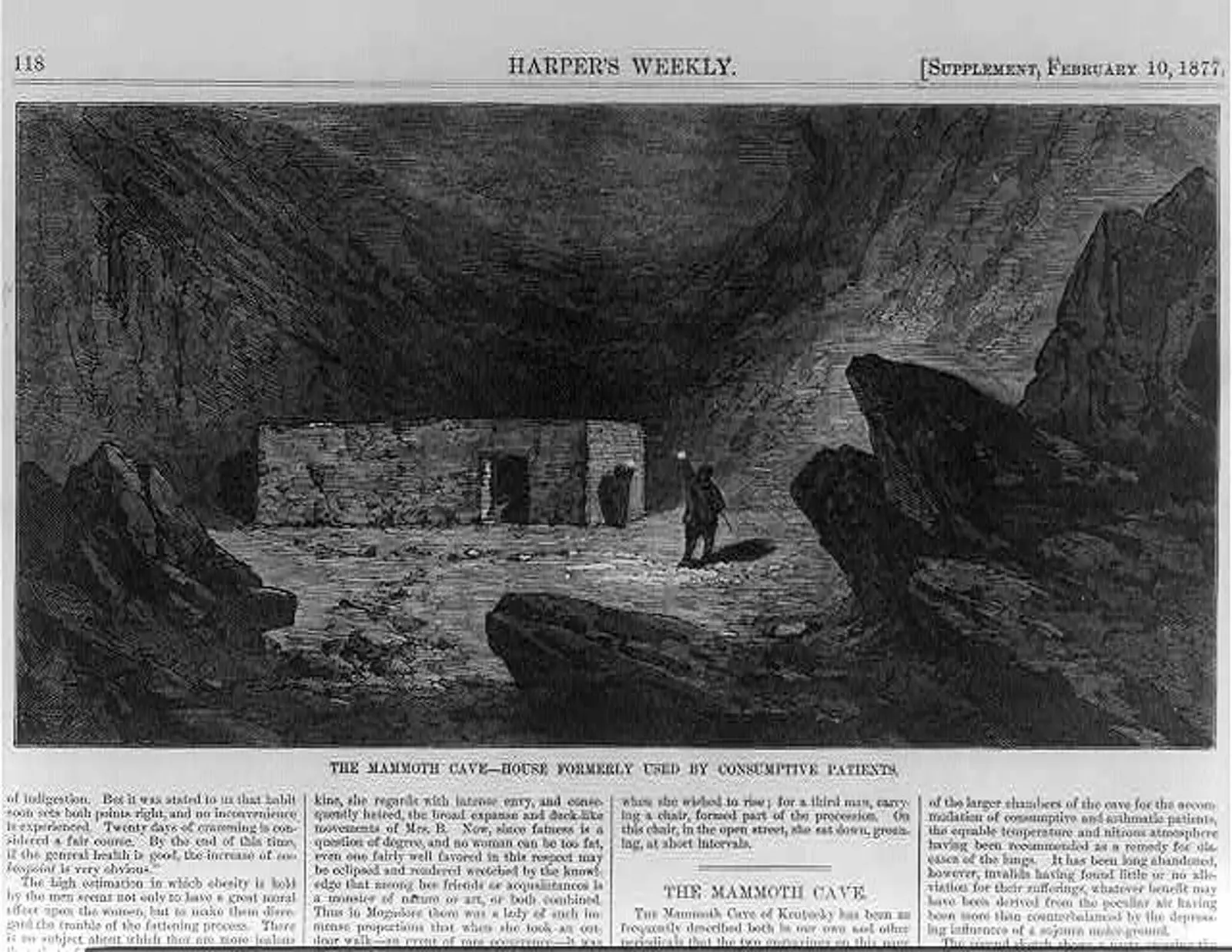
Cave · KY
Mammoth Cave National Park
Mammoth Cave National Park in Kentucky protects the world's longest known cave.
Documented AccountsTours onlyAlso reported: electrical, being touched
IllustrationTunnel · TN
Sensabaugh Tunnel
Sensabaugh Tunnel is a 1920s road tunnel under a railroad just outside Kingsport, named for landowner Edward Sensabaugh.
UnverifiedOutside onlyAlso reported: knocking, electrical
IllustrationFormer asylum · PA
Hill View Manor (former Lawrence County Home)
Hill View Manor opened in 1926 as Lawrence County's home for older and poor residents, became a county nursing home and closed in 2004.
Documented AccountsTours onlyAlso reported: knocking, electrical
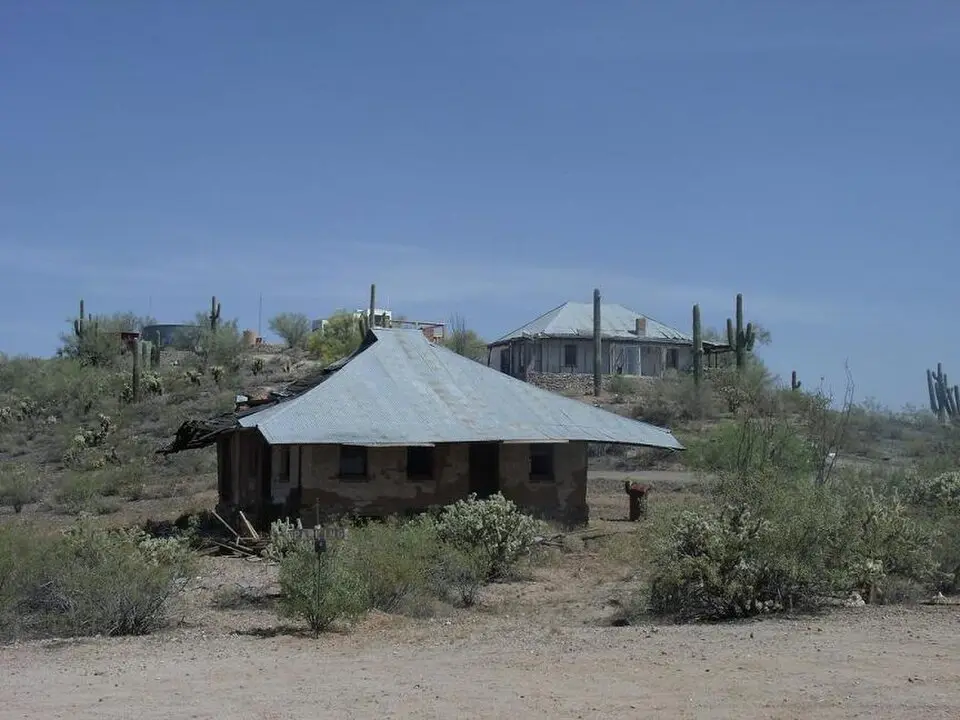
Ghost town · AZ
Vulture City
Vulture City is the abandoned town of the Vulture Mine near Wickenburg, Arizona's richest gold mine from the 1860s until 1942.
Documented AccountsOpen to visitors