← Savannah Wright Square
Wright Square
Tomochichi's grave and the legend of Alice Riley
Savannah, Georgia
Wright Square, laid out in 1733, is where Tomochichi, the Yamacraw leader who helped found Georgia, was buried in 1739.
What do we know about Wright Square?
Those letters do not say where she was hanged or that her body was displayed, both central to the ghost story. We found no named person who reports seeing her ghost. The haunting is folklore told by tour companies and history blogs.
Our rating of the reports about Wright Square: Unverified. A haunted reputation or legend, but no traceable account of an experience so far. The rating describes the evidence for the reports, not whether the place is haunted.
- Recorded legend
- 1
- Research sources
- 7
Reported experiences don’t establish a supernatural cause.
Read our evidence assessment →The hauntings
Accounts, encounters and stories associated with Wright Square.
What has been reported?
- Apparitions
Phenomena described in accounts associated with this location — not independently verified events.
Legends & disputed stories
Stories told about the place that the records don’t confirm.

- Legend
Savannah ghost lore calls Wright Square 'the hanging square' and says Alice Riley was hanged there, that her body hung for three days, and that her ghost appears in the square looking for her baby or following mothers with infants; another tale says Spanish moss will not grow on the square's trees because of her.[6][7]
What the research shows: No named witness; the place of execution and the three-day display are not in the colonial letters we read.
Before you go
Planning a visit?
Outside only
You can see it from public land; the inside isn’t open.
Access details ›
A public city square on Bull Street between State and York Streets, open to walk through. It holds Tomochichi's burial place and memorial boulder; please treat it as a grave site. Ghost tours stop here, but their stories are not evidence.
Entry
Cost not confirmed
Access last checked November 19, 2026. Confirm times and prices before you travel.
Approximate location, within about 1 km.
The history of Wright Square
Wright Square, laid out in 1733, is where Tomochichi, the Yamacraw leader who helped found Georgia, was buried in 1739. Ghost tours say Alice Riley, an Irish servant hanged in 1735 for murder, haunts the square looking for her baby. Colonial letters confirm her crime, her hanging and her child's death, but not that she was hanged here. No named witness has reported seeing her. The square is public.
- Established
- 1733
- Also known as
- Percival Square
Percival Square
Wright Square was laid out in 1733 and named Percival Square for John Percival, Earl of Egmont, one of the colony's founders. About 1763 it was renamed for royal governor James Wright. A courthouse has stood on its east side since early days.
Tomochichi's grave
Tomochichi, the mico of the Yamacraw, helped Oglethorpe's colonists found Savannah through his diplomacy. When he died on October 5, 1739, he had asked to be buried in the town he helped create. Oglethorpe gave him a military funeral, served as a pallbearer and had a pyramid of stones raised over his grave in the center of the square.
The Georgia Historical Society says the stones were gone by the 1830s, though the city's page says the early monument stood until the early 1880s; no one knows what became of it. In 1883 a monument to railroad founder William Washington Gordon was built at the center of the square, over a later mound. A historical marker says Tomochichi's remains are still beneath it, but that is not established. Gordon's daughter-in-law, Nellie Kinzie Gordon, pressed for a proper memorial, and in 1899 the Colonial Dames placed a granite boulder in his memory in the southeast corner.
Alice Riley in the colonial record
In March 1734 a farmer named William Wise was murdered, and two Irish servants, Alice Riley and Richard White, were convicted. Riley was sentenced in May 1734, but her hanging waited until after she gave birth. Edward Jenkins wrote to Oglethorpe that White escaped, was caught and taken straight to the gallows, and that Riley was hanged on January 19, 1735, still denying the murder. Recorder Thomas Christie wrote that her son, James, had since died. None of these letters says where she was hanged.
The legend
Ghost tours call Wright Square the hanging square. They say Riley was hanged here, that her body hung for three days, and that her ghost looks for her baby or follows mothers with infants. Another tale says Spanish moss will not grow on the square's trees because of her. No named witness reports seeing her.
Through the years
1733
Percival Square laid out
The square was laid out in 1733 as Percival Square, honoring John Percival, Earl of Egmont, a founder of the Georgia colony, and was renamed about 1763 for royal governor James Wright; with a courthouse on its east…
1734
William Wise murdered
William Wise, a farmer who arrived in 1733, was murdered on March 1, 1733/4 (1734 in today's calendar) by two Irish transport servants, Alice Riley and Richard White; the colony's recorder, Thomas Christie, described the killing to Oglethorpe in December 1734.[5]
1735
Alice Riley hanged
Riley was sentenced on May 11, 1734, but her hanging was delayed because she was pregnant. Edward Jenkins wrote on January 20, 1734/5 that White, who had escaped from prison, was recaptured and taken straight to the gallows,…
Read more ›
Riley was sentenced on May 11, 1734, but her hanging was delayed because she was pregnant. Edward Jenkins wrote on January 20, 1734/5 that White, who had escaped from prison, was recaptured and taken straight to the gallows, and that 'the woman' had been hanged the day before, denying the murder. Christie reported in March 1735 that she was hanged within six weeks of giving birth and that her child, James, had since died.[5]
Caveat: So Riley was hanged on January 19, 1734/5 (1735 in today's calendar). The letters we read do not say where the gallows stood, do not mention a gibbet, and leave unclear whether White was hanged before or after her.
1739
Tomochichi buried in the square
Tomochichi, mico (leader) of the Yamacraw, whose diplomacy helped the colonists found Savannah, died on October 5, 1739. At his wish to be buried in the town he helped create, Oglethorpe gave him a military funeral, acting as…
Read more ›
Tomochichi, mico (leader) of the Yamacraw, whose diplomacy helped the colonists found Savannah, died on October 5, 1739. At his wish to be buried in the town he helped create, Oglethorpe gave him a military funeral, acting as a pallbearer, and had him buried in the center of the square under a pyramid of stones.[1][3][2]
1883
Gordon monument built
In 1883 the mound then at the center of the square was removed and a monument to railroad founder William Washington Gordon was built there by the Central of Georgia Railroad; a letter to the editor at the…
Read more ›
In 1883 the mound then at the center of the square was removed and a monument to railroad founder William Washington Gordon was built there by the Central of Georgia Railroad; a letter to the editor at the time objected that Tomochichi lay buried in the square.[3][4][2]
Caveat: Whether Tomochichi's remains were disturbed or still lie beneath the monument is not established; a historical marker cited by the Savannah Morning News says they remain there.
1899
Tomochichi boulder dedicated
Gordon's daughter-in-law, Nellie Kinzie Gordon, pressed for a memorial to Tomochichi, and on April 21, 1899, the Georgia Society of the Colonial Dames of America dedicated a granite boulder from the Stone Mountain Company, with a bronze plaque,…
Read more ›
Gordon's daughter-in-law, Nellie Kinzie Gordon, pressed for a memorial to Tomochichi, and on April 21, 1899, the Georgia Society of the Colonial Dames of America dedicated a granite boulder from the Stone Mountain Company, with a bronze plaque, in the southeast corner of the square.[1][3][4]
The research conclusion

Why it has this rating
No named witness: the Alice Riley ghost is folklore. The colonial letters confirm she was hanged in January 1735 for the murder of William Wise, but do not say where, and mention no gibbet or display. Tomochichi's burial is history, not ghost material.
Read the full written assessment ›
The square's history and Tomochichi's burial are documented by the City of Savannah and the Georgia Historical Society. Alice Riley's case is unusually well recorded: letters to Oglethorpe and the Trustees, printed in the Colonial Records of Georgia, describe the murder of William Wise, her delayed hanging on January 19, 1735, and the death of her son James.
Those letters do not say where she was hanged or that her body was displayed, both central to the ghost story. We found no named person who reports seeing her ghost. The haunting is folklore told by tour companies and history blogs.
The sources behind the story
7 research references support this entry.

1City of SavannahFacilities: Wright Square Official or site history · Reference 01
Facilities: Wright Square. City of Savannah.
City page checked 2026-11-17: laid out 1733 as Percival Square, renamed for Gov. James Wright, long called Court House Square; Tomochichi buried there in 1739; his monument 'demolished in the early 1880s' for the Gordon monument; Colonial Dames boulder in the southeast. Location given as Bull and East York.
Accessed November 17, 2026.
2Georgia Historical SocietyWright Square (historical marker) Website · Reference 02
Wright Square (historical marker). Georgia Historical Society, 1958.
Text of the 1958 marker: laid out 1733 and named for John Percival, Earl of Egmont; renamed about 1763 for royal governor James Wright; Tomochichi buried with ceremony in the center of the square in 1739 with Oglethorpe as a pallbearer; Gordon monument completed 1883.
Accessed November 17, 2026.
3Georgia Historical SocietyTomochichi: Death and Burial Website · Reference 03
Tomochichi: Death and Burial. Georgia Historical Society.
Online exhibit from the state historical society's collections: Tomochichi's death on October 5, 1739, burial in the square under a pyramid of stones, the stones' disappearance by the 1830s (comparing a 1757 map and an 1837 painting, per SCAD's Robin B. Williams), the 1883 Gordon monument, Nellie Kinzie Gordon's advocacy and the 1899 boulder. Says it is unknown what happened to the original monument.
Accessed November 17, 2026.
4Savannah Morning News (via The Atlanta Journal-Constitution)That's so Savannah: Tomochichi's boulder a monument to a man integral to Georgia's founding Newspaper · Reference 04
Christopher Berinato, That's so Savannah: Tomochichi's boulder a monument to a man integral to Georgia's founding. Savannah Morning News (via The Atlanta Journal-Constitution), 2021-07-29.
Newspaper column: by 1883 only a dirt mound remained; the Gordon monument was built on it; a historical marker says Tomochichi's remains still lie beneath; the Colonial Dames got the boulder from the Stone Mountain Company and were billed one dollar; dedicated April 21, 1899. Read through a summarizing tool because the page text was scrambled.
Accessed November 17, 2026.
5University of Georgia Press (Manifold open edition)The Colonial Records of the State of Georgia, vol. 20: Original Papers, Correspondence to the Trustees, James Oglethorpe, and Others, 1732-1735 Archive or collection · Reference 05
The Colonial Records of the State of Georgia, vol. 20: Original Papers, Correspondence to the Trustees, James Oglethorpe, and Others, 1732-1735. University of Georgia Press (Manifold open edition), 1982.
Edited transcriptions of letters in the British Colonial Office records (C.O. 5/636) and Egmont papers. We read: Thomas Christie to Oglethorpe, December 14, 1734 (manner of William Wise's murder); Edward Jenkins to Oglethorpe, January 20, 1734/5 (White's recapture and hanging; 'the woman was Hanged yesterday'); Christie to the Trustees, March 19, 1734/5 (Riley hanged within six weeks of giving birth, sentence of May 11, child since dead); the editors' footnote 82 and index. None of these letters names the place of execution.
Accessed November 17, 2026.
6Executed Today1735: Alice Riley, Savannah ghost Website · Reference 06
1735: Alice Riley, Savannah ghost. Executed Today, 2017-01-19.
History blog that tells the legend: Riley hanged in Wright Square, her body left on the gibbet three days, her ghost looking for her child. The writer himself warns that much of the Riley story is 'embroidery and conjecture'. Used only as a place the legend is published.
Accessed November 17, 2026.
7Ghost City ToursThe Ghost of Alice Riley Website · Reference 07
Tim Nealon, The Ghost of Alice Riley. Ghost City Tours.
Ghost-tour company page (undated, 2026 footer). Quotes the Christie and Jenkins letters, links the story to Wright Square as 'The Hanging Square' without saying the hanging happened there, and repeats unattributed tales that Riley's spirit follows mothers with babies and that Spanish moss will not grow in the square. No named witnesses.
Accessed November 17, 2026.
More haunted places
Explore nearby
Historic house
Davenport House Museum
Savannah, Georgia · under 1 mile away · Tours only
Historic house
Owens-Thomas House & Slave Quarters
Savannah, Georgia · under 1 mile away · Tours only
Cemetery
Colonial Park Cemetery
Savannah, Georgia · under 1 mile away · Outside only
Hotel
The Marshall House
Savannah, Georgia · under 1 mile away · Open to visitors
Similar places
Also a cemetery
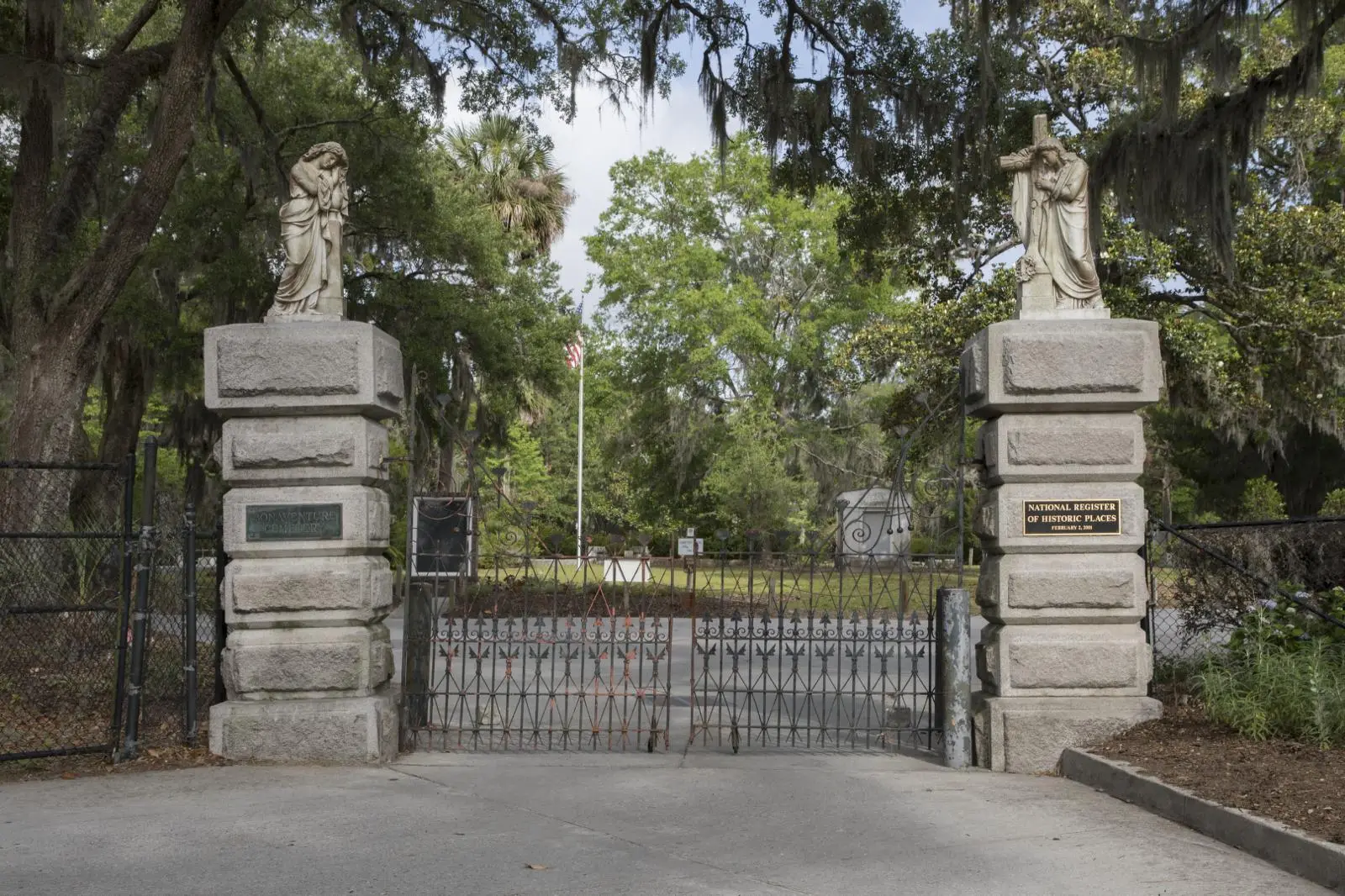
Cemetery · Savannah, GA
Bonaventure Cemetery
Bonaventure is Savannah's largest city cemetery, laid out from 1846 on the former Tattnall family plantation.
UnverifiedOutside onlyAlso a cemetery
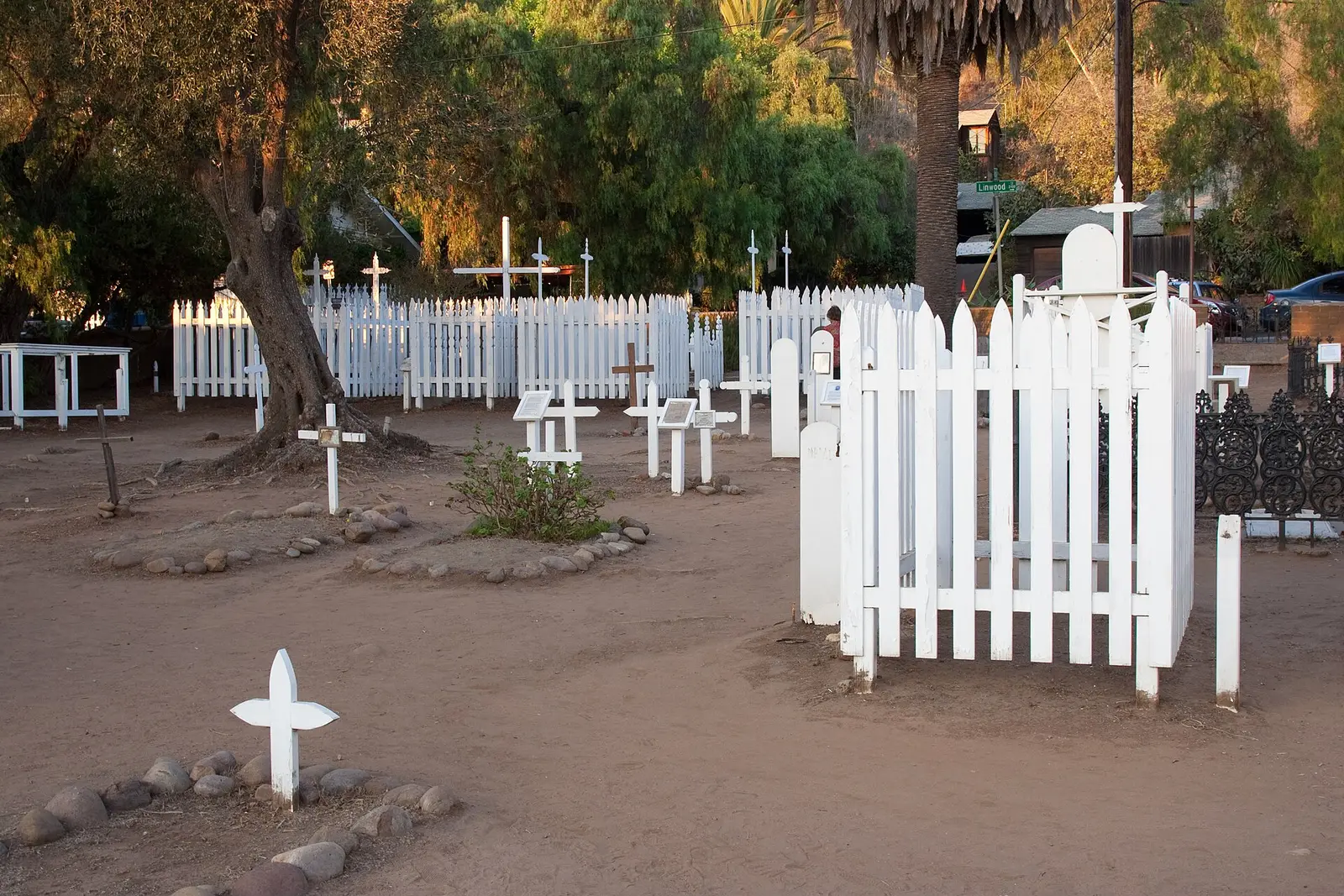
Cemetery · San Diego, CA
El Campo Santo Cemetery
El Campo Santo is Old Town San Diego's Catholic cemetery, opened in 1849, where about 477 people were buried, including many Native Americans and Yankee Jim Robinson.
UnverifiedOutside onlyAlso a cemetery
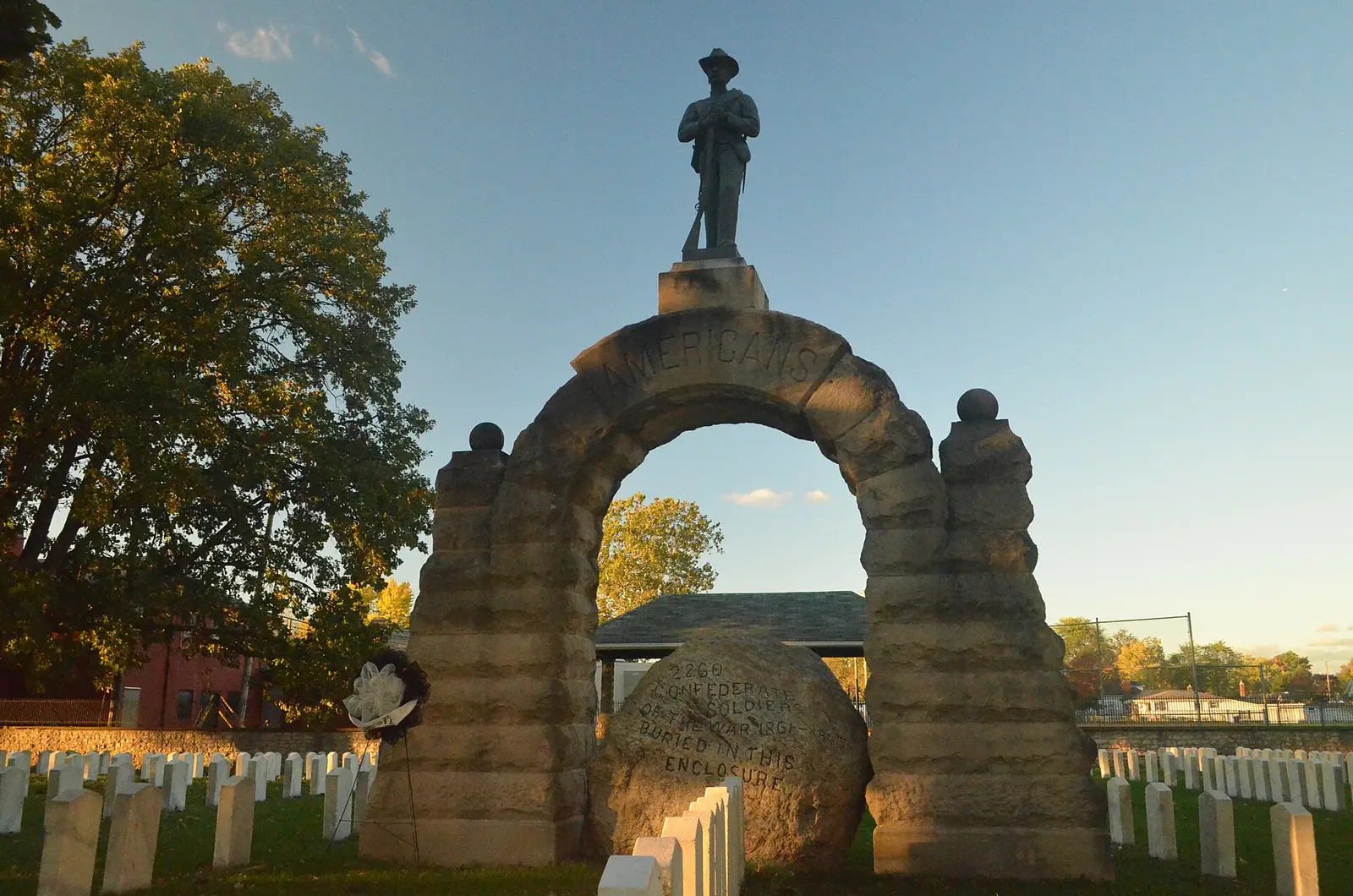
Cemetery · Columbus, OH
Camp Chase Confederate Cemetery
Camp Chase Confederate Cemetery holds more than 2,000 Confederate prisoners who died at a Union prison camp in Columbus between 1861 and 1865.
Documented AccountsOutside onlyAlso a cemetery
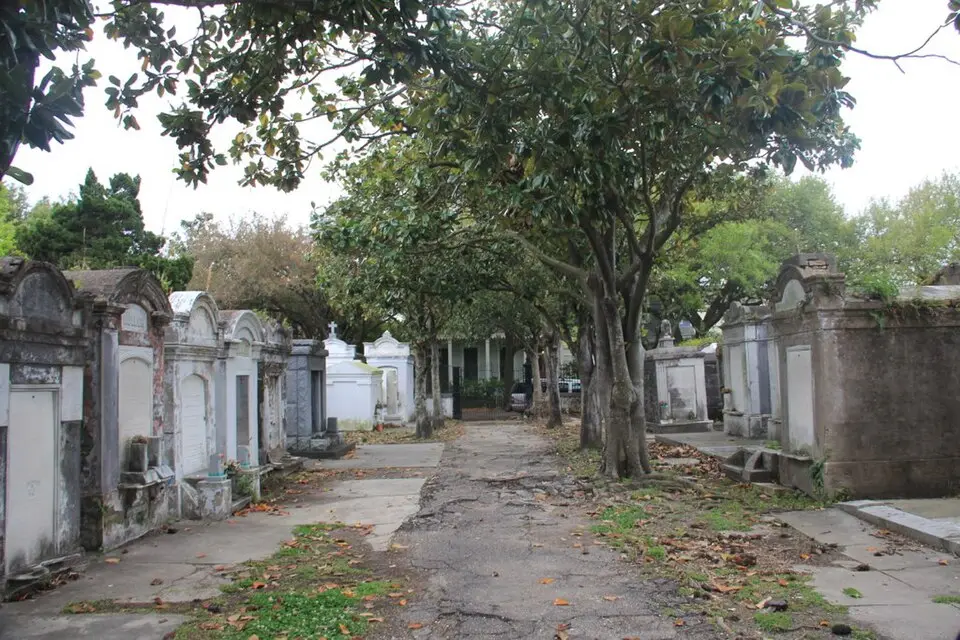
Cemetery · New Orleans, LA
Lafayette Cemetery No. 1
Lafayette Cemetery No. 1 is an above-ground cemetery in the Garden District, founded in 1833, where many yellow fever victims were buried.
UnverifiedTours only