← Denver Riverside Cemetery
Riverside Cemetery
Denver, Colorado
Riverside Cemetery, founded in 1876 on the South Platte, is Denver's oldest surviving cemetery, with more than 66,000 burials including Clara Brown, John Evans and people moved from the old City Cemetery in 1893.
What do we know about Riverside Cemetery?
The ghost material is thin. The only story we could trace is a 2012 public radio report in which a volunteer tour guide, partly joking, said a longtime employee had heard babies crying on certain nights and that people often see a woman in a white dress. No witness is named and no date is given, so these are unverified reports. The cemetery's place on 'spooky' lists rests mostly on its age, its neglected grounds and its night tours.
Our rating of the reports about Riverside Cemetery: Unverified. A haunted reputation or legend, but no traceable account of an experience so far. The rating describes the evidence for the reports, not whether the place is haunted.
- Reported account
- 1
- Counted for the rating
- 0
- Research sources
- 4
Counted for the rating: independent accounts we could trace to a witness. Retellings of the same story count once, and staff passing on what visitors said aren’t counted. How we count
Reported experiences don’t establish a supernatural cause.
Read our evidence assessment →The hauntings
Accounts, encounters and stories associated with Riverside Cemetery.
What has been reported?
- Apparitions
- Voices
Phenomena described in accounts associated with this location — not independently verified events.
Reported experiences
1 published and reported account, each assessed by its source.
Account 01 · October 29, 2012
KUNC, 2012
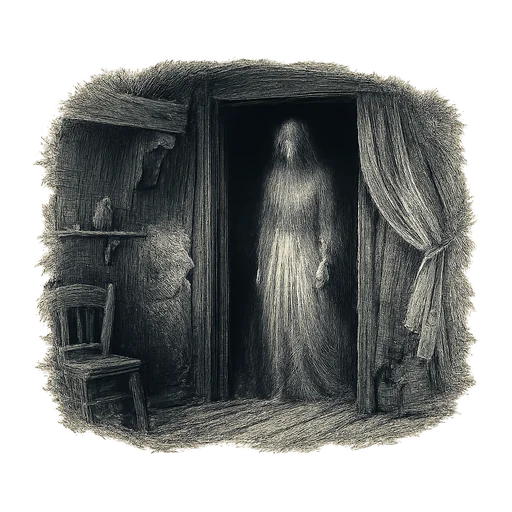
On a 2012 night tour, a volunteer guide told public radio that a longtime cemetery employee has heard babies crying on certain nights and that people often see a woman in a white dress.[3]
- Apparitions
- Voices
No traceable witnessNote: Second-hand from a tour guide speaking partly in jest; the employee is not named and no dates are given.
Read full account ›
On a 2012 night tour, a volunteer guide told public radio that a longtime cemetery employee has heard babies crying on certain nights and that people often see a woman in a white dress.[3]
Legends & disputed stories
Stories told about the place that the records don’t confirm.

- Legend
Tour guides tell of an expensive gravestone with no record of a sale and no one buried beneath it, which one guide linked to amusement-park owner Mary Elitch and her ostrich.[3]
What the research shows: A guide's story, not a ghost sighting; we found no record to confirm it.
Before you go

Planning a visit?
Outside only
You can see it from public land; the inside isn’t open.
Access details ›
A historic cemetery owned by the Fairmount Cemetery Company, with preservation work and tours by the nonprofit Fairmount Heritage Foundation. It is a burial ground with more than 66,000 people buried there; please visit respectfully and keep to the drives and paths. We could not confirm current hours or fees on the foundation's site; contact the foundation before visiting.
Entry
Cost not confirmed
Access last checked November 17, 2026. Confirm times and prices before you travel.
Approximate location, within about 1 km.
The history of Riverside Cemetery
Riverside Cemetery, founded in 1876 on the South Platte, is Denver's oldest surviving cemetery, with more than 66,000 burials including Clara Brown, John Evans and people moved from the old City Cemetery in 1893. Its ghost lore is slight: a volunteer guide said in 2012 that a longtime employee has heard babies crying and that people see a woman in white. Nobody traceable reports an experience. It is open as a historic cemetery.
- Established
- 1876
- Also known as
- Historic Riverside Cemetery
A rural cemetery for Denver
Denver's first cemetery, Mount Prospect, had a poor reputation by the 1860s. In response, twenty prominent citizens formed the Riverside Cemetery Association on April 1, 1876, and bought 160 acres on the east bank of the South Platte River, four miles northeast of the State Capitol. Landscape engineer Harvey C. Lowrie laid it out in the 'rural cemetery' style, modeled on Mount Auburn near Boston, with lawns, trees and winding drives. The association bought water rights in 1879, and by 1885 the Rocky Mountain News ranked it with any cemetery in the East.
Decline and Fairmount
From 1881 railroads crossed the grounds, and meatpacking and other industry grew around them. When the Fairmount Cemetery Company opened a new cemetery in a more desirable part of town in 1890, many families moved their relatives there. Fairmount took over Riverside on January 10, 1900. The loss of the cemetery's historic water rights in 1981 left much of the landscape dry.
The people buried here
Riverside holds more than 66,000 burials and more than 800 Civil War veterans in its Grand Army of the Republic section. They include Clara Brown, born into slavery in Virginia around 1800, freed in 1857, who came to Colorado in 1859, ran a laundry in Central City and used her earnings to help other formerly enslaved people come west; John Evans, who founded what became the University of Denver; Augusta Tabor; and Negro Leagues player Oliver Marcelle. Silas Soule, the Army officer who testified against John Chivington over the Sand Creek Massacre and was murdered in Denver in 1865, is buried in the veterans' section.
Reburials from City Cemetery
In 1893 Denver hired a contractor to move unclaimed remains from City Cemetery, now Cheesman Park, to Riverside. Their reburial place went unrecorded; in 1989 a wetlands project uncovered closely spaced plain coffins that may be theirs, and the cemetery boundary was extended to include them.
Through the years
1859
1859
Clara Brown, born into slavery in Virginia around 1800 and freed in 1857, came to Colorado in 1859, ran a laundry in Central City, invested in mining claims and used her earnings to help other formerly enslaved people…
Read more ›
Clara Brown, born into slavery in Virginia around 1800 and freed in 1857, came to Colorado in 1859, ran a laundry in Central City, invested in mining claims and used her earnings to help other formerly enslaved people come west; she is buried at Riverside, as are John Evans, Augusta Tabor and Negro Leagues player Oliver Marcelle.[1]
1865
1865
Silas Soule, the Army officer who testified against Col. John Chivington over the 1864 Sand Creek Massacre, was murdered in Denver the following year and is buried in Riverside's veterans' section.[4]
1876
Riverside Cemetery founded
Twenty Denver citizens formed the Riverside Cemetery Association on April 1, 1876, in response to the poor state of the city's first cemetery, and opened Riverside on 160 acres beside the South Platte River, four miles northeast of the State Capitol.[1]
1879
1879
Landscape engineer Harvey C. Lowrie laid Riverside out as a 'rural cemetery', modeled on Mount Auburn near Boston, with lawns, trees and winding drives; it was the first Denver-area cemetery designed this way. The association bought water rights in 1879.[1]
1893
Remains moved from City Cemetery
In 1893 Denver hired a contractor to move unclaimed remains from the old City Cemetery, now Cheesman Park, to Riverside; the reburial site was not recorded. In 1989 a wetlands project beside the cemetery uncovered closely spaced plain…
Read more ›
In 1893 Denver hired a contractor to move unclaimed remains from the old City Cemetery, now Cheesman Park, to Riverside; the reburial site was not recorded. In 1989 a wetlands project beside the cemetery uncovered closely spaced plain coffins that may be those reburials, and the cemetery's boundary was extended to include them.[2][1]
Caveat: The nomination calls the contractor 'E.F. McGovern'; the Denver Public Library gives E. P. McGovern.
1900
Fairmount takes over
From December 1881 railroads crossed Riverside's land and industry grew around it; after Fairmount Cemetery was organized in 1890 many families moved their dead there, and the Fairmount Cemetery Company took over Riverside on January 10, 1900.[1]
1981
Water rights lost
The loss of the cemetery's 1879 water rights in 1981 left it unable to irrigate its historic landscape properly.[1]
The research conclusion

Why it has this rating
A thin reputation: in 2012 a volunteer guide, partly joking, relayed an unnamed employee hearing babies and talk of a woman in white. No traceable account.
Read the full written assessment ›
Riverside's history is documented in detail by its 1994 National Register nomination, including its link to the failed 1893 removal of graves from Denver's City Cemetery (now Cheesman Park).
The ghost material is thin. The only story we could trace is a 2012 public radio report in which a volunteer tour guide, partly joking, said a longtime employee had heard babies crying on certain nights and that people often see a woman in a white dress. No witness is named and no date is given, so these are unverified reports. The cemetery's place on 'spooky' lists rests mostly on its age, its neglected grounds and its night tours.
The sources behind the story
4 research references support this entry.

1National Park Service (NPGallery)National Register of Historic Places Registration Form: Riverside Cemetery (ref. 94001253) Register or nomination · Reference 01
Fairmount Cemetery Company, National Register of Historic Places Registration Form: Riverside Cemetery (ref. 94001253). National Park Service (NPGallery), 1994-10-28.
Nomination prepared in March 1994 by the cemetery's owner, read by OCR. Detailed on founding (April 1, 1876), Lowrie's design, water rights, railroads and industry, the 1900 Fairmount takeover, notable burials (Clara Brown, Evans, Tabor, Marcelle and others), the GAR section, the 1893 reburials and the 1989 discovery, and the 1981 loss of water rights. Written by an interested party; nothing about ghosts.
Accessed November 17, 2026.
2Denver Public Library Special Collections and ArchivesCheesman Park's Past Life as a Cemetery Archive or collection · Reference 02
Katie Rudolph, Cheesman Park's Past Life as a Cemetery. Denver Public Library Special Collections and Archives, 2015-10-05.
Archivist's history of the old City Cemetery: relocation of graves to Riverside began March 14, 1893, under contractor E. P. McGovern, who was dismissed on March 21.
Accessed November 17, 2026.
3KUNC (public radio)Preserving Riverside, Denver's Historic Pioneer Cemetery Television or radio · Reference 03
Nathan Heffel, Preserving Riverside, Denver's Historic Pioneer Cemetery. KUNC (public radio), 2012-10-29.
Public radio report on a night tour run by the Fairmount Heritage Foundation. A volunteer guide jokes about a 'mean nasty ghost', says a longtime employee has heard babies crying on certain nights, and that people often see a woman in a white dress; another guide tells a legend about an unexplained gravestone. Second-hand, from tour guides; no witness named.
Accessed November 17, 2026.
45280 MagazineThe Spookiest Graveyards in Colorado Magazine · Reference 04
Robert Sanchez, The Spookiest Graveyards in Colorado. 5280 Magazine, 2023-10-12.
Halloween feature that calls Riverside Denver's oldest surviving cemetery and lists it for its age and notable graves, not for ghost reports. Source for Silas Soule's testimony about Sand Creek, his murder in Denver the next year and his burial in the veterans' section, and for Walter Springs and Oliver Marcelle. Notes that Marcelle's nickname 'The Ghost' is a baseball nickname.
Accessed November 17, 2026.
More haunted places
Explore nearby
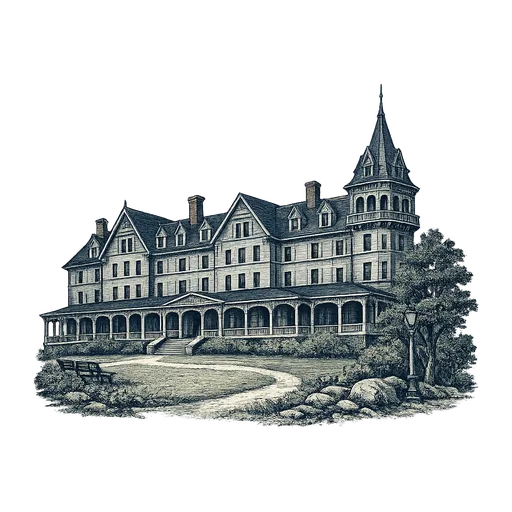
Hotel
The Brown Palace Hotel and Spa
Denver, Colorado · 3.5 miles away · Open to visitors
Historic house
Molly Brown House Museum
Denver, Colorado · 3.6 miles away · Open to visitors
Cemetery
Cheesman Park
Denver, Colorado · 4.2 miles away · Outside only
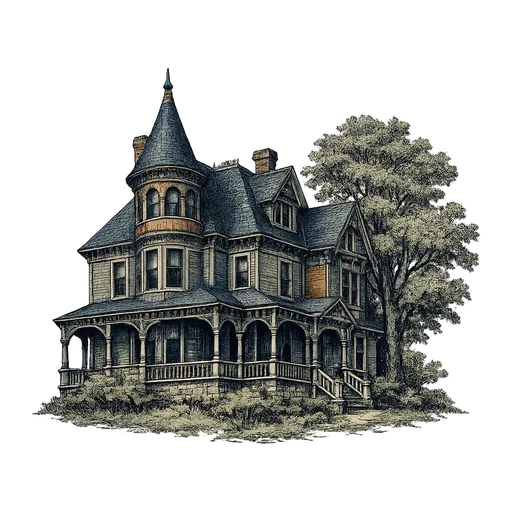
Historic house
Croke-Patterson-Campbell Mansion
Denver, Colorado · 4.3 miles away · Outside only
Similar places
Also a cemetery
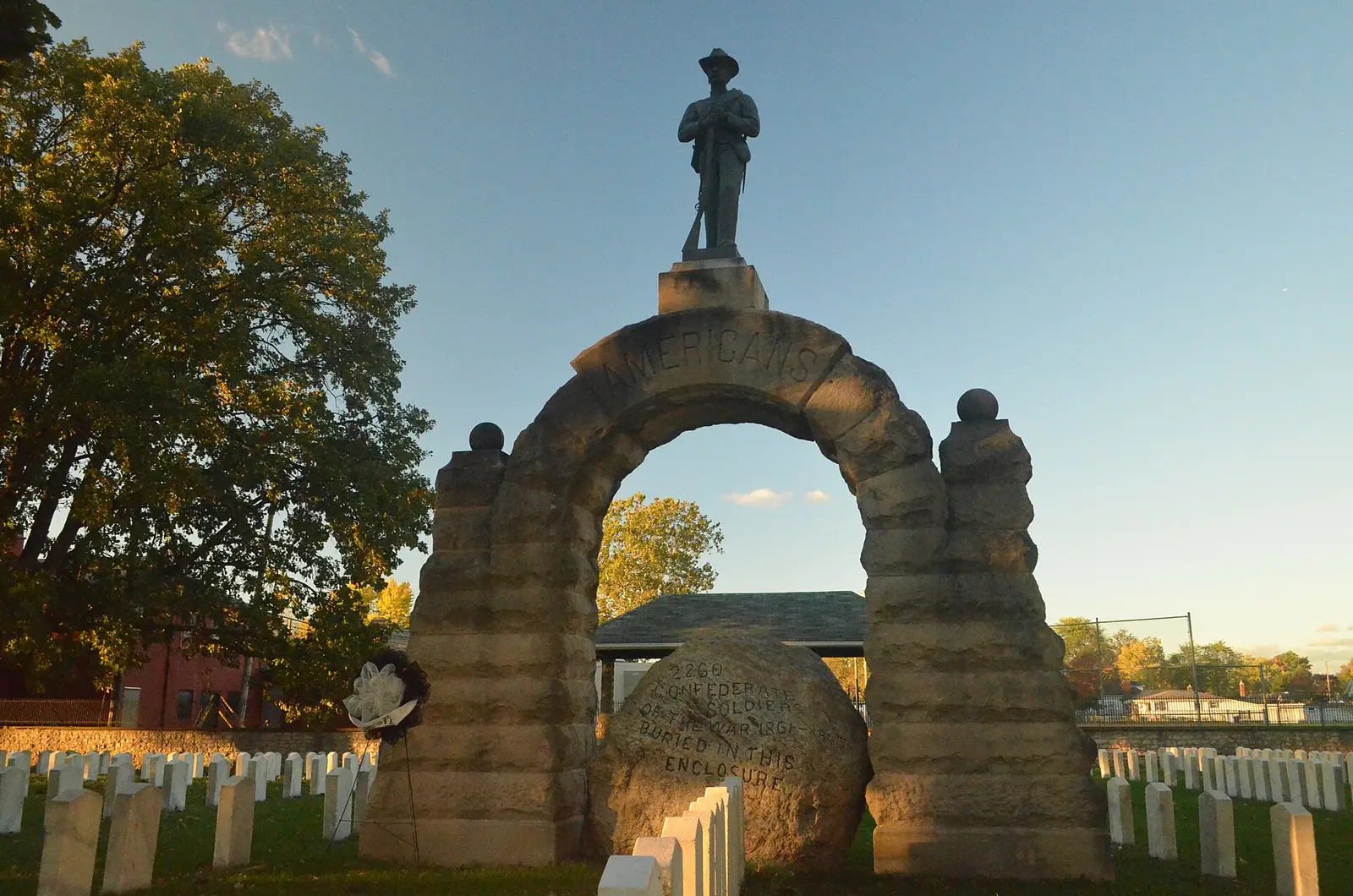
Cemetery · Columbus, OH
Camp Chase Confederate Cemetery
Camp Chase Confederate Cemetery holds more than 2,000 Confederate prisoners who died at a Union prison camp in Columbus between 1861 and 1865.
Documented AccountsOutside onlyAlso a cemetery
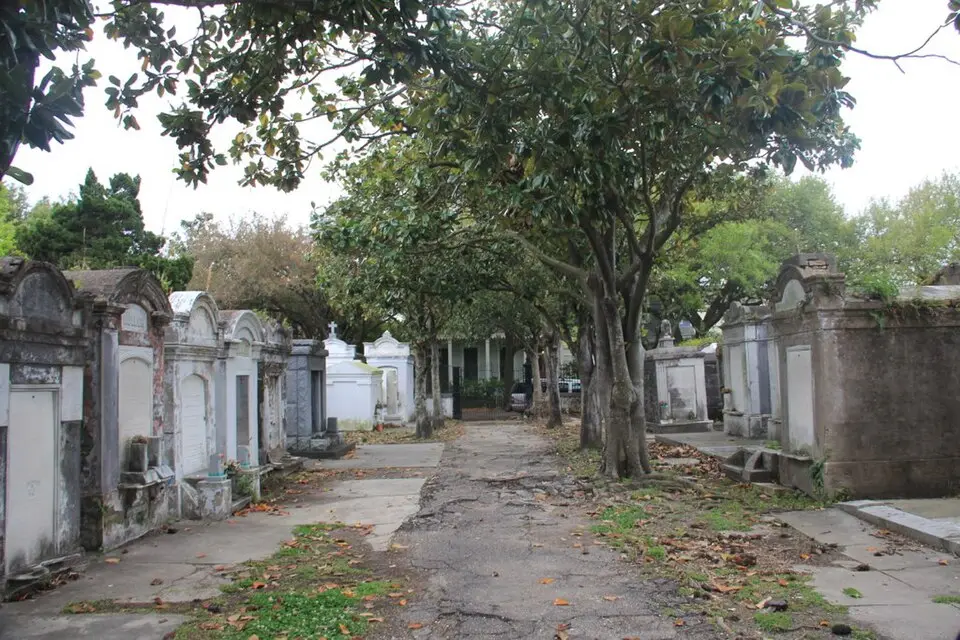
Cemetery · New Orleans, LA
Lafayette Cemetery No. 1
Lafayette Cemetery No. 1 is an above-ground cemetery in the Garden District, founded in 1833, where many yellow fever victims were buried.
UnverifiedTours onlyAlso a cemetery
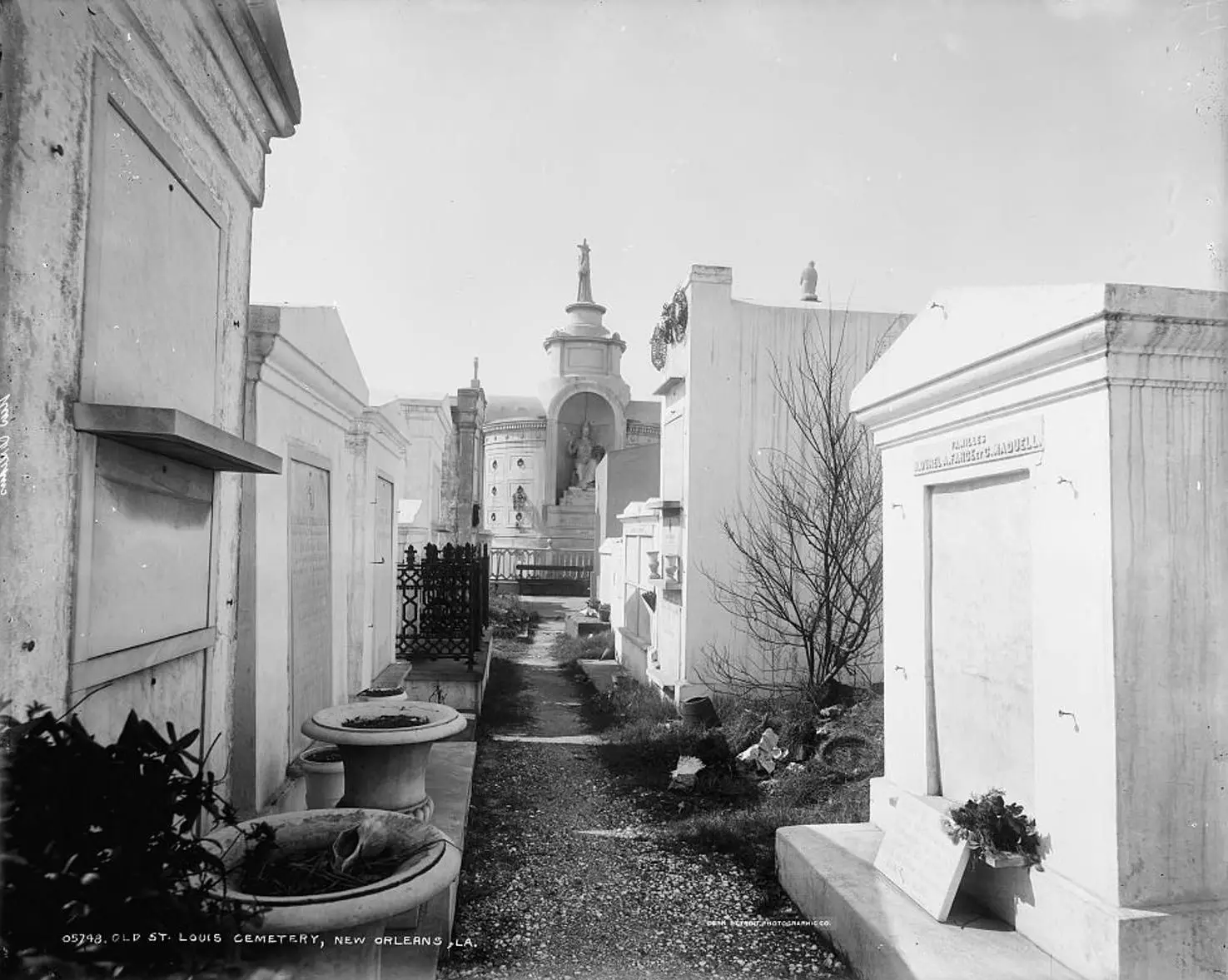
Cemetery · New Orleans, LA
St. Louis Cemetery No. 1
New Orleans' oldest surviving cemetery, founded in 1789 and known for its above-ground tombs.
UnverifiedTours onlyAlso a cemetery
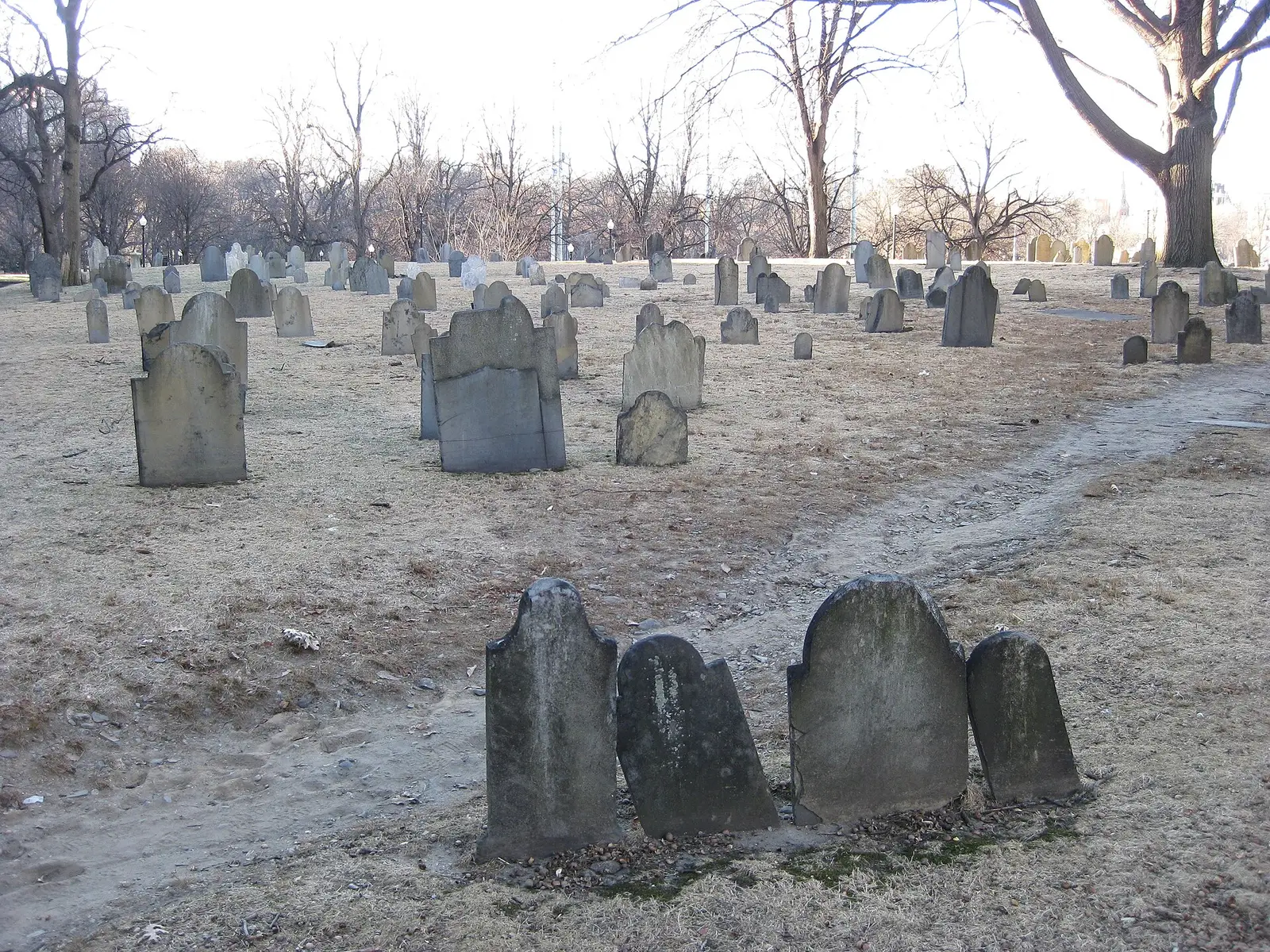
Cemetery · Boston, MA
Boston Common and the Central Burying Ground
The Central Burying Ground is the 1756 graveyard on the Boylston Street edge of Boston Common, the city's oldest park and once a place of public hangings.
UnverifiedOutside only