← Georgia Fort Pulaski
Fort Pulaski
National Monument
Georgia
Fort Pulaski, on Cockspur Island near Savannah, is a brick fort finished in 1847 and breached by Union rifled cannon in 1862.
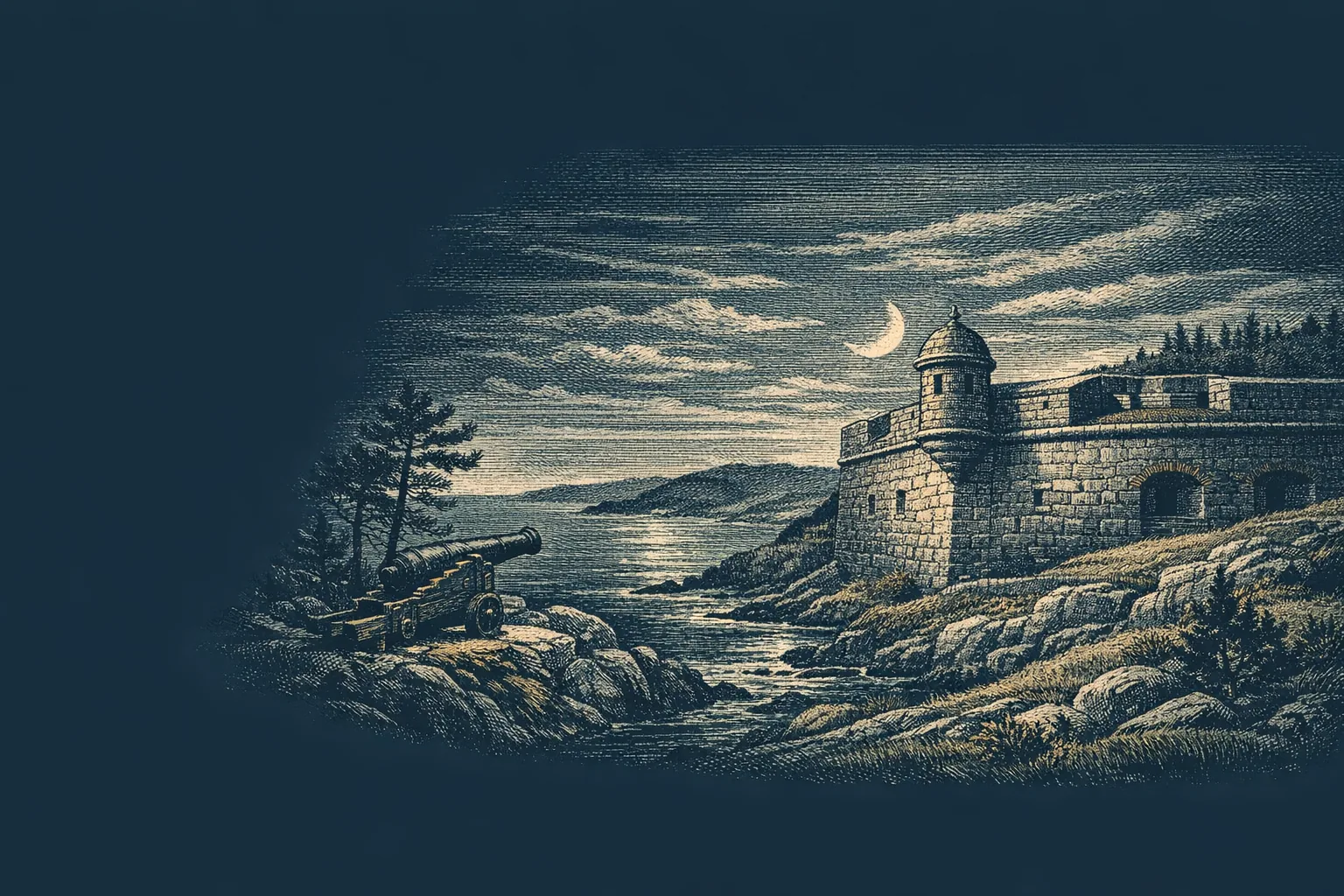
Decorative engraving of a fort.
What do we know about Fort Pulaski?
The ghost stories are thin. The best known, about extras from the film Glory, is retold in a published ghost anthology and on paranormal websites, but none names the extras or gives a date. Other reports of screams, footsteps and phantom gunfire come from a paranormal website citing unnamed visitors. None of this is a traceable account.

Our rating of the reports about Fort Pulaski: Unverified. A haunted reputation or legend, but no traceable account of an experience so far. The rating describes the evidence for the reports, not whether the place is haunted.
- Reported accounts
- 2
- Counted for the rating
- 0
- Research sources
- 7
Counted for the rating: independent accounts we could trace to a witness. Retellings of the same story count once, and staff passing on what visitors said aren’t counted. How we count
Reported experiences don’t establish a supernatural cause.
Read our evidence assessment →The hauntings
Accounts, encounters and stories associated with Fort Pulaski.

What has been reported?
- Apparitions
- Voices
- Footsteps
- Shadow figures

Phenomena described in accounts associated with this location — not independently verified events.
Reported experiences
2 published and reported accounts, each assessed by its source.
Account 01 · August 18, 2021
The Atlanta Journal-Constitution, 2021
A widely retold story says that extras from the film Glory, wearing Confederate uniforms, toured the fort between shoots and were scolded by a figure in Confederate uniform for not saluting, who then vanished; it appears in Alan Brown's ghost anthology Ghostly Tales of the Haunted…
- Apparitions
- Voices
No traceable witnessNote: No version we found names the extras, the date or where the story was first told.
Read full account ›
Account 02
HauntedUS
A paranormal website says unnamed visitors and guides report screams and cries, shadowy figures, footsteps on the stairs and ramparts, phantom gunfire and cannon, and the sound of a baseball game in the empty parade ground, with heavy feelings around the casemates where prisoners were held.[7]
- Voices
- Footsteps
- Shadow figures
No traceable witnessNote: No named witness or date; feelings are not counted as accounts. Cannons are sometimes fired at park events.
Read full account ›
A paranormal website says unnamed visitors and guides report screams and cries, shadowy figures, footsteps on the stairs and ramparts, phantom gunfire and cannon, and the sound of a baseball game in the empty parade ground, with heavy feelings around the casemates where prisoners were held.[7]
Before you go

Planning a visit?
Open to visitors
Parts of the inside are open to the public.
Access details ›
A National Park Service site on Cockspur Island, reached from US 80 east of Savannah. An entrance pass is required (the park does not accept cash), with free entrance days through the year. The fort is open daily except some holidays; check the official site for hours. The park does not run ghost tours, and visiting after hours is not allowed.
Entry
Paid entry
Access last checked November 17, 2026. Confirm times and prices before you travel.
The history of Fort Pulaski
Fort Pulaski, on Cockspur Island near Savannah, is a brick fort finished in 1847 and breached by Union rifled cannon in 1862. In 1864–65 it held Confederate officers known as the Immortal Six Hundred, 13 of whom died of disease. Ghost stories, including film extras scolded by a vanishing Confederate officer, are told without named witnesses. It is a National Park Service site with an entrance fee.
- Established
- 1829–1847
A fort on Cockspur Island
Fort Pulaski was built between 1829 and 1847 on marshy Cockspur Island, at the mouth of the Savannah River. It was designed by the French military engineer Simon Bernard and named for Casimir Pulaski, who died in the 1779 siege of Savannah. A young Lieutenant Robert E. Lee worked on its drainage early on; the National Park Service says the fort took about 25 million bricks and 18 years to build.
Seizure and siege
On January 3, 1861, Georgia militia seized the unfinished fort, and enslaved people taken from nearby rice plantations were made to help clear its moat and mount its guns. In April 1862 Union Captain Quincy Gillmore opened fire from batteries on Tybee Island, about a mile away. His new rifled cannon bored through the walls, and after about 30 hours Colonel Charles Olmstead surrendered rather than risk the main powder magazine exploding. The result showed that brick forts could no longer stand against rifled artillery.
The Immortal Six Hundred
In 1864 Union commanders held 600 Confederate officers under fire on Morris Island, South Carolina, in retaliation for Union officers held under fire in Charleston. On October 23, 1864, about 540 of them were marched into Fort Pulaski's southeastern casemates. That winter they were put on a retaliation ration with no meat, fruit or vegetables, little fuel and no blankets, and scurvy and dysentery spread. Thirteen men died of disease before a surgeon restored full rations in January 1865. They lie in unmarked graves in a small cemetery just outside the fort. The survivors were shipped to Fort Delaware in March 1865.
Stories told since
A story retold in Alan Brown's ghost anthology and on paranormal websites says that extras from the film Glory, wearing Confederate uniforms, were scolded by an officer for not saluting him, who then vanished. No version names the extras or dates the event. A paranormal website says unnamed visitors have heard screams, footsteps and gunfire, and seen shadowy figures near the casemates where prisoners were held.
Through the years
1829–1847
Fort built
Fort Pulaski was built between 1829 and 1847 on Cockspur Island to guard the river approaches to Savannah, to a design by French military engineer Simon Bernard; it was named for Casimir Pulaski, who died in the 1779…
1862
Siege and surrender
On April 10–11, 1862, Union batteries on Tybee Island under Captain Quincy A. Gillmore, including new rifled cannon, breached the fort's southeast angle from about a mile away; Colonel Charles H. Olmstead surrendered after about 30 hours to…
Read more ›
On April 10–11, 1862, Union batteries on Tybee Island under Captain Quincy A. Gillmore, including new rifled cannon, breached the fort's southeast angle from about a mile away; Colonel Charles H. Olmstead surrendered after about 30 hours to save the garrison from the threatened main powder magazine. The siege showed that masonry forts could not withstand rifled artillery.[1][2][3]
1864
Immortal Six Hundred arrive
In 1864 Union Major General John G. Foster confined 600 Confederate officers under Confederate fire on Morris Island, South Carolina, in retaliation for Union officers held under fire in Charleston; they became known as the Immortal Six Hundred.…
Read more ›
In 1864 Union Major General John G. Foster confined 600 Confederate officers under Confederate fire on Morris Island, South Carolina, in retaliation for Union officers held under fire in Charleston; they became known as the Immortal Six Hundred. On October 23, 1864, about 540 of them were marched into Fort Pulaski's southeastern casemates, guarded by the 157th New York Infantry, and nearly 200 were moved to Hilton Head in November.[4][3]
1864
Retaliation ration
From December 1864, for a little over a month, the prisoners were held on a retaliation ration with no meat, fruit or vegetables, no blankets and little fuel; scurvy, diarrhea and dysentery spread, and 13 men died of…
Read more ›
From December 1864, for a little over a month, the prisoners were held on a retaliation ration with no meat, fruit or vegetables, no blankets and little fuel; scurvy, diarrhea and dysentery spread, and 13 men died of disease before a surgeon ordered full rations in January 1865. The survivors were shipped to Fort Delaware in early March 1865.[4]
The research conclusion

Why it has this rating
The ghost stories, including film extras scolded by a vanishing officer, name no witnesses or dates. The Immortal Six Hundred and the impressment of enslaved laborers are documented history and are not ghost material.
Read the full written assessment ›
The fort's history is unusually well recorded: the National Park Service, its National Register nomination and the Georgia encyclopedia agree on its construction, the 1862 siege and the imprisonment of the Immortal Six Hundred, whose 13 dead lie in unmarked graves by the fort.
The ghost stories are thin. The best known, about extras from the film Glory, is retold in a published ghost anthology and on paranormal websites, but none names the extras or gives a date. Other reports of screams, footsteps and phantom gunfire come from a paranormal website citing unnamed visitors. None of this is a traceable account.
The sources behind the story
7 research references support this entry.

1New Georgia Encyclopedia (Georgia Humanities)Fort Pulaski Website · Reference 01
David H. McGee, Fort Pulaski. New Georgia Encyclopedia (Georgia Humanities), 2002-08-28.
Scholarly state encyclopedia entry (last edited 2017). Source for Lee's preliminary work, Mansfield's command of construction from 1831, the January 1861 occupation with impressed enslaved labor, Olmstead taking command in December 1861, and the 1924 and 1933 dates. Says nothing about the Immortal Six Hundred or ghosts.
Accessed November 17, 2026.
2National Park Service (NPGallery)National Register of Historic Places Inventory–Nomination Form for Federal Properties: Fort Pulaski National Monument Register or nomination · Reference 02
National Register of Historic Places Inventory–Nomination Form for Federal Properties: Fort Pulaski National Monument. National Park Service (NPGallery).
Scanned form (survey dated 1972), read by OCR. Gives construction 1829–1847, garrison dates, the significance of the 1862 siege for military engineering, and latitude 32°01'39" N, longitude 80°53'28" W for the fort, used for the map point. Nothing on ghosts or on the prisoners.
Accessed November 17, 2026.
3National Park Service (archived at npshistory.com)Fort Pulaski National Monument (official park brochure) Official or site history · Reference 03
Fort Pulaski National Monument (official park brochure). National Park Service (archived at npshistory.com), 2025.
Official unigrid brochure (GPO 2025 printing; text last updated 2011). Covers Bernard's design, naming, construction from 1829 ($1 million, 25 million bricks, 18 years), the January 3, 1861 seizure, Gillmore's 11 batteries and rifled cannon, Olmstead's surrender after about 30 hours, Lee's work on the drainage, the prison in the casemates in winter 1864, abandonment after 1880, national monument 1924 and restoration from about 1933.
Accessed November 17, 2026.
4National Park ServiceImmortal 600 Official or site history · Reference 04
Immortal 600. National Park Service, 2024-12-29.
NPS article (date is last updated). Authoritative account of the retaliation on Morris Island, the October 23, 1864 transfer of about 540 officers, the 157th New York guards, the retaliation ration, the 13 deaths from disease, the March 1865 move to Fort Delaware and release by June 1865.
Accessed November 17, 2026.
5National Park ServiceThe Cemetery at Fort Pulaski Official or site history · Reference 05
The Cemetery at Fort Pulaski. National Park Service.
NPS place page: 13 unmarked graves of the Immortal Six Hundred, removal of Union dead to Beaufort National Cemetery, and prisoner Henry C. Dickinson's diary note of a burial in the 'Confederate graveyard' at the fort's northwest corner.
Accessed November 17, 2026.
6The Atlanta Journal-Constitution (also in the Savannah Morning News)Review: 'Ghostly Tales of the Haunted South' provides roadmap to spooks from Texas to Georgia Newspaper · Reference 06
Enocha Edenfield, Review: 'Ghostly Tales of the Haunted South' provides roadmap to spooks from Texas to Georgia. The Atlanta Journal-Constitution (also in the Savannah Morning News), 2021-08-18.
Book review confirming that Alan Brown's Ghostly Tales of the Haunted South features Fort Pulaski and retells the familiar story of Glory extras bossed around by a Civil War specter. We could not access the book itself.
Accessed November 17, 2026.
7HauntedUSIs Fort Pulaski Haunted? Website · Reference 07
Mitch Goth, Is Fort Pulaski Haunted?. HauntedUS.
Paranormal website, undated. Gives the Glory extras story in detail and lists screams, shadow figures, footsteps, gunfire and baseball sounds reported by unnamed visitors and guides. Cites no sources; used only as the place the stories were published.
Accessed November 17, 2026.
More haunted places
Explore nearby
Cemetery
Bonaventure Cemetery
Savannah, Georgia · 9.4 miles away · Outside only
Historic house
Sorrel-Weed House
Savannah, Georgia · 12 miles away · Tours only
Hotel
The Marshall House
Savannah, Georgia · 12 miles away · Open to visitors
Historic house
Davenport House Museum
Savannah, Georgia · 12 miles away · Tours only
Similar places
Also a fort
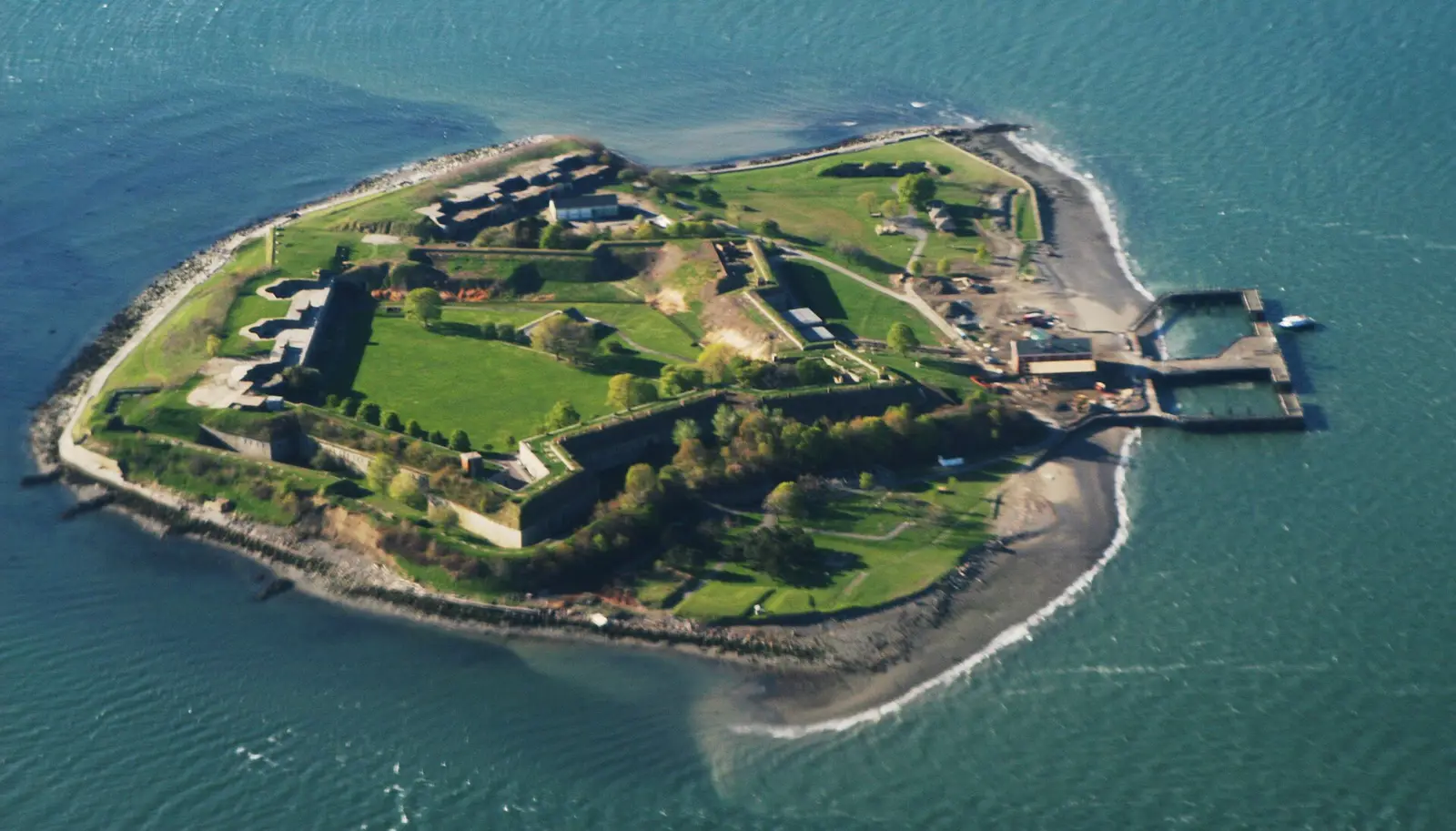
Fort · Boston, MA
Fort Warren
Fort Warren is a Civil War-era granite fort on Georges Island in Boston Harbor, where the Union held Confederate prisoners.
Documented AccountsOpen to visitorsAlso a fort · also reported: shadow figures, footsteps
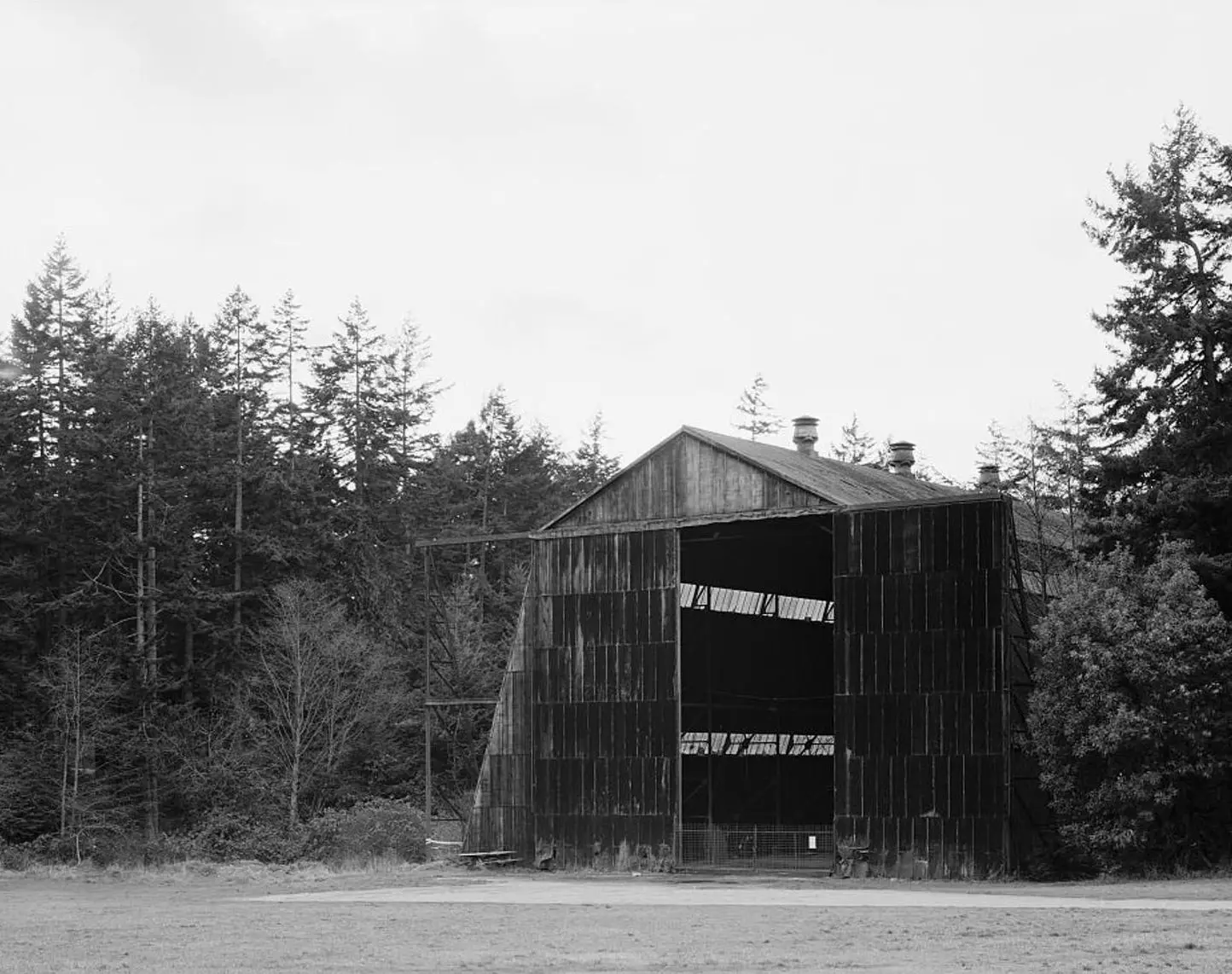
Fort · Port Townsend, WA
Fort Worden Historical State Park
Fort Worden is a 1902 coast artillery fort at Port Townsend, later a state juvenile treatment center and, since 1973, a state park.
Documented AccountsOutside onlyAlso a fort · also reported: shadow figures, footsteps
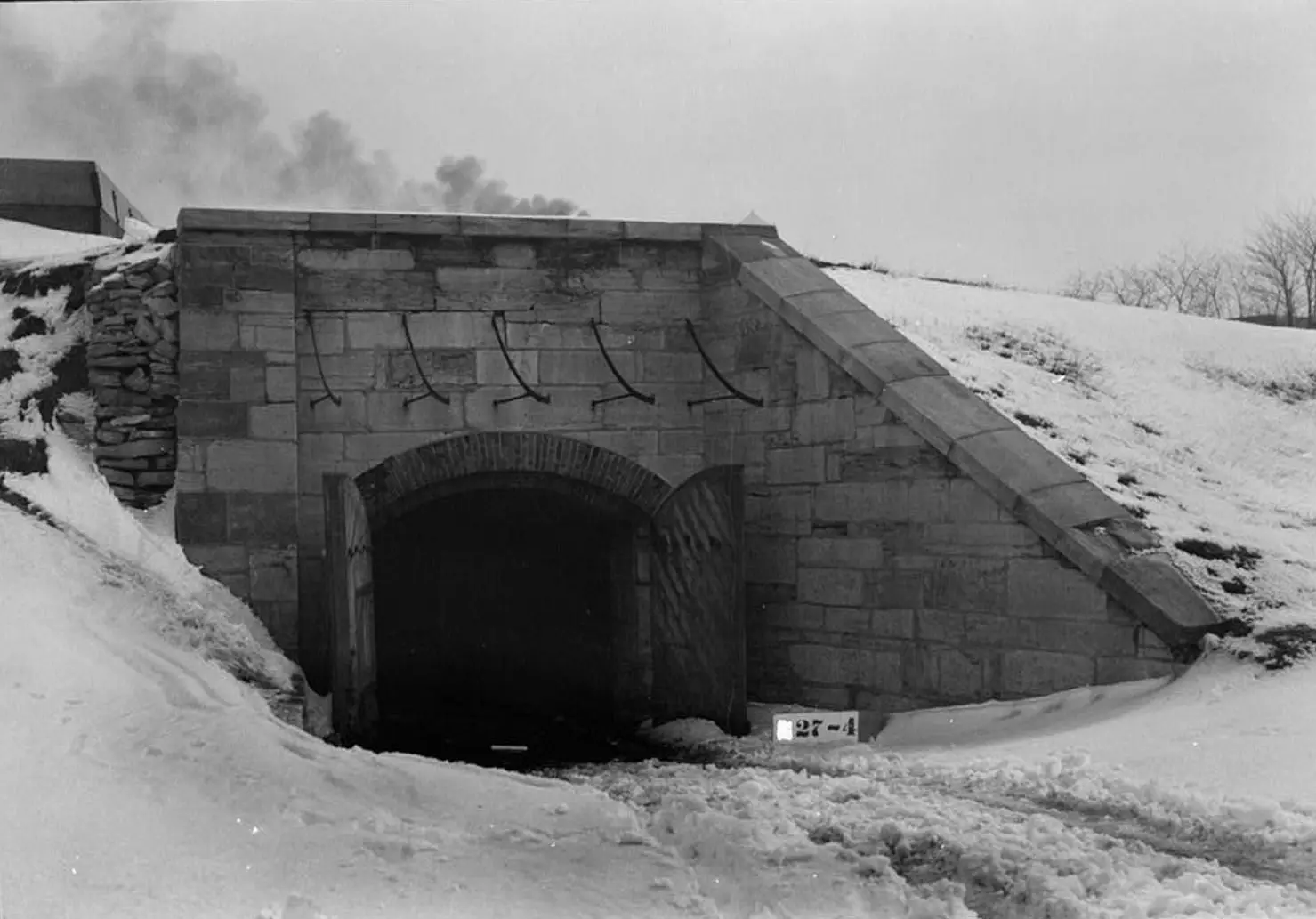
Fort · Detroit, MI
Historic Fort Wayne
Historic Fort Wayne is an 1840s star fort on the Detroit River, used by the U.S. Army from the Civil War to the Vietnam era and now a city park with a Native American burial mound.
Documented AccountsOutside onlyAlso a fort · also reported: shadow figures
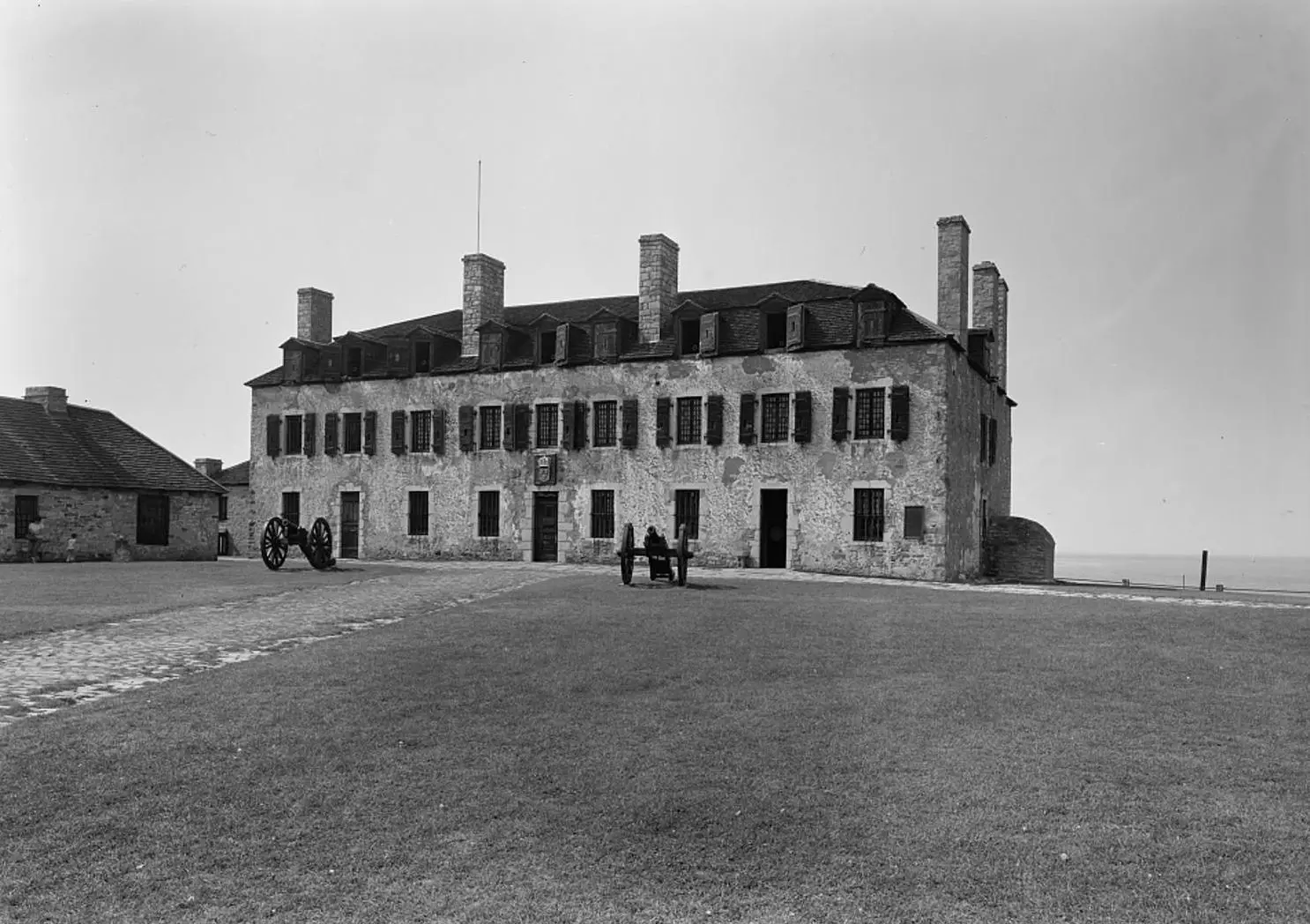
Fort · NY
Old Fort Niagara
Old Fort Niagara guards the mouth of the Niagara River; its French Castle, built in 1726–27, is the oldest masonry building in the Great Lakes basin.
Documented AccountsOpen to visitors