← Indiana Stepp Cemetery
Stepp Cemetery
History and legends
Indiana
Stepp Cemetery is a small 19th-century burial ground inside Morgan-Monroe State Forest, between Martinsville and Bloomington.
What do we know about Stepp Cemetery?
The Woman in Black is folklore. Indiana University folklorists and published ghost books tell many incompatible versions, and the folklore literature cited by public media places the stories in the 1950s to 1970s, when the cemetery became a teenage hangout. Reporters who sat on the famous stump in 2007 saw nothing, and one local man is said to have claimed he staged hauntings there in 1966. Folklore archive interviews from 1968 to 1973 exist but could not be accessed.

Our rating of the reports about Stepp Cemetery: Unverified. A haunted reputation or legend, but no traceable account of an experience so far. The rating describes the evidence for the reports, not whether the place is haunted.
- Reported accounts
- 2
- Counted for the rating
- 0
- Research sources
- 5
Counted for the rating: independent accounts we could trace to a witness. Retellings of the same story count once, and staff passing on what visitors said aren’t counted. How we count
Reported experiences don’t establish a supernatural cause.
Read our evidence assessment →The hauntings
Accounts, encounters and stories associated with Stepp Cemetery.

What has been reported?
- Apparitions

Phenomena described in accounts associated with this location — not independently verified events.
Reported experiences
2 published and reported accounts, each assessed by its source.
Account 01 · 2001
A man who said he staged the effects, 2001
A local wiki reports that a man said he and a friend staged haunting effects at the cemetery, including howls, shaking bushes and phantoms, for two or three weeks in August 1966.[2]
No traceable witnessReported by A man who said he staged the effects, as reported by Bloomingpedia citing the Herald-Times (2001)Note: Apparently from a 2001 Herald-Times article that we could not access; a claim of a hoax, not an account of an experience.
Read full account ›
A local wiki reports that a man said he and a friend staged haunting effects at the cemetery, including howls, shaking bushes and phantoms, for two or three weeks in August 1966.[2]
Account 02 · October 25, 2007
Brian J. McFillen and fellow Indiana Daily Student reporters, 2007
Indiana Daily Student reporters who visited at night in 2007, sat on the stump and lay beside it reported seeing nothing.[5]
Published accountReported by Brian J. McFillen and fellow Indiana Daily Student reporters (2007)Note: A report of no experience.
Read full account ›
Indiana Daily Student reporters who visited at night in 2007, sat on the stump and lay beside it reported seeing nothing.[5]
Legends & disputed stories
Stories told about the place that the records don’t confirm.

- Legend
The best-known legend tells of a woman in black who sits on a tree stump beside a child's grave in the back corner of the cemetery and sometimes digs up the child to hold him; people still leave toys at the grave.[1][3]
- Legend
The stump beside the grave, where the woman was said to sit holding the child, was later nicknamed the "Warlock's chair" and had curses of delayed death attached to it; it is now gone.[1]
- Legend
Versions of the legend conflict: in one, retold from Mark Marimen's Haunted Indiana, a woman from the East Coast lost her family and guarded their graves nightly until she was buried there; in another, from Troy Taylor's Beyond the Grave, a mother who lost her son and a hand in a car accident threatens visitors with a hook; others involve a husband killed in a quarry blast or a murdered daughter.[3][4]
What the research shows: The two books were not consulted; their versions are as summarized by the Indiana Daily Student.
- Legend
A blogger who checked the child's grave on Find a Grave reported that the child buried there was stillborn in the 1930s, not killed in an accident as the legend says, and suggested two stories had merged.[3]
What the research shows: Find a Grave was not consulted directly (it returned 403).
- Legend
A rumor links the cemetery to the Crabbites, a little-documented religious sect said to have gathered there around the turn of the 20th century.[1]
What the research shows: Indiana Public Media found some support in Indiana Folklore and a local archivist; a folklore blogger found almost no record of the group.
- Legend
Indiana Public Media, citing the journal Indiana Folklore, reports that most of the ghost stories date no earlier than the 1950s, 1960s and 1970s, when teenagers with cars began gathering there for late-night parties.[1]
Before you go

Planning a visit?
Location
Indiana
Outside only
You can see it from public land; the inside isn’t open.
Access details ›
A small historic cemetery inside Morgan-Monroe State Forest, off Old State Road 37. The forest is public land run by the Indiana DNR, but the DNR's property page does not mention the cemetery or set special rules for it. Gravestones have been vandalized: visit by day, treat the graves with respect and take nothing. Parts of the forest were damaged by a June 2026 tornado; check the DNR page for closures.
Entry
Cost not confirmed
Access last checked November 19, 2026. Confirm times and prices before you travel.
Approximate location, within about 1 km.
The history of Stepp Cemetery
Stepp Cemetery is a small 19th-century burial ground inside Morgan-Monroe State Forest, between Martinsville and Bloomington. It is known for the legend of a Woman in Black who keeps watch from a tree stump beside a child's grave. Folklorists date the stories to teenagers' late-night visits from the 1950s on, and versions vary widely. No traceable first-hand sighting was found. It is on public forest land.
- Also known as
- Stepps Cemetery
The cemetery
Stepp Cemetery lies in a clearing in Morgan-Monroe State Forest, off Old State Road 37 between Martinsville and Bloomington. A local wiki says Reuben Stepp bought the land in 1856 and sold it in 1884, and the State of Indiana bought it in 1929, when it became part of the state forest. Indiana Public Media reports that the oldest known gravestone belongs to Isaac Heartstock, a War of 1812 veteran who died in 1851, though the local wiki says the graves date from the 1870s. The cemetery is maintained by the Benton Township trustees, while the DNR looks after the forest around it. Its reputation has brought vandalism, including broken headstones.
The Woman in Black
The best-known legend tells of a woman in black who has haunted the cemetery for decades. She sits on a tree stump beside a child's grave in the back corner, sometimes said to dig up the child to hold him. People still leave toys at that grave. The stump, later nicknamed the "Warlock's chair," is gone; stories once tied curses of death to it.
The story has many versions. In one, retold from Mark Marimen's book Haunted Indiana, a woman who moved from the East Coast lost her family one by one and kept watch at their graves every night until she was buried there too. In another, from Troy Taylor's Beyond the Grave, a mother who lost her son and her hand in a car accident guards his grave and threatens visitors with a hook. Other tellings involve a husband killed in a quarry blast or a murdered daughter. A blogger who checked the child's grave on Find a Grave found the child was stillborn in the 1930s, not killed as the legend says.
A further rumor ties the cemetery to the Crabbites, a little-documented religious sect said to have held gatherings nearby around 1900.
Where the stories come from
Indiana Public Media, citing the journal Indiana Folklore, reports that most of the ghost stories date no earlier than the 1950s, 1960s and 1970s, when teenagers with cars began holding late-night gatherings there. A local wiki reports a man's claim that he and a friend staged hauntings at the cemetery for a few weeks in August 1966. In 2007 Indiana Daily Student reporters visited at night, sat on the stump, and saw nothing.
We haven’t found an openly licensed photograph of Stepp Cemetery yet. If you took one and are happy to share it, tell us.
Through the years
1851
Oldest known burial
1856
Reuben Stepp buys the land
A local wiki, citing 2001 Herald-Times reporting, says Reuben Stepp bought the land in 1856 and sold it in 1884.[2]
Caveat: The underlying newspaper articles were not consulted.
The research conclusion

Why it has this rating
The Woman in Black is folklore with many incompatible versions, dated by folklorists to teenagers' night visits from the 1950s. No named person's account of an experience was found; the named reports are reporters who saw nothing (2007) and a man who said he staged hauntings there in 1966.
Read the full written assessment ›
Little is documented about the cemetery itself beyond its location, its acquisition by the state in 1929 and a few landholding dates, and even the date of the oldest grave is uncertain.
The Woman in Black is folklore. Indiana University folklorists and published ghost books tell many incompatible versions, and the folklore literature cited by public media places the stories in the 1950s to 1970s, when the cemetery became a teenage hangout. Reporters who sat on the famous stump in 2007 saw nothing, and one local man is said to have claimed he staged hauntings there in 1966. Folklore archive interviews from 1968 to 1973 exist but could not be accessed.
The sources behind the story
5 research references support this entry.

1WFIU/WTIU News (Indiana Public Media)Stepp: A Small Rural Cemetery That Looms Large In Hoosier Lore Television or radio · Reference 01
Tyler Lake, Stepp: A Small Rural Cemetery That Looms Large In Hoosier Lore. WFIU/WTIU News (Indiana Public Media), 2018-10-26.
Public-media feature drawing on the journal Indiana Folklore and a local historical society archivist. Reliable for the 1929 forest acquisition, the vandalism and the folklore scholarship that dates the legends to the 1950s–1970s. The Heartstock gravestone detail is attributed to an unidentified 'Sinclair'.
Accessed November 16, 2026.
2BloomingpediaStepp Cemetery Website · Reference 02
Stepp Cemetery. Bloomingpedia.
Community wiki for Bloomington. Cites Herald-Times articles of August 12, 21 and 26, 2001 (not consulted) for the land history, the township maintenance and a man's claim to have staged hauntings in 1966. Treat as a pointer to those articles.
Accessed November 16, 2026.
3The Ghost in My MachineHaunted Road Trip: The Morgan-Monroe State Forest, Stepp Cemetery, and the Lady in Black of Bloomington, Indiana Website · Reference 03
Lucia Peters, Haunted Road Trip: The Morgan-Monroe State Forest, Stepp Cemetery, and the Lady in Black of Bloomington, Indiana. The Ghost in My Machine, 2015-08-10.
Folklore blog that compares versions of the legend and checks the child's grave against Find a Grave. Skeptical and careful, but second-hand.
Accessed November 16, 2026.
4Indiana Daily StudentStepp Cemetery haunted by 'the woman in black' Newspaper · Reference 04
Mary Kenney, Stepp Cemetery haunted by 'the woman in black'. Indiana Daily Student, 2010-10-29.
Student newspaper feature quoting IU folklorist Daniel Peretti and summarizing versions from Mark Marimen's Haunted Indiana and Troy Taylor's Beyond the Grave (neither book opened). Useful for how the legend varies.
Accessed November 16, 2026.
5Indiana Daily StudentAlone in the dark? Newspaper · Reference 05
Brian J. McFillen, Alone in the dark?. Indiana Daily Student, 2007-10-25.
Student reporters' night visit; they sat on the stump and saw nothing. A named report of no experience.
Accessed November 16, 2026.
More haunted places

Explore nearby
Hotel
Story Inn
Indiana · 19 miles away · Open to visitors
Historic house
Hannah House
Indianapolis, Indiana · 32 miles away · Tours only
Former asylum
Central State Hospital and the Indiana Medical History Museum
Indianapolis, Indiana · 34 miles away · Tours only
Prison
Rotary Jail Museum
Crawfordsville, Indiana · 57 miles away · Open to visitors


Similar places
Also a cemetery
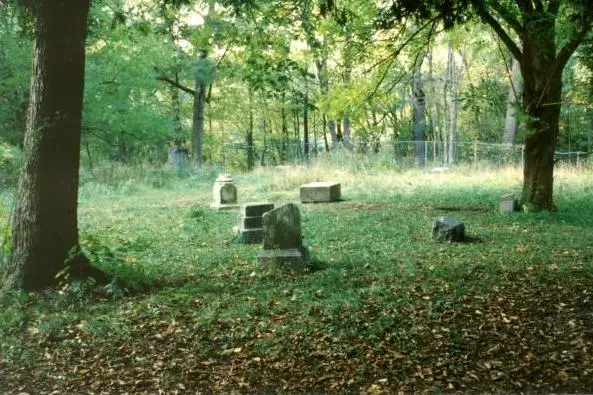
Cemetery · IL
Bachelor's Grove Cemetery
Bachelor's Grove is a small 19th-century settlers' cemetery inside a Cook County forest preserve near Midlothian.
Documented AccountsOutside onlyAlso a cemetery
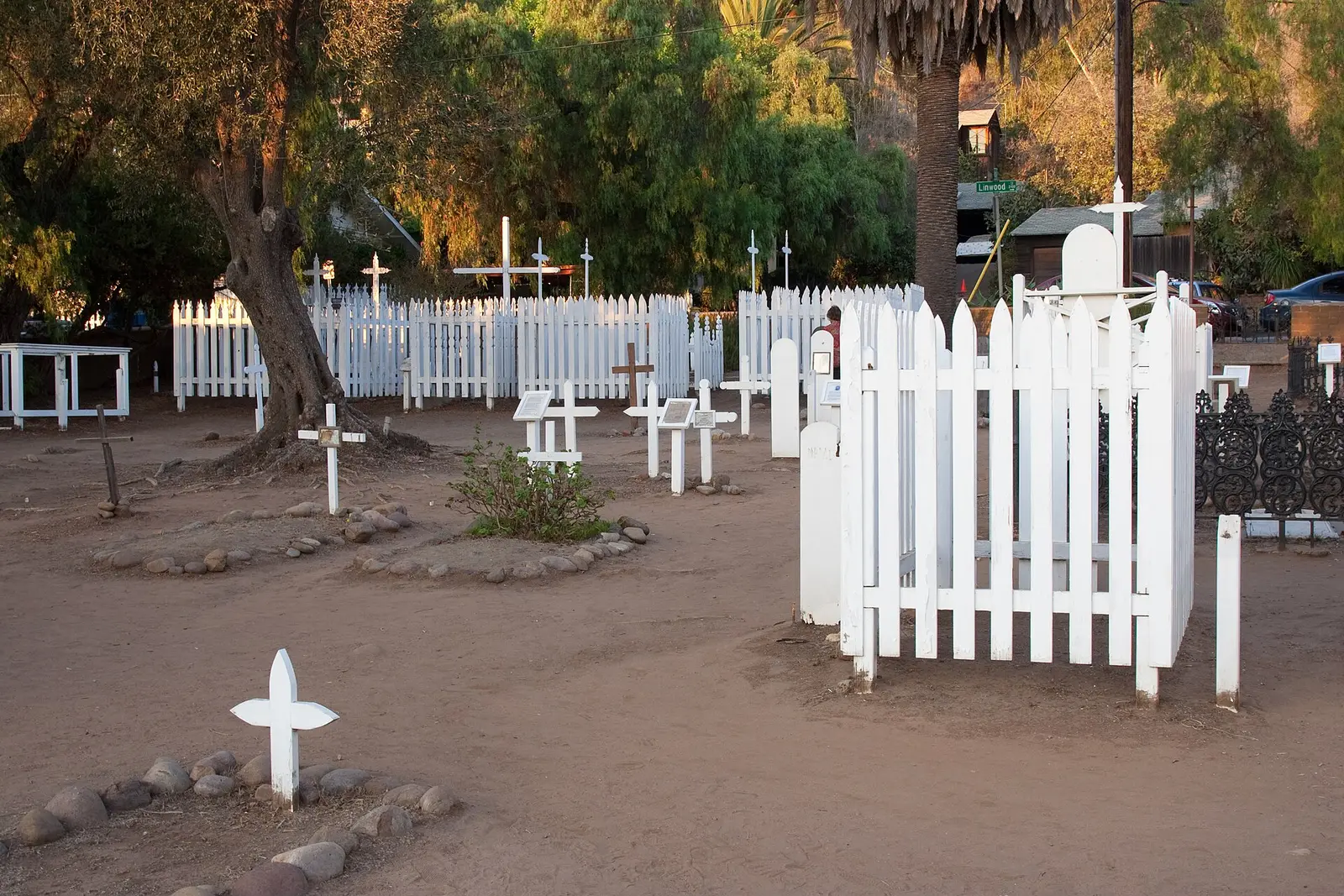
Cemetery · San Diego, CA
El Campo Santo Cemetery
El Campo Santo is Old Town San Diego's Catholic cemetery, opened in 1849, where about 477 people were buried, including many Native Americans and Yankee Jim Robinson.
UnverifiedOutside onlyAlso a cemetery
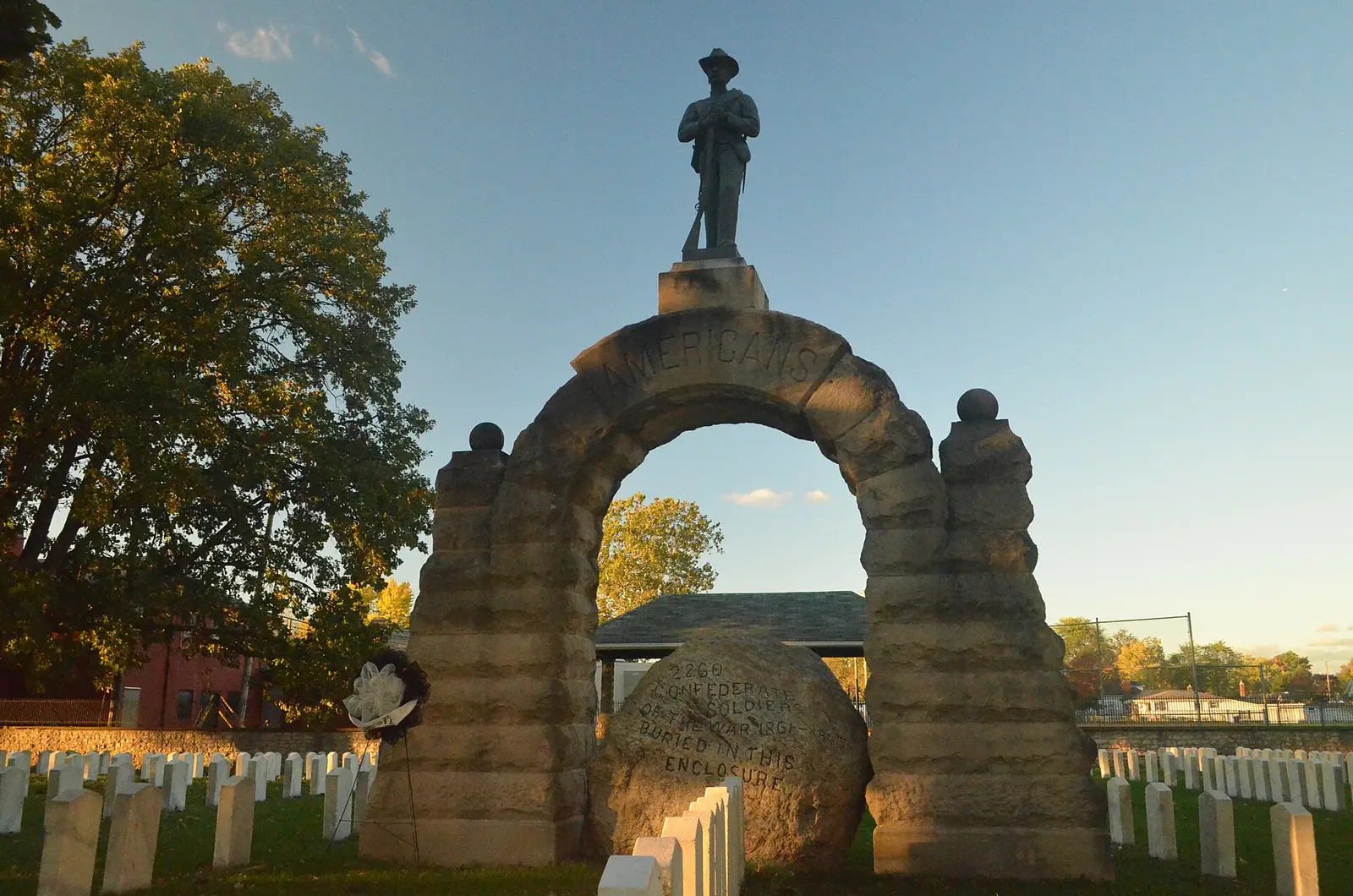
Cemetery · Columbus, OH
Camp Chase Confederate Cemetery
Camp Chase Confederate Cemetery holds more than 2,000 Confederate prisoners who died at a Union prison camp in Columbus between 1861 and 1865.
Documented AccountsOutside onlyAlso a cemetery
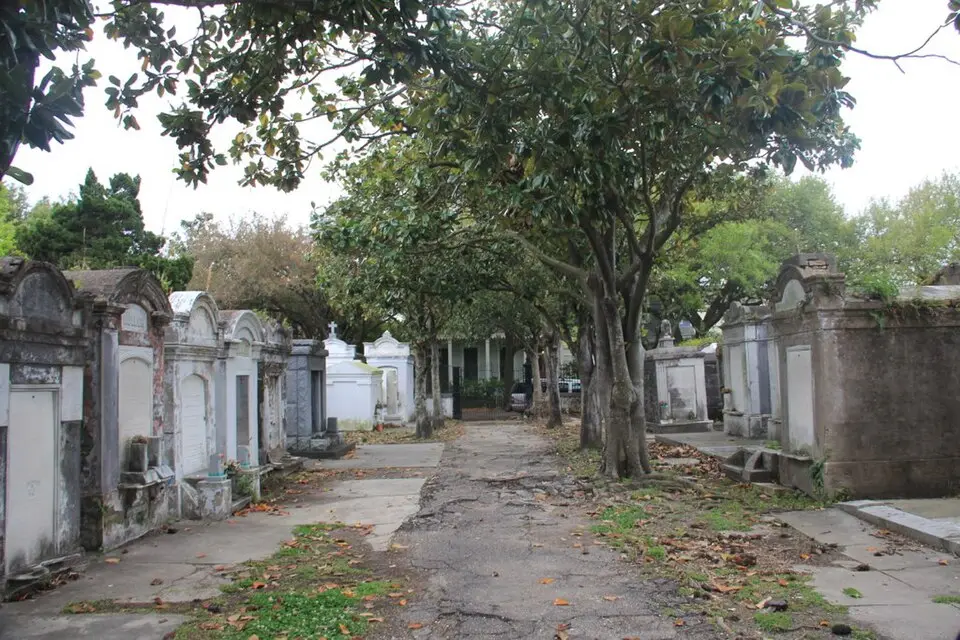
Cemetery · New Orleans, LA
Lafayette Cemetery No. 1
Lafayette Cemetery No. 1 is an above-ground cemetery in the Garden District, founded in 1833, where many yellow fever victims were buried.
UnverifiedTours only