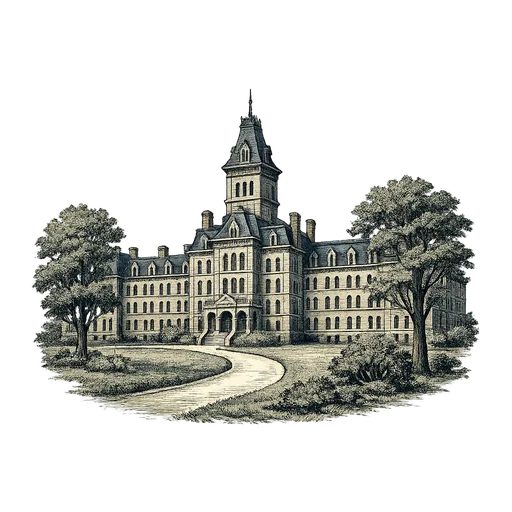
← Pennsylvania Pennhurst State School and Hospital
Pennhurst State School and Hospital
A disability-rights landmark and a haunted attraction
Pennsylvania
Pennhurst was a Pennsylvania state institution where more than 10,500 people with intellectual and developmental disabilities lived between 1908 and 1987.
What do we know about Pennhurst State School and Hospital?
The ghost material is recent and comes mostly from events sold at the attraction. Two traceable accounts were found: a 2020 Ghost Research Society investigation that reported voices and knocking (while three of its own members found nothing clear) and a 2025 CNN report of a visitor at a paranormal convention there. Neither is independent of the commercial setting, and neither shows anything beyond what the people present believed they heard.

Our rating of the reports about Pennhurst State School and Hospital: Documented Accounts. At least one traceable published or first-hand account of an unexplained experience. We check that the reports exist, not the supernatural. The rating describes the evidence for the reports, not whether the place is haunted.
- Reported accounts
- 2
- Counted for the rating
- 1
- Research sources
- 8
Counted for the rating: independent accounts we could trace to a witness. Retellings of the same story count once, and staff passing on what visitors said aren’t counted. How we count
Reported experiences don’t establish a supernatural cause.
Read our evidence assessment →The hauntings
Accounts, encounters and stories associated with Pennhurst State School and Hospital.

What has been reported?
- Voices
- Shadow figures
- Knocking
Phenomena described in accounts associated with this location — not independently verified events.
Reported experiences
2 published and reported accounts, each assessed by its source.
Account 01 · 2020
Dale Kaczmarek and Charles Williams, 2020
During an investigation at the attraction on August 7, 2020, Ghost Research Society members reported hearing voices down a hallway in the Mayflower Building, loud knocks on wooden doors in the tunnels, and shadow figures; three other members of the group said they captured no clear…
- Voices
- Shadow figures
- Knocking
Published accountReported by Dale Kaczmarek and Charles Williams, Ghost Research SocietyNote: Reported by the group itself during a paid investigation; recorder and device 'responses' are their interpretation.
Read full account ›
During an investigation at the attraction on August 7, 2020, Ghost Research Society members reported hearing voices down a hallway in the Mayflower Building, loud knocks on wooden doors in the tunnels, and shadow figures; three other members of the group said they captured no clear evidence.[8]
Account 02 · October 14, 2025
A visitor, 2025
A visitor told CNN that at a paranormal convention at Pennhurst in May 2025, a woman recording in a basement room asked any presence to name someone in the room, then asked whether it had said "Steve," his name; he said he was not sure he…
- Voices
Published accountReported by A visitor (CNN, 2025)Note: He did not say he heard the voice himself; it was another participant's interpretation during a ticketed event.
Read full account ›
A visitor told CNN that at a paranormal convention at Pennhurst in May 2025, a woman recording in a basement room asked any presence to name someone in the room, then asked whether it had said "Steve," his name; he said he was not sure he believes in ghosts but left shaken.[4]
Before you go

Planning a visit?
Tours only
Visits are by guided tour or organized event.
Access details ›
Part of the former campus is now run as a paid, for-profit haunted attraction ("Pennhurst Asylum"), which also sells daytime tours and paranormal investigations; its marketing is entertainment, not evidence. Disability-rights advocates have objected to the attraction since it opened. Other parts of the former campus are in separate use. The state historical marker stands on Route 724 near Spring City. The residents' cemetery should be treated as a burial ground, not a ghost-hunting site.
Entry
Paid entry
Access last checked November 16, 2026. Confirm times and prices before you travel.
Approximate location, within about 1 km.
The history of Pennhurst State School and Hospital
Pennhurst was a Pennsylvania state institution where more than 10,500 people with intellectual and developmental disabilities lived between 1908 and 1987. A 1968 TV exposé and the Halderman lawsuit helped close it and shaped disability rights nationwide. Since 2010 part of the site has been a paid haunted attraction. Named ghost hunters and visitors have described voices and knocking, but nothing shows the site is haunted.
- Established
- 1908
- Also known as
- Eastern Pennsylvania Institution for the Feeble-Minded and Epileptic
A state institution
Pennhurst opened in 1908 under the name Eastern Pennsylvania Institution for the Feeble-Minded and Epileptic, the language of its time. It spread over about 1,400 acres along the Schuylkill River outside Spring City in Chester County. Historian Dennis Downey describes it as part of a national trend to separate people with intellectual and developmental disabilities from the rest of society. Over eight decades more than 10,500 people lived there, and at its peak more than 3,500 at once.
Suffer the Little Children
In 1968 Philadelphia reporter Bill Baldini broadcast a five-part television report, "Suffer the Little Children," on conditions at Pennhurst. It helped spur families and advocates to act. In May 1974 people living at Pennhurst, with their families, the Pennsylvania Association for Retarded Citizens and the United States, filed the class action Halderman v. Pennhurst State School and Hospital. Judge Raymond Broderick ruled for the plaintiffs in 1977, finding conditions unsanitary, dangerous and inadequate.
In 1981 the US Supreme Court held that one federal disability law did not itself create enforceable rights and sent the case back to the lower courts. The case was settled in 1984 and Pennhurst closed in 1987, as the people who lived there moved to community homes or other facilities. The case and the movement around it are central to US disability-rights history.
After closing
The buildings fell into disrepair. A plan to sell the site led to the Pennhurst Memorial and Preservation Alliance, and the state dedicated a historical marker in 2010. That year a for-profit haunted attraction, Pennhurst Asylum, opened on part of the campus. The Alliance called it a "travesty" and protested; since 2017 new owners have dropped disability-themed scenes and opened a museum.
The stories
The attraction sells paranormal investigations. On a 2020 investigation the Ghost Research Society reported voices in the Mayflower Building and knocks in the tunnels, though three of its members found nothing clear. In 2025 a visitor at a paranormal convention there told CNN that another participant asked whether someone had said "Steve," his name. These are reports from paid events, not evidence of ghosts.
Through the years
1908
Pennhurst opens
Pennhurst opened in 1908 as the Eastern Pennsylvania Institution for the Feeble-Minded and Epileptic, a state institution on about 1,400 acres along the Schuylkill River outside Spring City, Chester County; historian Dennis Downey places it within a national…
Read more ›
Pennhurst opened in 1908 as the Eastern Pennsylvania Institution for the Feeble-Minded and Epileptic, a state institution on about 1,400 acres along the Schuylkill River outside Spring City, Chester County; historian Dennis Downey places it within a national trend to segregate people with intellectual and developmental disabilities.[1][2]
Caveat: The institution's original name uses the terminology of its time.
1968
"Suffer the Little Children" broadcast
In 1968 Philadelphia reporter Bill Baldini broadcast a five-part television report, "Suffer the Little Children," on conditions at Pennhurst, which helped spur families and advocates to act.[4][1][2]
Caveat: Sources differ on the station (NBC10 per KYW; possibly WCAU per the Minnesota council) and the Minnesota council gives the title as "Suffer the Children".
1974
Halderman v. Pennhurst filed
In May 1974 people living at Pennhurst, supported by their families and guardians, the Pennsylvania Association for Retarded Citizens, a parents' association and the United States, filed the class action Halderman v. Pennhurst; Judge Raymond Broderick ruled for them in 1977.[5]
1981
Supreme Court decision
On April 20, 1981, the US Supreme Court held that a section of the Developmentally Disabled Assistance and Bill of Rights Act did not create substantive rights to appropriate treatment in the least restrictive setting, and sent the…
Read more ›
On April 20, 1981, the US Supreme Court held that a section of the Developmentally Disabled Assistance and Bill of Rights Act did not create substantive rights to appropriate treatment in the least restrictive setting, and sent the case back for the remaining constitutional and statutory claims.[6]
2010
State historical marker dedicated
After closure the buildings fell into disrepair; a planned sale to a developer led to the founding of the Pennhurst Memorial and Preservation Alliance, and in 2010 the Commonwealth dedicated a state historical marker recognizing Pennhurst's place in disability-rights history.[1]
2010
Haunted attraction opens
In 2010 a for-profit haunted attraction, Pennhurst Asylum, opened on part of the former campus. The Pennhurst Memorial and Preservation Alliance called it a "travesty" that portrayed people with disabilities in a demeaning way and urged a boycott;…
Read more ›
In 2010 a for-profit haunted attraction, Pennhurst Asylum, opened on part of the former campus. The Pennhurst Memorial and Preservation Alliance called it a "travesty" that portrayed people with disabilities in a demeaning way and urged a boycott; advocates fought it through lawsuits, zoning and picketing without success.[7][1][3]
2017
Attraction changes owners and theme
According to Alliance members writing for the University of Minnesota, new owners in 2017 removed the disability-themed scenes in favor of a generic horror theme, repaired roofs, opened a museum and began working with the Alliance; research they…
Read more ›
According to Alliance members writing for the University of Minnesota, new owners in 2017 removed the disability-themed scenes in favor of a generic horror theme, repaired roofs, opened a museum and began working with the Alliance; research they cite found that more than 80% of the attraction's performers identified as disabled.[7]
Caveat: Account by people involved with the Alliance; not checked against another source.

The research conclusion

Why it has this rating
One traceable account: Ghost Research Society investigators reported voices, knocks and shadow figures during a paid investigation in 2020. A visitor quoted by CNN in 2025 did not hear the voice himself; it was another participant's reading of her recording, which is device output. Pennhurst's history in the disability-rights movement doesn't raise the rating.
Read the full written assessment ›
The history is well recorded: a scholarly encyclopedia essay, the Supreme Court's 1981 opinion, a state disability council's history and news coverage agree on the main facts, including the 1968 exposé, the 1974 lawsuit and closure in 1987.
The ghost material is recent and comes mostly from events sold at the attraction. Two traceable accounts were found: a 2020 Ghost Research Society investigation that reported voices and knocking (while three of its own members found nothing clear) and a 2025 CNN report of a visitor at a paranormal convention there. Neither is independent of the commercial setting, and neither shows anything beyond what the people present believed they heard.
The sources behind the story
8 research references support this entry.

1The Encyclopedia of Greater Philadelphia (Rutgers University–Camden)Pennhurst State School and Hospital Website · Reference 01
Dennis B. Downey, Pennhurst State School and Hospital. The Encyclopedia of Greater Philadelphia (Rutgers University–Camden), 2013.
Scholarly encyclopedia essay by a historian of Pennhurst (Millersville University). Authoritative for the 1908 opening, the original name, acreage, the 10,500 and 3,500 figures, the Baldini report, the 1984 settlement, the 1987 closure, the 2010 marker and the 2010 opening of the haunted attraction. Says nothing about ghosts.
Accessed November 16, 2026.
2KYW NewsradioBefore it became a haunted house, Pennhurst sparked a disability advocacy movement Television or radio · Reference 02
Sabrina Boyd-Surka, Before it became a haunted house, Pennhurst sparked a disability advocacy movement. KYW Newsradio, 2023-04-15.
News feature quoting historian Dennis Downey, sociologist Allison Carey and self-advocate Debbie Robinson. Confirms 1908 opening, the 1968 Baldini documentary, 1987 closure and the attraction operating since 2010. No ghost claims.
Accessed November 16, 2026.
3NBC10 Philadelphia (Associated Press)Haunted House at Horrific Pennhurst Causes Outrage Television or radio · Reference 03
Haunted House at Horrific Pennhurst Causes Outrage. NBC10 Philadelphia (Associated Press), 2010-08-31.
Wire report from before the attraction opened. Quotes the Pennhurst Memorial and Preservation Alliance's objections and the organizers' plans, and paraphrases the historical marker. Its line that the Supreme Court 'upheld the principle' in 1981 oversimplifies the ruling and is not used.
Accessed November 16, 2026.
4CNN (via KTVZ)Visiting former mental asylums: Hopeful, haunted or 'nightmare factories?' Television or radio · Reference 04
Jen Rose Smith, Visiting former mental asylums: Hopeful, haunted or 'nightmare factories?'. CNN (via KTVZ), 2025-10-14.
Travel feature on 'dark tourism'. Gives a visitor's account from Pennhurst Paracon (May 2025) and historian Troy Rondinone's criticism of sensational attractions. Says Pennhurst closed in 1986, which conflicts with 1987 in the other sources.
Accessed November 16, 2026.
5Minnesota Governor's Council on Developmental DisabilitiesThe Threads that Came Together in the Pennhurst Case (Parallels in Time) Official or site history · Reference 05
The Threads that Came Together in the Pennhurst Case (Parallels in Time). Minnesota Governor's Council on Developmental Disabilities.
State disability council history, based partly on a 2006 interview with Judith Gran, Thomas Gilhool and James Conroy. Gives the May 1974 filing, the plaintiffs, Judge Broderick and the 1977 decision. Names Baldini's series 'Suffer the Children' and is unsure of his station, so it is not relied on for those details.
Accessed November 16, 2026.
6Supreme Court of the United States (text via Legal Information Institute, Cornell Law School)Pennhurst State School and Hospital v. Halderman, 451 U.S. 1 (1981) Official or site history · Reference 06
Justice William Rehnquist (opinion of the Court), Pennhurst State School and Hospital v. Halderman, 451 U.S. 1 (1981). Supreme Court of the United States (text via Legal Information Institute, Cornell Law School), 1981-04-20.
Primary legal source. Gives the holding (the Developmentally Disabled Assistance and Bill of Rights Act did not create substantive rights), the remand, about 1,200 residents at the time, and the District Court's findings on conditions. Only the first 100,000 characters were read.
Accessed November 16, 2026.
7Institute on Community Integration, University of Minnesota (Impact, vol. 36, no. 3)Fear and Loathing at Abandoned Institutions Magazine · Reference 07
Diana Muller Katovich, Jess Gallagher and James W. Conroy, Fear and Loathing at Abandoned Institutions. Institute on Community Integration, University of Minnesota (Impact, vol. 36, no. 3).
Written by people connected with the Pennhurst Memorial and Preservation Alliance, so it is an advocacy view. Describes the opposition to the attraction since 2010, the 2017 change of ownership and theme, the museum, and research finding most performers identify as disabled. Treats ghost stories as entertainment. Undated.
Accessed November 16, 2026.
8Ghost Research SocietyPennhurst Asylum investigation Website · Reference 08
Dale Kaczmarek, Pennhurst Asylum investigation. Ghost Research Society, 2020-08-07.
Ghost-hunting group's own report of its August 7, 2020 investigation. Cited only as where these experiences were published; device 'responses' are the group's interpretation. Three members report finding no clear evidence.
Accessed November 16, 2026.
More haunted places

Explore nearby
Prison
Eastern State Penitentiary
Philadelphia, Pennsylvania · 26 miles away · Open to visitors
Fort
Fort Mifflin
Philadelphia, Pennsylvania · 29 miles away · Open to visitors
Theater
Fulton Theatre
Lancaster, Pennsylvania · 40 miles away · Open to visitors
Prison
Old Jail Museum (former Carbon County Jail)
Jim Thorpe, Pennsylvania · 47 miles away · Tours only

Similar places
Also a former asylum · also reported: knocking, shadow figures
IllustrationFormer asylum · PA
Hill View Manor (former Lawrence County Home)
Hill View Manor opened in 1926 as Lawrence County's home for older and poor residents, became a county nursing home and closed in 2004.
Documented AccountsTours onlyAlso a former asylum · also reported: shadow figures
Former asylum · Athens, OH
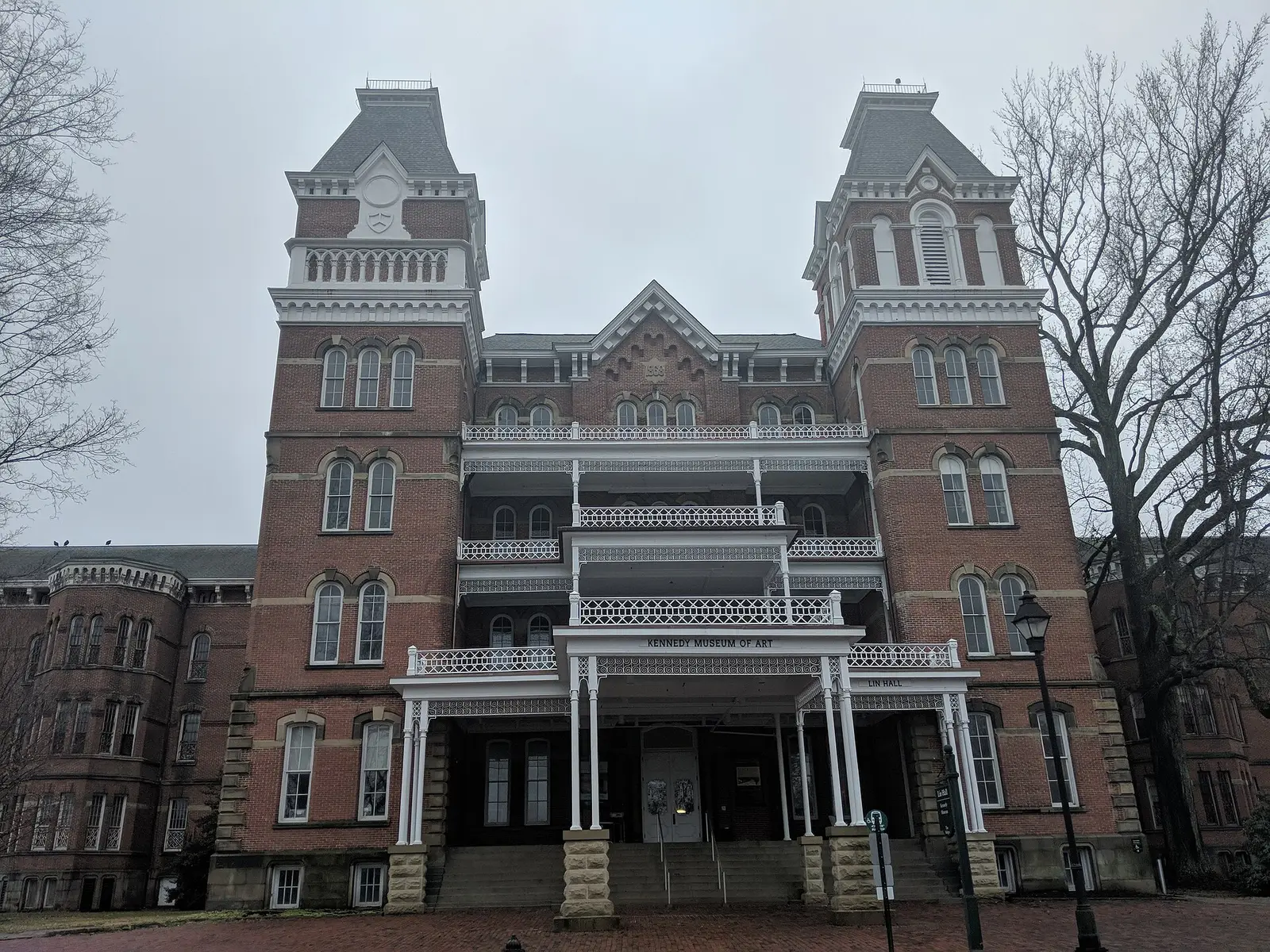
The Ridges (former Athens Lunatic Asylum)
The Ridges is the former Athens State Hospital, a Kirkbride-plan psychiatric hospital that served southeastern Ohio from 1874 to 1993 and now belongs to Ohio University.
UnverifiedOpen to visitorsAlso a former asylum · also reported: shadow figures
Former asylum · Louisville, KY
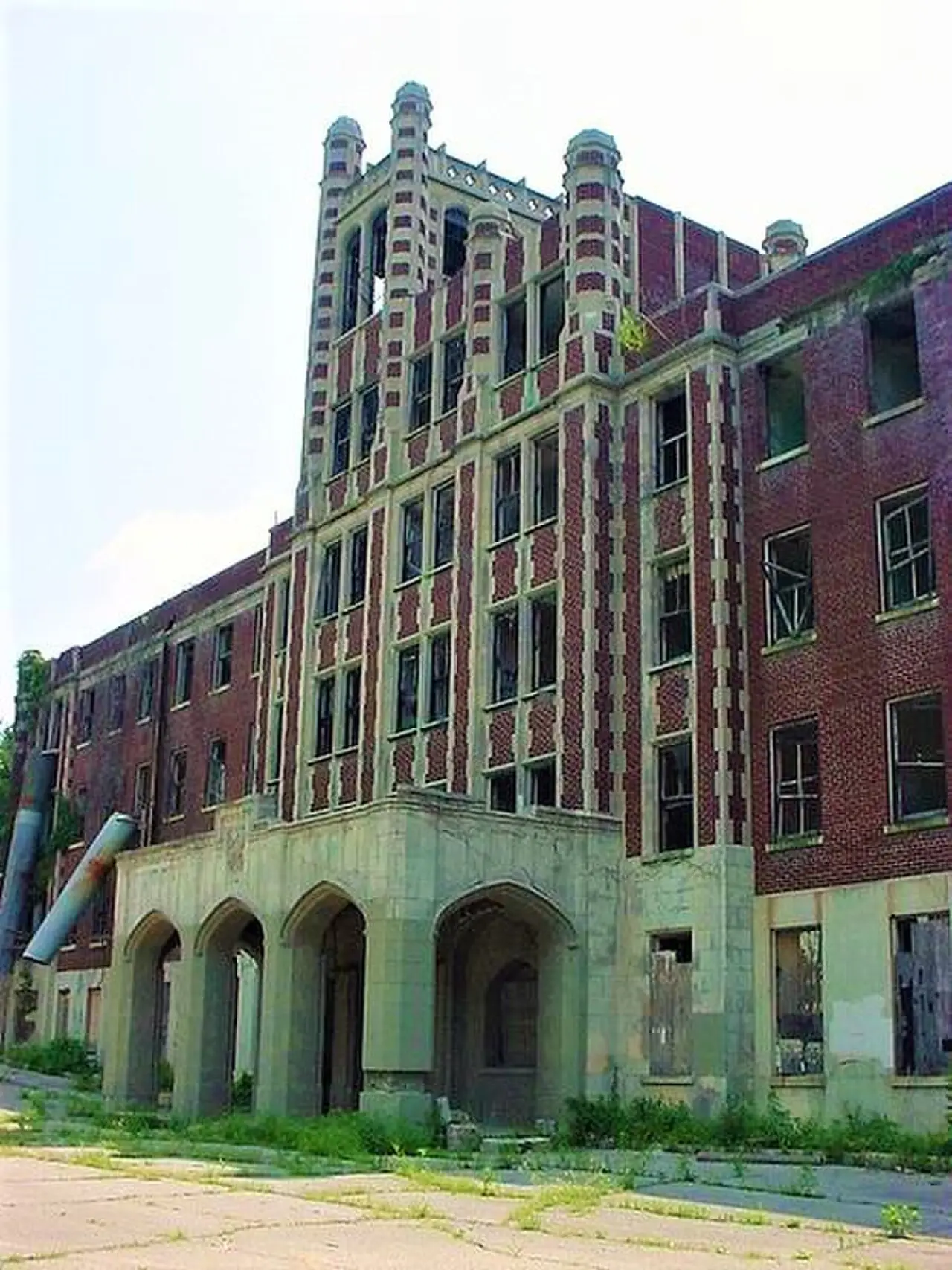
Waverly Hills Sanatorium
Shadowy figures in the long corridors, described by tour staff, a ghost-story writer and a TV investigation team.
Well DocumentedTours onlyAlso a former asylum · also reported: shadow figures
Former asylum · Westland, MI
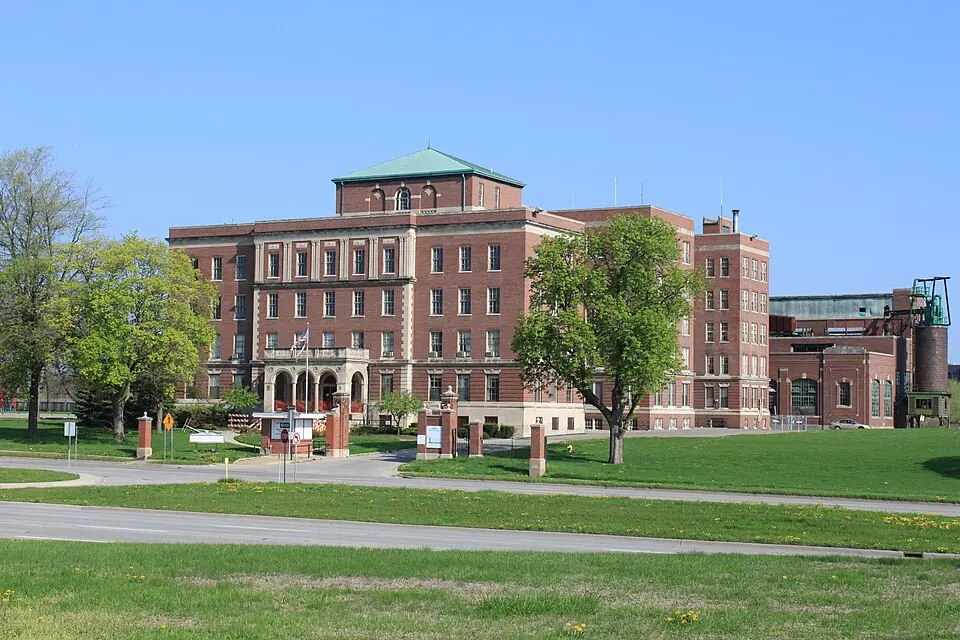
Eloise
Eloise was Wayne County's poorhouse and later a vast hospital complex in Westland, where about 10,000 people lived at its peak.
Documented AccountsTours only