← Franklin Octagon Hall
Octagon Hall
Franklin, Kentucky
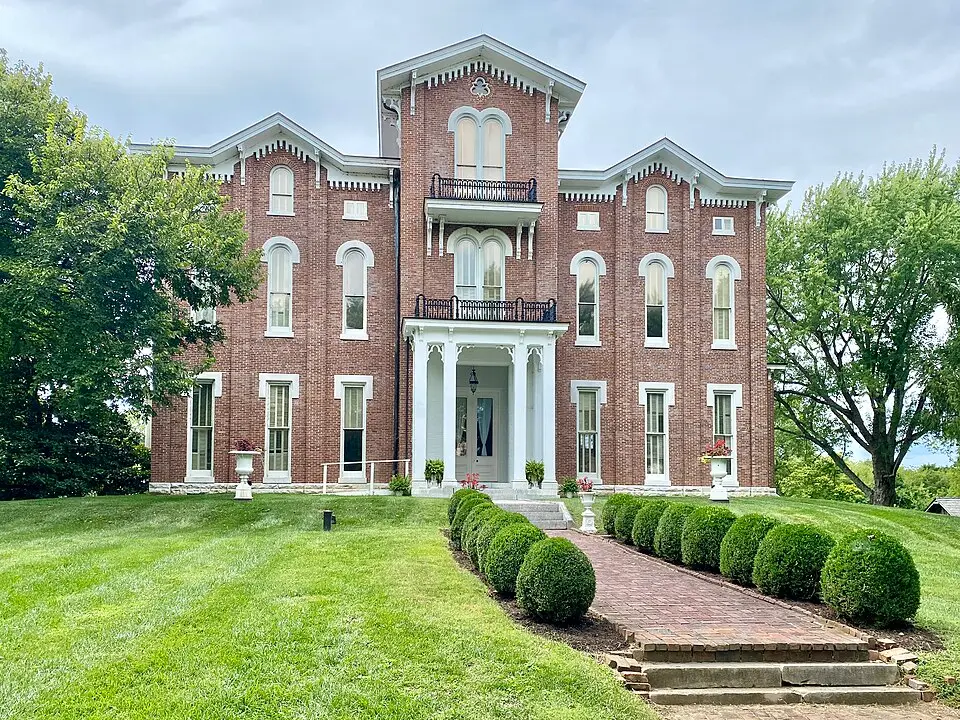
Octagon Hall is a rare eight-sided brick house north of Franklin, Kentucky, built in the mid-19th century by Andrew Jackson Caldwell with the labor of people he enslaved.
What do we know about Octagon Hall?
The ghost evidence comes from three separate origins: Jack Montgomery's 2007 door, the museum's own founders and staff, and podcaster Bethany Ford's 2020 visit. They describe different things, and the most detailed accounts come from people who run, or sell, ghost hunts here. Recorder voices, photos and alarms are device output and are not counted. The name and date of the Caldwell daughter who died in a kitchen fire are not settled.
Our rating of the reports about Octagon Hall: Well Documented. At least three independent, traceable accounts from visitors or witnesses that describe consistent experiences, often the same things in the same places. The rating describes the evidence for the reports, not whether the place is haunted.
- Reported accounts
- 3
- Counted for the rating
- 5
- Research sources
- 10
Counted for the rating: independent accounts we could trace to a witness. Retellings of the same story count once, and staff passing on what visitors said aren’t counted. How we count
Reported experiences don’t establish a supernatural cause.
Read our evidence assessment →The hauntings
Accounts, encounters and stories associated with Octagon Hall.
What has been reported?
- Doors
- Shadow figures
- Apparitions
- Footsteps
- Music
- Voices
- Cold spots
Phenomena described in accounts associated with this location — not independently verified events.
Reported experiences
3 published and reported accounts, each assessed by its source.
Account 01 · October 2, 2010
Jack Montgomery, 2010
Bowling Green Daily News writer Jack Montgomery wrote that on a 2007 tour he watched a door open and close on its own, and found no wire or device to explain it.[2]
- Doors
Published accountReported by Jack Montgomery, Bowling Green Daily News (2010)Note: A single, brief first-person account in a newspaper feature; he was on a tour, probably with museum staff present.
Read full account ›
Bowling Green Daily News writer Jack Montgomery wrote that on a 2007 tour he watched a door open and close on its own, and found no wire or device to explain it.[2]
Account 02 · October 2, 2010 · 4 versions
The museum's founder and family, 2010
The museum's founder and his family told the Daily News of shadowy figures on the staircase, doors opening and closing, and impressions on exhibit beds no one had lain on; the paper also reported motion alarms bringing police to a locked house, and voices on researchers'…
- Doors
- Shadow figures
- Apparitions
- Footsteps
- Music
- Voices
Published accountReported by The museum's founder and family, museum operators, to the Bowling Green Daily News (2010)Note: The operators' own accounts. Recorder voices and alarms are device output and are not counted as accounts of an experience.
Read full account ›
The museum's founder and his family told the Daily News of shadowy figures on the staircase, doors opening and closing, and impressions on exhibit beds no one had lain on; the paper also reported motion alarms bringing police to a locked house, and voices on researchers' recorders.[2]
The museum's founder told Bowling Green Living that he saw a girl with long hair and a long dress by the basement back door, took her for a lost visitor, and watched her vanish; he also reported footsteps, singing and doors moving.[10]
The museum's assistant director told Kentucky Monthly he has seen shadow figures and full-body apparitions, and said visitors have heard greetings, and sometimes an order to get out, from no visible source.[6]
During the October fundraiser, a woman who was there said, a closet door in an upstairs bedroom banged rapidly after she had felt a presence, though everyone downstairs was accounted for.[10]
Note: Undated account from the museum's founder; the magazine page itself is undated (about 2018).
Note: Museum staff, whose ghost hunts the article says are the museum's biggest source of income.
Note: Her role is not stated, but she spoke on the museum's behalf, so she is grouped with staff. The 'presence' is a feeling and is not counted.
Account 03 · September 30, 2021
Bethany Ford, 2021
Bethany Ford of the Uncommon in the Commonwealth podcast told Kentucky Monthly that on a May 2020 visit her group saw unexplained shadows and a full-body apparition of a Civil War soldier, and felt a cold breeze.[6]
- Cold spots
- Apparitions
- Shadow figures
Published accountReported by Bethany Ford, Uncommon in the Commonwealth podcast, to Kentucky Monthly (2021)Note: A paranormal podcaster's account. Voices she reported capturing on equipment are device output, and chills are feelings; neither is counted.
Read full account ›
Bethany Ford of the Uncommon in the Commonwealth podcast told Kentucky Monthly that on a May 2020 visit her group saw unexplained shadows and a full-body apparition of a Civil War soldier, and felt a cold breeze.[6]
Before you go
Planning a visit?
Tours only
Visits are by guided tour or organized event.
Access details ›
A volunteer-run house museum open for tours part of the week, for a set cash donation; it closes for the winter. The museum also sells novice ghost hunts and private overnight paranormal investigations for adults. These are paid ghost attractions, and its haunted marketing is not evidence. Check the official site before visiting.
Entry
Paid entry
Access last checked November 16, 2026. Confirm times and prices before you travel.
The history of Octagon Hall
Octagon Hall is a rare eight-sided brick house north of Franklin, Kentucky, built in the mid-19th century by Andrew Jackson Caldwell with the labor of people he enslaved. Retreating Confederate troops camped there in 1862. A newspaper writer, the museum's own staff and a podcaster have described doors moving, shadow figures and apparitions. It is a volunteer-run museum that also sells paid ghost hunts.
- Established
- 1847–1859
- Also known as
- Andrew Jackson Caldwell House
The house
Octagon Hall stands on the old road from Bowling Green to Franklin. Andrew Jackson Caldwell (1818–1866) built it in the decades when octagon houses were briefly fashionable; the museum dates the work from 1847 to 1859, while the National Register form gives about 1860. When it was nominated to the National Register in 1980, it was one of fewer than ten octagonal houses left in Kentucky.
The people Caldwell enslaved
Caldwell was an enslaver. The 1850 census lists ten people enslaved in his household, the oldest 27 and the youngest a month old. By 1860 he held 34 people, who lived in three quarters buildings. According to the Kentucky Historical Society, enslaved workers quarried the limestone for the foundation, made the bricks and crafted the woodwork.
The Civil War
In February 1862, after the fall of Forts Henry and Donelson, Confederate troops retreating from Bowling Green camped on the farm for a night before moving into Tennessee. Union troops occupied it soon after, and the house served as a field hospital. Caldwell sympathized with the Confederacy, and it has long been said he hid Southern soldiers in the house.
A young Caldwell daughter died after her dress caught fire in the basement kitchen. Sources disagree on her name and the year.
Later owners
Dr. Miles Williams bought the house in 1918 and lived there until 1954; it was later rented out. In 2001 its founders formed the Octagon Hall Foundation, which runs it as a museum.
Through the years
1847–1859
House built
Andrew Jackson Caldwell (1818–1866) built the eight-sided brick house on the road between Bowling Green and Franklin; the museum and the 2010 Daily News give construction as 1847 to 1859, and the 1980 nomination called it one of…
Read more ›
Andrew Jackson Caldwell (1818–1866) built the eight-sided brick house on the road between Bowling Green and Franklin; the museum and the 2010 Daily News give construction as 1847 to 1859, and the 1980 nomination called it one of fewer than ten octagonal houses left in Kentucky.[1][2][3]
Caveat: The National Register form gives 'circa 1860' and 'between 1842 and 1860', and 'ca. 1862' in its dates field.
1850–1860
Enslaved workers build the house
Caldwell enslaved people. The 1850 census lists ten enslaved people in his household, from 27 years to one month old; by 1860 he held 34 people, who lived in three quarters buildings. Enslaved workers quarried the limestone for…
Read more ›
Caldwell enslaved people. The 1850 census lists ten enslaved people in his household, from 27 years to one month old; by 1860 he held 34 people, who lived in three quarters buildings. Enslaved workers quarried the limestone for the foundation, made the bricks and crafted the interior woodwork.[2][4][5]
Caveat: The Kentucky Historical Society page does not name the people Caldwell enslaved.
1862
1862
Caldwell was a Confederate sympathizer, and it has long been said that he hid Southern soldiers in the house; the state marker says it sheltered many of them and that its large basement served as a hiding place.[1][3][5]
Caveat: The National Register form presents the hiding of soldiers as a report, not established fact.
1862
Confederate retreat camps at the house
In February 1862, after the fall of Forts Henry and Donelson, Confederate troops retreating from Bowling Green camped at the farm for a night before moving into Tennessee, and Union troops occupied it soon after; the house was also used as a field hospital.[1][2]
Caveat: Troop numbers differ: the museum gives an estimated 8,000 to 10,000 Confederates; the 2010 Daily News gives about 12,000 Confederates and 18,000 Union troops.
2001
Octagon Hall Foundation formed
Nashville osteopath Dr. Miles Williams bought the house in 1918 and lived there until his death in 1954, after which it was rented out; in 2001 its founders formed the nonprofit Octagon Hall Foundation, which runs it as…
Read more ›
Nashville osteopath Dr. Miles Williams bought the house in 1918 and lived there until his death in 1954, after which it was rented out; in 2001 its founders formed the nonprofit Octagon Hall Foundation, which runs it as a volunteer-staffed museum and sells ghost hunts and overnight paranormal investigations. It was listed on the National Register on April 10, 1980.[1][4][7][8][9]
Also recorded
A young daughter of Caldwell died after her dress caught fire in the basement winter kitchen and was buried in the family plot on the farm.[2][6]
Caveat: Her name and the year rest on magazine and newspaper features, not a record we consulted. The Daily News calls her Elizabeth; Kentucky Monthly says Mary Elizabeth and 1851; Bowling Green Living says Mary. The 1860 household on the historical society's page includes a daughter named Mary.
The research conclusion

Why it has this rating
Five traceable accounts from people describing their own experiences: Daily News writer Jack Montgomery (a door moving, 2007), the museum's founder, its assistant director, a museum spokesperson describing her own experiences, and podcaster Bethany Ford (2020). At least three independently describe doors moving on their own and three describe figures that vanish, so this is Well Documented, though most of the accounts come from people who run or sell ghost hunts there.
Read the full written assessment ›
The history is well supported by the National Register form, the Kentucky Historical Society and the museum. The Historical Society's census research documents the people Caldwell enslaved.
The ghost evidence comes from three separate origins: Jack Montgomery's 2007 door, the museum's own founders and staff, and podcaster Bethany Ford's 2020 visit. They describe different things, and the most detailed accounts come from people who run, or sell, ghost hunts here. Recorder voices, photos and alarms are device output and are not counted. The name and date of the Caldwell daughter who died in a kitchen fire are not settled.
The sources behind the story
10 research references support this entry.
1Octagon Hall Foundation, Ltd.History Official or site history · Reference 01
History. Octagon Hall Foundation, Ltd..
Official site history. Reliable for the operator's account of construction (1847–1859), the 1862 encampment and later owners. Does not mention the Caldwell family's enslaved workers.
Accessed November 16, 2026.
2Bowling Green Daily NewsThe Mysteries of Octagon Hall: a home to history and hauntings Newspaper · Reference 02
Jack Montgomery, The Mysteries of Octagon Hall: a home to history and hauntings. Bowling Green Daily News, 2010-10-02.
Regional newspaper feature. The earliest traceable ghost reporting we found. Contains the author's own account of a door moving in 2007 and summarizes reports from the family who run the museum, and visiting paranormal groups. Calls Caldwell a slaveholder. Some numbers (12,000 Confederate and 18,000 Union troops) differ from the museum's.
Accessed November 16, 2026.
3National Park Service; prepared by the Kentucky Heritage CommissionNational Register of Historic Places Inventory-Nomination Form: Octagon Hall (Andrew Jackson Caldwell House) Register or nomination · Reference 03
Jayne C. Henderson, Historian, National Register of Historic Places Inventory-Nomination Form: Octagon Hall (Andrew Jackson Caldwell House). National Park Service; prepared by the Kentucky Heritage Commission, 1980.
Read in its text layer. Reliable for the building's form, brickwork and rarity in Kentucky, and gives the UTM reference used for the map point. Gives 'ca. 1862' in one field and 'circa 1860' and 'between 1842 and 1860' elsewhere. Its line about Caldwell hiding Confederate soldiers is introduced as 'It has been reported'. It does not mention enslaved people.
Accessed November 16, 2026.
4Kentucky Historical Society, ExploreKYHistoryOctagon Hall Official or site history · Reference 04
Tim Talbott, Octagon Hall. Kentucky Historical Society, ExploreKYHistory.
State historical society interpretation drawing on census records. The source used here for Caldwell's enslavement of people (10 in 1850, 34 in 1860) and their work building the house, and for the 1918 sale. No publication date shown. Does not discuss the Civil War or any ghost stories.
Accessed November 16, 2026.
5Kentucky Historical SocietyKentucky Historical Marker #503: Octagon Hall Official or site history · Reference 05
Kentucky Historical Marker #503: Octagon Hall. Kentucky Historical Society, 1962-08.
Roadside marker text dedicated August 1962. Calls Caldwell an ardent supporter of the Southern cause and says the house sheltered Confederate soldiers and that its bricks, wood and stone were made or quarried on site.
Accessed November 16, 2026.
6Kentucky MonthlyA Spirited Site Magazine · Reference 06
Jackie Hollenkamp Bentley, A Spirited Site. Kentucky Monthly, 2021-09-30.
State magazine feature built around the museum's ghost hunts. Quotes the museum's assistant director and podcaster Bethany Ford. Gives the daughter's death as 1851 and her name as Mary Elizabeth. Prices and hours in it are out of date.
Accessed November 16, 2026.
7National Park Service, NPGalleryOctagon Hall (NRIS 80001667), National Register record Register or nomination · Reference 07
Octagon Hall (NRIS 80001667), National Register record. National Park Service, NPGallery, 1980-04-10.
Record summary only; confirms the listing (date published April 10, 1980) and location southeast of Franklin on KY 31W.
Accessed November 16, 2026.
8Octagon Hall Foundation, Ltd.Paranormal Official or site history · Reference 08
Paranormal. Octagon Hall Foundation, Ltd..
Official page selling private overnight paranormal investigations and novice ghost hunts. Marketing, not evidence; names no witnesses.
Accessed November 16, 2026.
9Octagon Hall Foundation, Ltd.Octagon Hall Museum (home page) Official or site history · Reference 09
Octagon Hall Museum (home page). Octagon Hall Foundation, Ltd..
Official museum site, checked 16 November 2026. Describes the house as one of the most haunted places in the South; this is the operator's own promotion, not evidence. States that admission is by cash donation and that the museum closes for winter.
Accessed November 16, 2026.
10Bowling Green Living (Tanner Publishing)Eerie From All Eight Sides: Octagon Hall Steeped in History, Death and the Great Unknown Magazine · Reference 10
Monica Ramsey, Eerie From All Eight Sides: Octagon Hall Steeped in History, Death and the Great Unknown. Bowling Green Living (Tanner Publishing).
Local lifestyle magazine. The page shows only '8 years ago', so about 2018. Quotes the museum's founder and assistant director and a woman at a fundraiser. Mentions a burial ground for 17 enslaved people, which we could not confirm elsewhere.
Accessed November 16, 2026.
More haunted places
Explore nearby
Similar places
Also a historic house · also reported: music, doors
Historic house · KY
White Hall State Historic Site
White Hall, near Richmond, Kentucky, is the home of the antislavery politician Cassius Marcellus Clay, built on a house his father, a major enslaver, finished in 1799.
Documented AccountsTours onlyAlso a historic house · also reported: doors, shadow figures
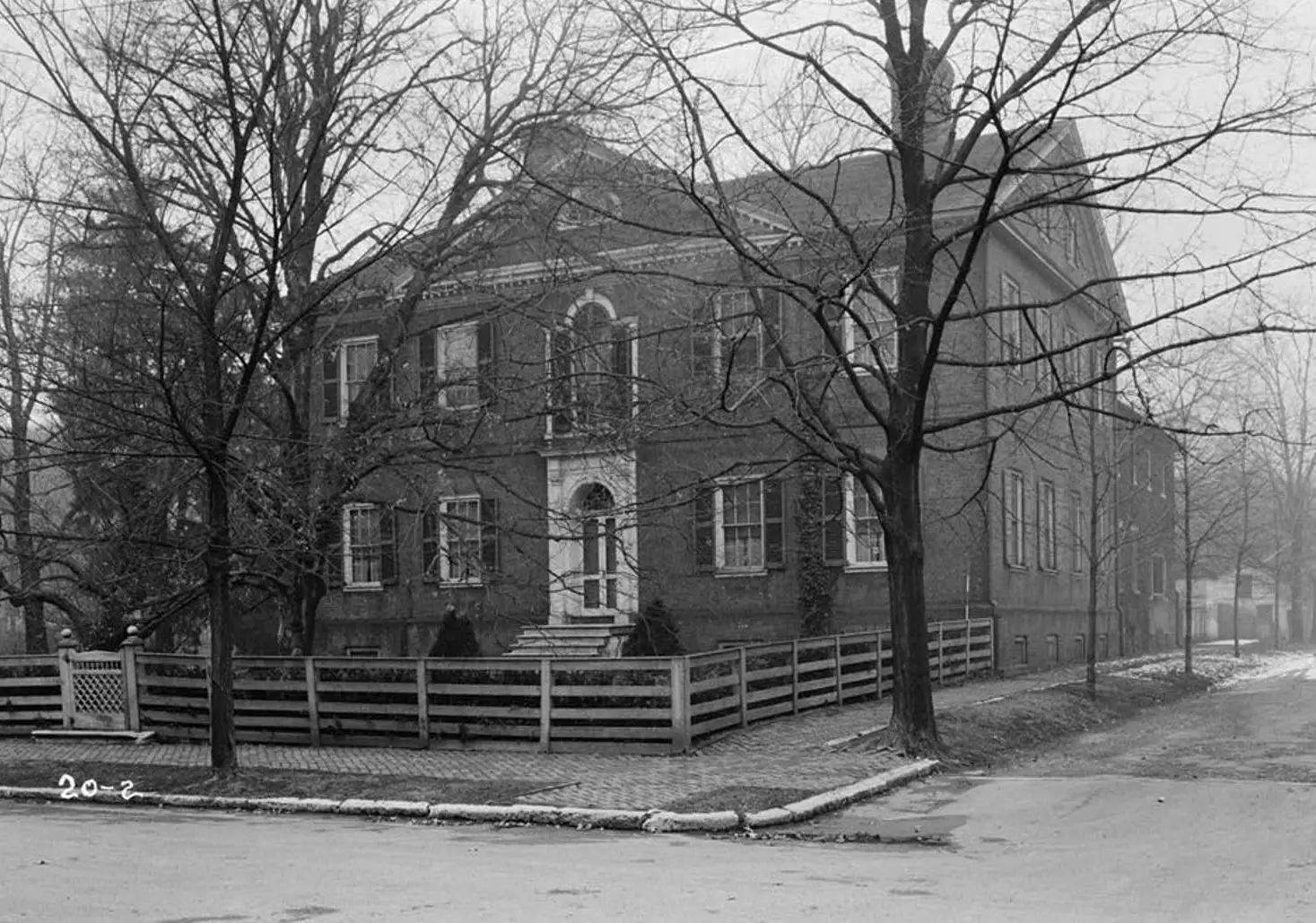
Historic house · Frankfort, KY
Liberty Hall Historic Site
Liberty Hall in Frankfort is the Federal-style home Senator John Brown built from 1796, now a museum.
Well DocumentedTours onlyAlso a historic house · also reported: music, doors
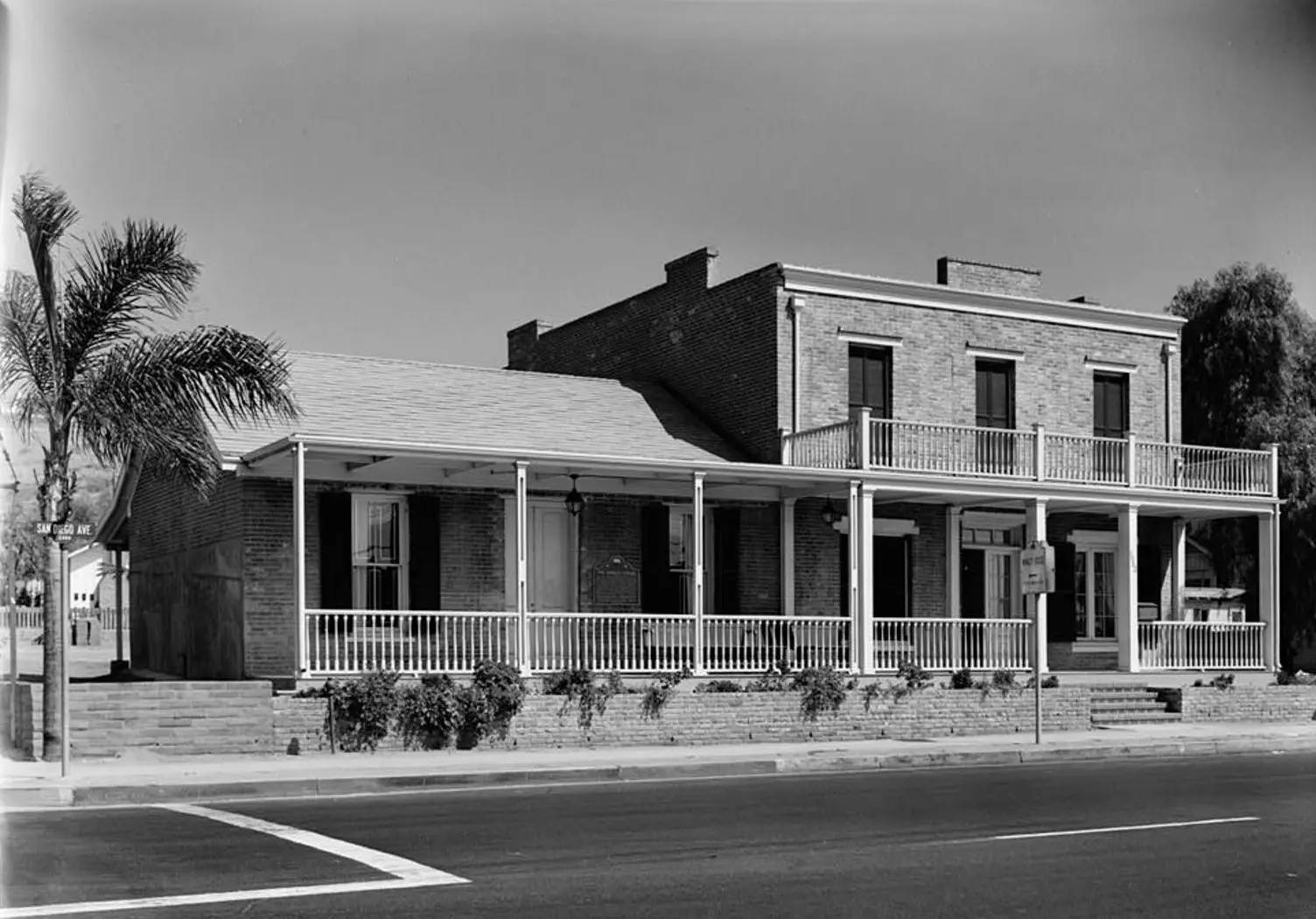
Historic house · San Diego, CA
Whaley House
Footsteps, slamming doors and figures reported by museum staff since the 1960s, on the site of an 1852 hanging.
Documented AccountsOpen to visitorsAlso a historic house · also reported: cold spots, shadow figures
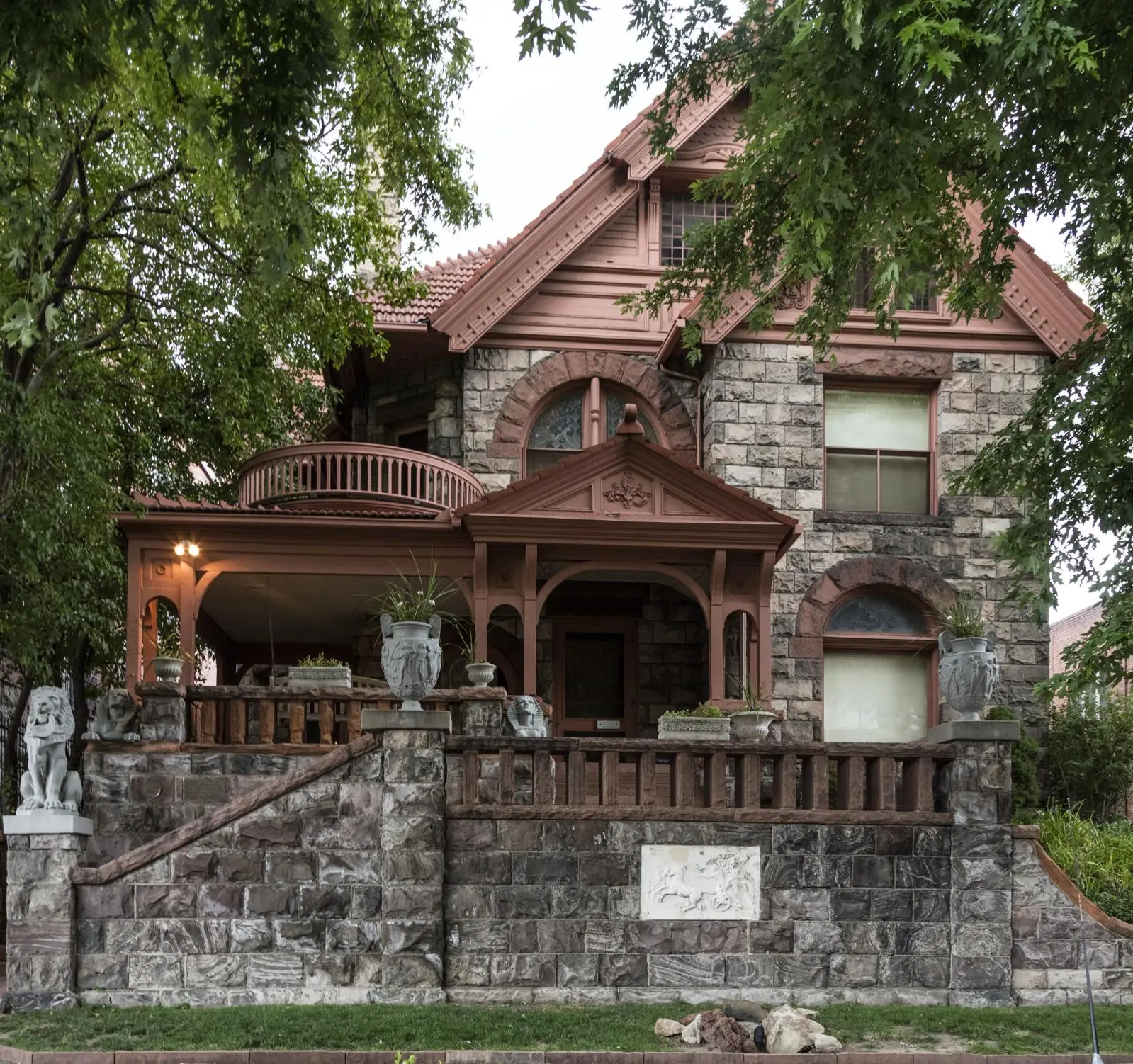
Historic house · Denver, CO
Molly Brown House Museum
The Molly Brown House is the late-1880s Capitol Hill home of Titanic survivor Margaret Brown, now a museum run by Historic Denver.
Documented AccountsOpen to visitors