← Portland Lone Fir Cemetery
Lone Fir Cemetery
History, the hospital patients, Block 14 and the ghost stories
Portland, Oregon
Lone Fir is Portland's pioneer cemetery, in use since 1846, where about 25,000 people are buried, including 185 patients of Oregon's first psychiatric hospital and many Chinese immigrants in Block 14.
What do we know about Lone Fir Cemetery?
The haunted reputation rests on roundups that describe no experience and on a ghost-tour company's page whose witnesses cannot be traced and whose history conflicts with the records. We found no traceable account.

Our rating of the reports about Lone Fir Cemetery: Unverified. A haunted reputation or legend, but no traceable account of an experience so far. The rating describes the evidence for the reports, not whether the place is haunted.
- Reported accounts
- 2
- Counted for the rating
- 0
- Research sources
- 8
Counted for the rating: independent accounts we could trace to a witness. Retellings of the same story count once, and staff passing on what visitors said aren’t counted. How we count
Reported experiences don’t establish a supernatural cause.
Read our evidence assessment →The hauntings
Accounts, encounters and stories associated with Lone Fir Cemetery.

What has been reported?
- Apparitions
- Voices
Phenomena described in accounts associated with this location — not independently verified events.
Reported experiences
2 published and reported accounts, each assessed by its source.
- No traceable witness
Note: Neither describes any experience or names any witness.
Account 02
Ghost City Tours
A ghost-tour company's website says a former groundskeeper is still seen tending graves, and describes a woman in black, children's voices and figures elsewhere in the cemetery.[8]
- Apparitions
- Voices
No traceable witnessNote: No witness can be traced. The groundskeeper it names does not match the records, which give a different sexton for 1888 to 1928, and it misdates the hospital. It also attaches ghost stories to the Chinese section and to the hospital patients; we do not repeat them.
Read full account ›
A ghost-tour company's website says a former groundskeeper is still seen tending graves, and describes a woman in black, children's voices and figures elsewhere in the cemetery.[8]
Before you go

Planning a visit?
Outside only
You can see it from public land; the inside isn’t open.
Access details ›
A working cemetery owned by Metro, open daily until sunset; check Metro's site and its visitor rules before you go. Funerals still take place here, and Block 14 is a burial ground under construction as a memorial; please be respectful.
Entry
Cost not confirmed
Access last checked November 19, 2026. Confirm times and prices before you travel.
The history of Lone Fir Cemetery
Lone Fir is Portland's pioneer cemetery, in use since 1846, where about 25,000 people are buried, including 185 patients of Oregon's first psychiatric hospital and many Chinese immigrants in Block 14. It appears in haunted-place roundups and a ghost-tour company's stories, but we found no traceable account of an experience. It is open daily.
- Established
- 1846–1901
- Also known as
- Lone Fir Pioneer Cemetery
Portland's pioneer cemetery
Lone Fir began with a single grave: Emmor Stephens was buried here in 1846 on what was then farmland east of the Willamette. The ground was platted as Mount Crawford Cemetery in 1855 and renamed Lone Fir in 1866 after a fir tree that still stands. About 25,000 people are buried on its 30.5 acres, and it was listed on the National Register of Historic Places in 2007.
The hospital patients
Oregon's first psychiatric hospital, the Oregon Hospital for the Insane, opened nearby in 1862 under Dr. James C. Hawthorne and Dr. A.M. Loryea, and closed in 1883 when the state hospital in Salem opened. Records show that 185 of its patients were buried at Lone Fir, many in unmarked graves. Metro's research has found 61 of their graves, 54 of them in Block 10, which old records call the asylum burial ground; the long-held belief that they lay in Block 14 is now thought unlikely. Metro has set 48 flat markers with names, where known, and burial years.
The Chinese section
Metro's research counts more than 3,000 Chinese and Chinese American people buried at Lone Fir between the 1860s and the 1920s, most in Block 14; the 2007 National Register nomination counted 1,131. Many remains were exhumed and sent home to China, as custom required, in 1928 and 1948, but not all. In 1952 the county built an office on the block. After an archaeological study confirmed that burials remained, the building came down and the block was returned to the cemetery in 2007. A memorial garden is due to open in early 2027.
The haunted reputation
Lone Fir's reputation is mostly atmosphere. Halloween tours here have told history, not ghost stories. A 2012 magazine listed it among Oregon's haunted places, and a 2019 comic feature called it 'haunted as hell', but neither described an experience. A ghost-tour company's site tells of a groundskeeper still tending graves and a woman in black, with no traceable witness; its groundskeeper does not match the records. It also attaches ghost stories to the Chinese section and the patients' graves, which we do not repeat.
Through the years
1862
Hospital opens nearby
The Oregon Hospital for the Insane, the state's first psychiatric hospital, was opened in East Portland in 1862 by Dr. James C. Hawthorne and Dr. A.M. Loryea on land given by James Stephens; it closed in 1883 when…
Read more ›
The Oregon Hospital for the Insane, the state's first psychiatric hospital, was opened in East Portland in 1862 by Dr. James C. Hawthorne and Dr. A.M. Loryea on land given by James Stephens; it closed in 1883 when the state hospital in Salem opened, and Hawthorne Boulevard is named for its co-founder.[3][2]
1891
Block 14 set aside
According to Metro's research, more than 3,000 Chinese and Chinese American people were buried at Lone Fir between the 1860s and the 1920s, most in Block 14, which a railroad company bought in 1891 to bury its Chinese…
Read more ›
According to Metro's research, more than 3,000 Chinese and Chinese American people were buried at Lone Fir between the 1860s and the 1920s, most in Block 14, which a railroad company bought in 1891 to bury its Chinese workers; in keeping with custom, many remains were exhumed and returned to China, including 526 in 1928 and more in 1948, but some remain in unmarked graves.[3][2]
Caveat: The 2007 nomination counted 1,131 Chinese burials; Metro's later research more than doubled the figure.
2007
Block 14 returned to the cemetery
In 1952 Multnomah County built a two-story office building on Block 14, believing all burials there had been removed; after an archaeological study found remains, the building was demolished in 2005 and the block was returned to the…
Read more ›
In 1952 Multnomah County built a two-story office building on Block 14, believing all burials there had been removed; after an archaeological study found remains, the building was demolished in 2005 and the block was returned to the cemetery on January 4, 2007. A memorial garden there is expected to be finished in early 2027.[3][2]
2025
Markers for patients' graves
Records show that 185 patients of the hospital were buried at Lone Fir, many in unmarked graves. Researchers have found the burial places of 61, 54 of them in Block 10, which old records call the asylum burial…
Read more ›
Records show that 185 patients of the hospital were buried at Lone Fir, many in unmarked graves. Researchers have found the burial places of 61, 54 of them in Block 10, which old records call the asylum burial ground; contrary to earlier belief, including the 2007 nomination, it is highly unlikely any were buried in Block 14. Metro has since placed 48 flat markers bearing names, where known, and burial years.[3][4]
Contradicted by source 2
Also recorded
Halloween tours at Lone Fir have told the cemetery's history, including the hospital patients and Block 14, rather than ghost stories.[5]
The research conclusion

Why it has this rating
A thin reputation from ghost tours, with no named witness. The 185 patients of the Hawthorne asylum and the more than 3,000 Chinese and Chinese American people buried here are documented history and are not ghost material.
Read the full written assessment ›
The cemetery's history is well recorded by its 2007 National Register nomination and by Metro, whose newer research corrects the nomination on where the hospital patients lie and on how many Chinese people were buried here.
The haunted reputation rests on roundups that describe no experience and on a ghost-tour company's page whose witnesses cannot be traced and whose history conflicts with the records. We found no traceable account.
The sources behind the story
8 research references support this entry.

1Metro (Portland regional government)Lone Fir Cemetery Official or site history · Reference 01
Lone Fir Cemetery. Metro (Portland regional government), 2026.
Owner's page checked November 17, 2026: Emmor Stephens buried 1846; platted as Mount Crawford Cemetery 1855; renamed Lone Fir in 1866; 25,000 people buried; more than 700 trees; open daily 7 a.m. to sunset; 649 SE 26th Avenue; Block 14 memorial under way. No fee information and no ghosts.
Accessed November 17, 2026.
2National Park ServiceLone Fir Cemetery (National Register of Historic Places registration form, NRIS 07000824) Register or nomination · Reference 02
Lone Fir Cemetery (National Register of Historic Places registration form, NRIS 07000824). National Park Service, 2007.
2007 nomination: first burial 1846; platted as Mt. Crawford Cemetery in 1855; about 25,000 interred on 30.5 acres; Dr. J.C. Hawthorne's Oregon Hospital for the Insane opened in 1862 on land given by James Stephens and closed in 1883; at least 132 patients buried, then believed to be in Block 14; the Suburban Railroad Company bought Block 14 in 1891 for Chinese workers' burials; exhumations for return to China in 1928 (526 people) and 1948; Morrison Building put on Block 14 in 1952, demolished 2005; Block 14 deeded back January 4, 2007 after an archaeological study found remains. Sexton Wilson Benefiel cared for the grounds from 1888 to 1928. No ghosts.
Accessed November 17, 2026.
3Metro (Portland regional government)Chinese cemetery memorial at Lone Fir Garden Official or site history · Reference 03
Chinese cemetery memorial at Lone Fir Garden. Metro (Portland regional government), 2026.
Project page: more than 3,000 Chinese and Chinese American people buried at Lone Fir between the 1860s and 1920s, most in Block 14; many exhumed and returned to China, some still in unmarked graves; Block 14 paved in the 1950s for a county office; memorial expected early 2027. Records show 185 patients of the Oregon Hospital for the Insane buried in various parts of the cemetery; burial places found for 61, 54 of them in Block 10, the 'asylum burial ground'; 'highly unlikely' patients were buried in Block 14. Links Metro's 2023 and 2026 research reports (not consulted).
Accessed November 17, 2026.
4The Southeast Examiner (from Metro)Honoring Hospital Patients at Lone Fir Newspaper · Reference 04
Hannah Erickson, Honoring Hospital Patients at Lone Fir. The Southeast Examiner (from Metro), 2025-08-01.
Reprint of a Metro story: 185 patients buried; 61 graves located, 54 in Block 10; 48 flat stone markers with names (where known) and burial years installed for unmarked patient graves; Metro adding Block 10's history to a new welcome sign.
Accessed November 17, 2026.
5Portland MercuryThe Ghosts of Lone Fir Cemetery Newspaper · Reference 05
Sarah Shay Mirk, The Ghosts of Lone Fir Cemetery. Portland Mercury, 2009-10-29.
Alt-weekly feature on a Halloween history tour led by a volunteer caretaker: covers the hospital's unclaimed patients and Block 14. Despite the title, it describes no ghost sightings.
Accessed November 17, 2026.
6Portland MercuryGhost Busted: The Mercury Uses Science to Expose Portland's Real-est and Fakiest Ghosts! Newspaper · Reference 06
Wm. Steven Humphrey (Lone Fir section), Ghost Busted: The Mercury Uses Science to Expose Portland's Real-est and Fakiest Ghosts!. Portland Mercury, 2019.
Comic Halloween feature (posted online 2021 from a 2019 issue) that rates Lone Fir 'Haunted as Hell!' Satire: no account of any experience.
Accessed November 17, 2026.
71859 Oregon's MagazineHaunted Oregon Magazine · Reference 07
Lee Lewis Husk, Haunted Oregon. 1859 Oregon's Magazine, 2012-09-01.
Statewide magazine roundup that lists Lone Fir among Oregon's haunted places, noting its unmarked graves and monthly 'spooky' tours. Reports no sighting and names no witness.
Accessed November 17, 2026.
8Ghost City ToursThe Hauntings at Lone Fir Cemetery Website · Reference 08
Tim Nealon, The Hauntings at Lone Fir Cemetery. Ghost City Tours.
Undated marketing page of a commercial ghost-tour company: a groundskeeper's ghost said to tend graves, a 'woman in black', children's voices, and stories attached to the Chinese section and to hospital patients. Its witnesses, journal and footage are unnamed or uncited, and its history conflicts with the records (wrong groundskeeper and wrong dates for the hospital).
Accessed November 17, 2026.
More haunted places

Explore nearby

Similar places
Also a cemetery
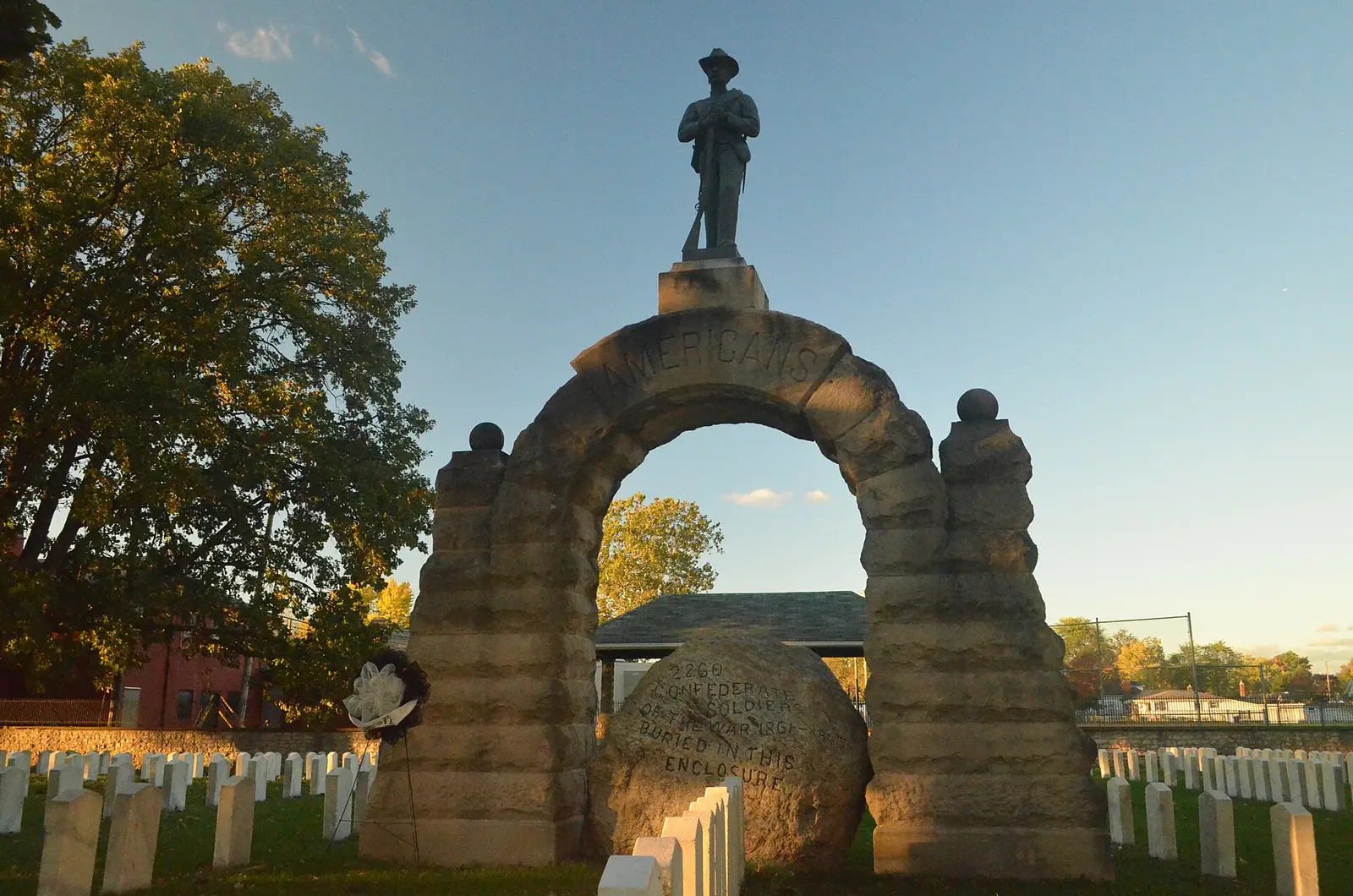
Cemetery · Columbus, OH
Camp Chase Confederate Cemetery
Camp Chase Confederate Cemetery holds more than 2,000 Confederate prisoners who died at a Union prison camp in Columbus between 1861 and 1865.
Documented AccountsOutside onlyAlso a cemetery
Cemetery · New Orleans, LA
Lafayette Cemetery No. 1
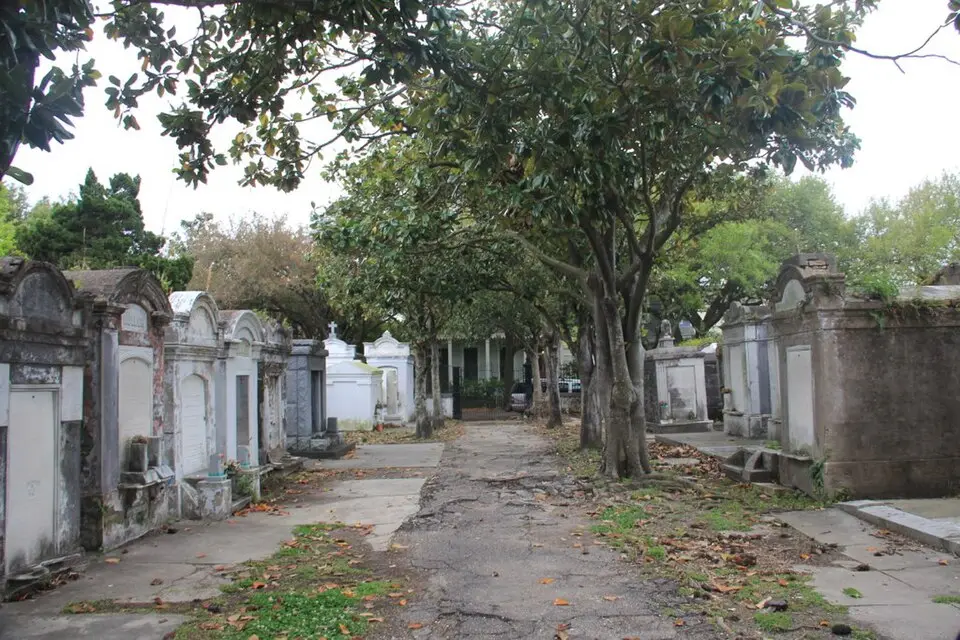
Lafayette Cemetery No. 1 is an above-ground cemetery in the Garden District, founded in 1833, where many yellow fever victims were buried.
UnverifiedTours onlyAlso a cemetery
Cemetery · New Orleans, LA
St. Louis Cemetery No. 1
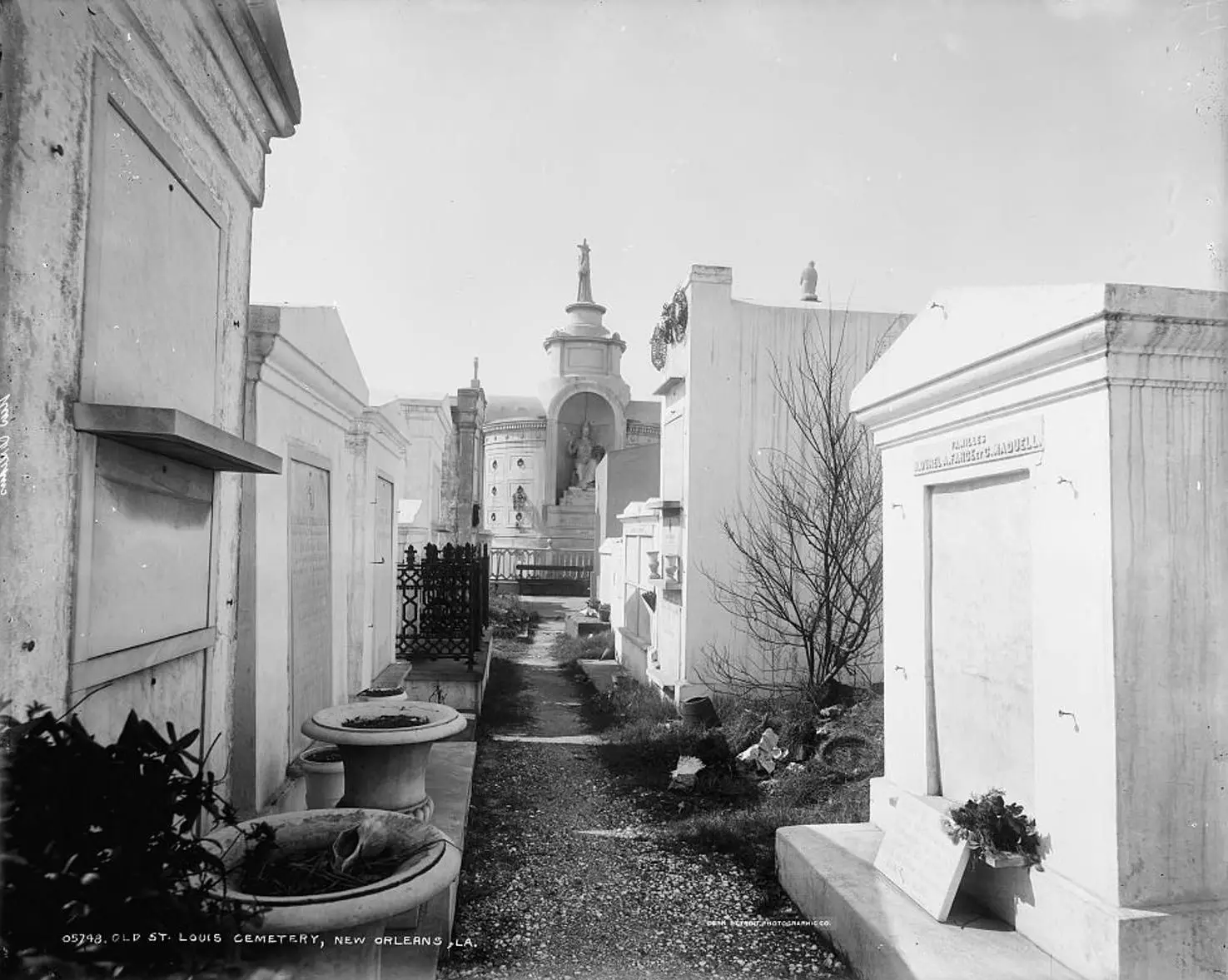
New Orleans' oldest surviving cemetery, founded in 1789 and known for its above-ground tombs.
UnverifiedTours onlyAlso a cemetery
Cemetery · Boston, MA
Boston Common and the Central Burying Ground
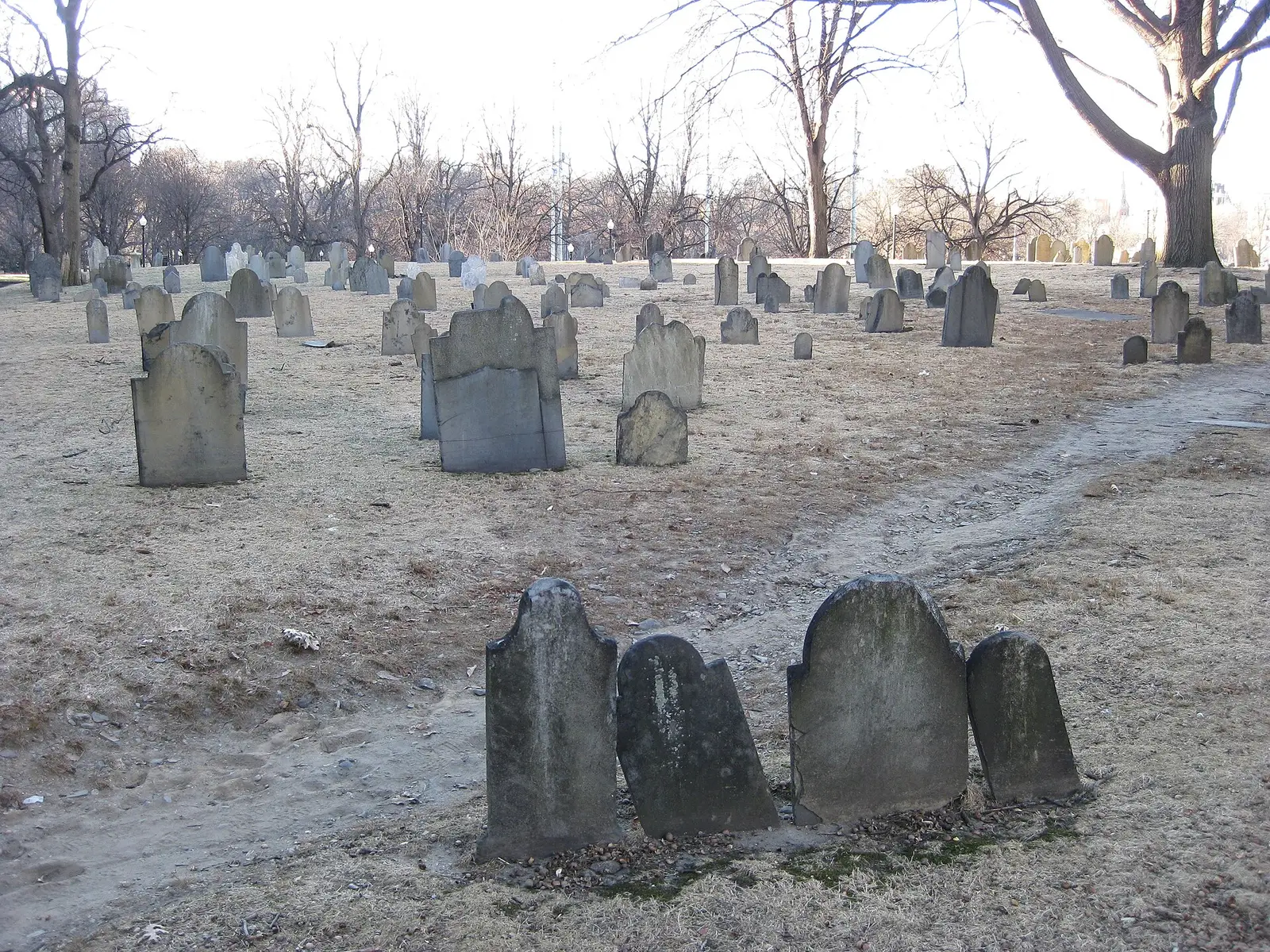
The Central Burying Ground is the 1756 graveyard on the Boylston Street edge of Boston Common, the city's oldest park and once a place of public hangings.
UnverifiedOutside only