← Sullivan's Island Fort Moultrie
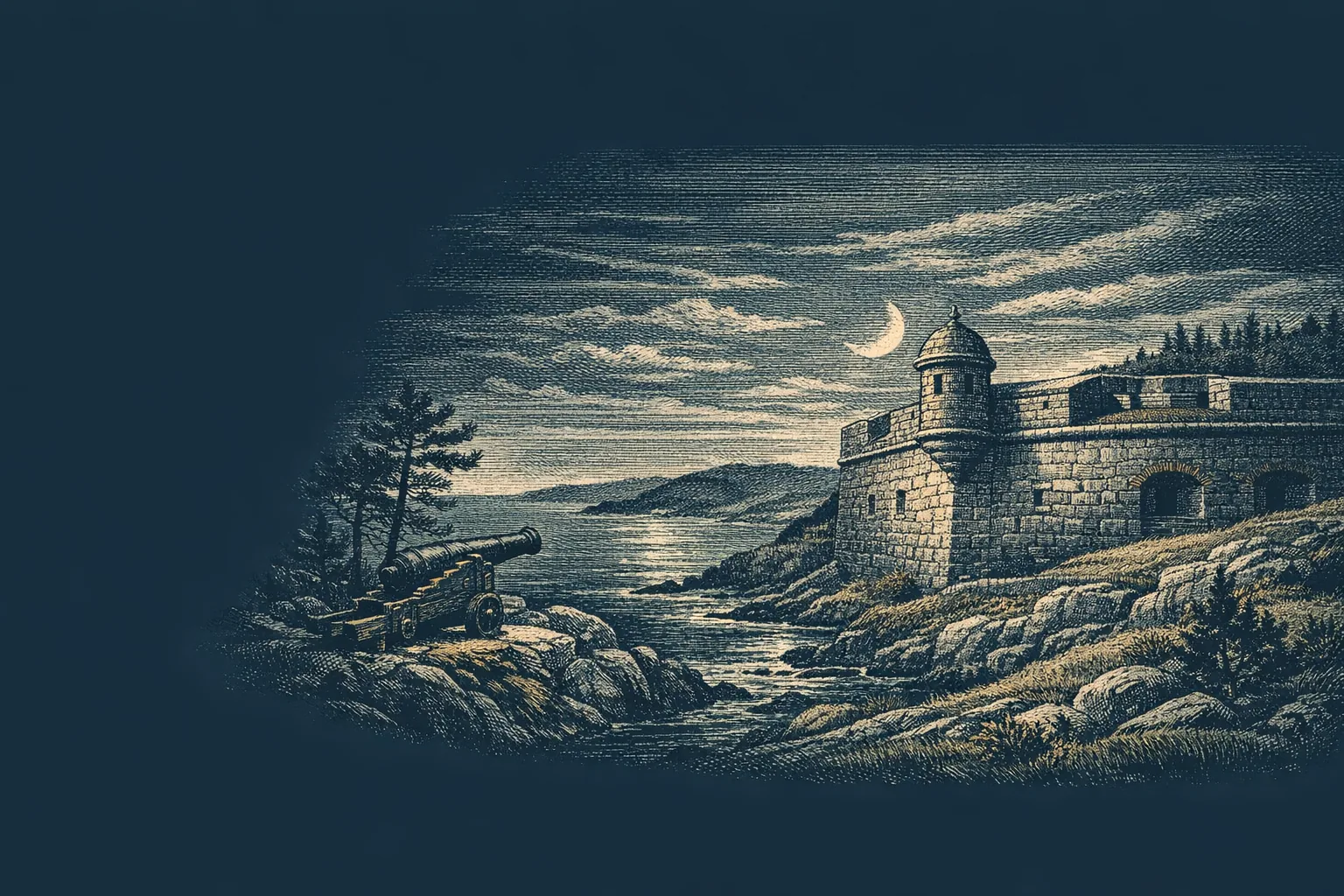
Fort Moultrie
Sullivan's Island, South Carolina
Fort Moultrie on Sullivan's Island has guarded Charleston Harbor since the 1776 battle that gave it its name.
Decorative engraving of a fort.
What do we know about Fort Moultrie?
The ghost stories are folklore. The headless-Osceola and spirit-pelican legends have no named witnesses, and the Poe story is a tour operator's retelling of an untraceable encounter on the beach. We found no account of anyone experiencing anything at the fort itself.

Our rating of the reports about Fort Moultrie: Unverified. A haunted reputation or legend, but no traceable account of an experience so far. The rating describes the evidence for the reports, not whether the place is haunted.
- Reported account
- 1
- Counted for the rating
- 0
- Research sources
- 8
Counted for the rating: independent accounts we could trace to a witness. Retellings of the same story count once, and staff passing on what visitors said aren’t counted. How we count
Reported experiences don’t establish a supernatural cause.
Read our evidence assessment →The hauntings
Accounts, encounters and stories associated with Fort Moultrie.

What has been reported?
- Apparitions
- Voices
Phenomena described in accounts associated with this location — not independently verified events.
Reported experiences
1 published and reported account, each assessed by its source.
Account 01 · 2021
Mount Pleasant Magazine, 2021
A Sullivan's Island story told by a local pirate-tour operator describes a woman on vacation in 2005 who met a tall, dark-haired man on the beach who talked about seashells, vanished, and whom she later recognized in a portrait as Edgar Allan Poe.[8]
- Apparitions
- Voices
No traceable witnessNote: Secondhand, through a tour operator; the witness is not traceable, and the story is set on the island's beach, not at the fort.
Read full account ›
A Sullivan's Island story told by a local pirate-tour operator describes a woman on vacation in 2005 who met a tall, dark-haired man on the beach who talked about seashells, vanished, and whom she later recognized in a portrait as Edgar Allan Poe.[8]
Legends & disputed stories
Stories told about the place that the records don’t confirm.

- Legend
A legend says that when a full moon falls on the anniversary of Osceola's death, his headless ghost rises from the grave and roams the grounds of Fort Moultrie searching for his head.[6]
What the research shows: No source is given for the legend, and it draws on a real desecration of a Seminole leader's body.
- Legend
Charleston ghost-tour lore says Osceola's spirit lingers near the fort as a pelican, seen flying over the burial grounds and spilling drops of black liquid, and perched in the palmettos and on the fort's embankments.[7]
What the research shows: Told by a ghost-tour author; no witness is named.
Before you go

Planning a visit?
Open to visitors
Parts of the inside are open to the public.
Access details ›
National Park Service site; the fort and grounds are a fee area with passes shown at the visitor center, and children under 16 do not need one. Osceola's grave lies outside the fort's entrance; please treat it as a grave. Check the official site for current hours.
Entry
Paid entry
Access last checked November 17, 2026. Confirm times and prices before you travel.
The history of Fort Moultrie
Fort Moultrie on Sullivan's Island has guarded Charleston Harbor since the 1776 battle that gave it its name. Poe served there in 1827–28, and the Seminole leader Osceola died there as a prisoner in 1838. Its ghost stories are legends about Osceola, whose head was removed after his death, plus a Poe tale set on the nearby beach. The fort is a National Park Service site with an entrance fee.
- Established
- 1807–1811
- Also known as
- Fort Sumter and Fort Moultrie National Historical Park (Fort Moultrie unit)
Three forts
On June 28, 1776, an unfinished fort of palmetto logs and sand on Sullivan's Island, under Colonel William Moultrie, held off nine British warships, and the fort took his name. A second fort, finished in 1798, was destroyed by a hurricane in 1804. The present brick fort was finished in 1809 by the National Park Service's dating, though its National Register nomination says it was built between 1807 and 1811. It was wrecked by rifled cannon in the Civil War, modernized again and again, and closed by the Army in 1947. It became part of the national park in 1960.
Poe the soldier
Edgar Allan Poe enlisted in 1827 under an assumed name, and his battery was sent to Fort Moultrie that fall. He was promoted to artificer there. Sullivan's Island later became the setting of his 1843 story 'The Gold Bug'.
Osceola
The Seminole leader Osceola was seized in Florida in October 1837 while negotiating under a flag of truce, and he was moved to Fort Moultrie with more than 200 of his people. Already ill, he died there on January 30, 1838. He was buried outside the fort's gate, but the army doctor secretly removed his head, which, according to the park's 1973 National Register nomination, was later lost in a museum fire. His grave was disturbed in a 1966 theft attempt, and his remains were reburied in concrete in 1968.
The legends
The fort's ghost stories grow out of that history. One legend says that when a full moon falls on the anniversary of his death, Osceola's headless ghost roams the grounds looking for his head. Charleston ghost-tour lore instead has his spirit appear as a pelican over the burial grounds. Neither story names anyone who saw anything, and both turn a real wrong done to a Seminole leader into a ghost story.
A separate Sullivan's Island tale, told by a local tour operator, describes a vacationer in 2005 who talked with a dark-haired stranger on the beach and later recognized him in a portrait as Poe. It is set on the beach, not at the fort, and the witness cannot be traced.
Through the years
1809
Present fort completed
A second Fort Moultrie, begun in 1794 and finished in 1798, was destroyed by a hurricane in 1804. The present brick fort followed under the Second System of coastal defenses and was finished in 1809, according to the…
Read more ›
A second Fort Moultrie, begun in 1794 and finished in 1798, was destroyed by a hurricane in 1804. The present brick fort followed under the Second System of coastal defenses and was finished in 1809, according to the NPS; the nomination says it was built between 1807 and 1811.[1][2][3]
Caveat: The NPS dates its completion to December 19, 1809.
1827–1828
Poe at Fort Moultrie
Edgar Allan Poe, who had enlisted in May 1827 under an assumed name, served at Fort Moultrie after his battery was ordered there on October 31, 1827, and was promoted to artificer. His 1843 story 'The Gold Bug' is set on Sullivan's Island.[4]
1838
Osceola dies at the fort
The Seminole leader Osceola, captured in October 1837 while negotiating under a flag of truce, was moved to Fort Moultrie with about 237 of his people and arrived on January 1, 1838. Already ill, he died there on January 30, 1838.[2][5]
Caveat: The nomination gives quinsy as the cause of death; the NPS page says only that he was in poor health.
1947
Army closes the fort
During the Civil War the fort's brick walls were wrecked by rifled cannon. It was rebuilt and rearmed several times, served in coastal defense until the Army closed it in 1947, and was added to Fort Sumter National…
Read more ›
During the Civil War the fort's brick walls were wrecked by rifled cannon. It was rebuilt and rearmed several times, served in coastal defense until the Army closed it in 1947, and was added to Fort Sumter National Monument in 1960. It is restored to show its periods from 1809 to 1947.[1][2][3]
1968
Osceola's remains reburied
Osceola was buried outside the fort's sallyport, but the army physician, Dr. Weedon, secretly removed his head, which was later lost in a museum fire. After an attempt to steal the remains in 1966, an excavation in 1968…
The research conclusion

Why it has this rating
Only legends: a headless Osceola and a spirit pelican, plus an untraceable beach story about Poe. The removal of Osceola's head after his death in 1838 is a documented desecration, not ghost material.
Read the full written assessment ›
The fort's history, Poe's service there and Osceola's imprisonment, death and burial are well recorded by the National Park Service and the park's National Register nomination.
The ghost stories are folklore. The headless-Osceola and spirit-pelican legends have no named witnesses, and the Poe story is a tour operator's retelling of an untraceable encounter on the beach. We found no account of anyone experiencing anything at the fort itself.
The sources behind the story
8 research references support this entry.

1National Park ServiceFort Moultrie Bicentennial (news release) Official or site history · Reference 01
Fort Moultrie Bicentennial (news release). National Park Service, 2009-12-08.
Archived release: the Army Corps of Engineers finished the present fort on December 19, 1809, the Army closed it in 1947, and it stands at 1214 Middle Street.
Accessed November 17, 2026.
2National Park Service (NPGallery)National Register of Historic Places Inventory–Nomination Form for Federal Properties: Fort Sumter National Monument (NRIS 66000101) Register or nomination · Reference 02
National Register of Historic Places Inventory–Nomination Form for Federal Properties: Fort Sumter National Monument (NRIS 66000101). National Park Service (NPGallery), 1973.
Federal nomination prepared by park historian Benjamin G. Nelson (dated 1973), with entries for each Fort Moultrie structure. Gives the 1776 palmetto fort, the 1798 fort destroyed in 1804, the present fort built 1807–1811 and added to the monument in 1960, its later batteries, and a detailed entry on Osceola's grave (FOSU 9): arrival on January 1, 1838, death from quinsy on January 30, 1838, removal of his head by the army physician Dr. Weedon, the 1966 attempted theft and 1968 reburial. Coordinates 32°45'33" N, 79°51'29" W. Says nothing about ghosts.
Accessed November 17, 2026.
3National Park ServiceFort Moultrie Official or site history · Reference 03
Fort Moultrie. National Park Service, 2026-09-28.
Park history page (last updated September 28, 2026): the June 28, 1776 battle, the British capture in 1780, the second fort of 1798 destroyed by an 1804 hurricane, the brick fort of 1809, the Civil War, later modernization and the restored fort showing 1809–1947.
Accessed November 17, 2026.
4National Park ServiceEdgar Allan Poe Official or site history · Reference 04
Edgar Allan Poe. National Park Service, 2023-01-30.
NPS biography: enlisted May 26, 1827 under an assumed name; his battery ordered to Fort Moultrie on October 31, 1827; promoted to artificer; left the Army in April 1829; 'The Gold Bug' (1843) was inspired by Sullivan's Island.
Accessed November 17, 2026.
5National Park ServiceOsceola Official or site history · Reference 05
Osceola. National Park Service, 2021-02-11.
NPS biography: captured under a flag of truce in October 1837, moved to Fort Moultrie with 237 of his people, died there on January 30, 1838, buried outside the fort's sallyport. Does not mention the removal of his head.
Accessed November 17, 2026.
6Mixsonian (personal history site)Osceola (introduction) Website · Reference 06
Larry Mixson, Osceola (introduction). Mixsonian (personal history site).
Personal history site. Opens with the legend that when a full moon falls on the anniversary of his death, Osceola's headless ghost rises and roams Fort Moultrie searching for his head. Cites no source for the legend.
Accessed November 17, 2026.
7Charleston MagazineHaunted Charleston Magazine · Reference 07
Haunted Charleston. Charleston Magazine, 2013-10.
October 2013 feature presenting stories from ghost-tour guide and author Geordie Buxton. Tells of a spectral pelican near Fort Moultrie said to be Osceola's spirit, seen in flight spilling drops of black liquid over the burial grounds. Folklore, not an account of an experience.
Accessed November 17, 2026.
8Mount Pleasant MagazineStranger on the Beach: Famous Sullivan's Island Specter Magazine · Reference 08
Jenny Harrison, Stranger on the Beach: Famous Sullivan's Island Specter. Mount Pleasant Magazine, 2021.
Magazine retelling, credited to the owner of a Charleston pirate-tour company, of a 2005 beach encounter in which a vacationer met a dark-haired man who vanished and later recognized him in a portrait as Poe. The witness is not traceable and the story is set on the beach, not at the fort.
Accessed November 17, 2026.
More haunted places
Explore nearby
Hotel
Battery Carriage House Inn
Charleston, South Carolina · 4.3 miles away · By permission
Theater
Dock Street Theatre
Charleston, South Carolina · 4.4 miles away · Open to visitors
Museum
Old Exchange and Provost Dungeon
Charleston, South Carolina · 4.4 miles away · Open to visitors
Church
Unitarian Church in Charleston and churchyard
Charleston, South Carolina · 4.4 miles away · Open to visitors


Similar places
Also a fort
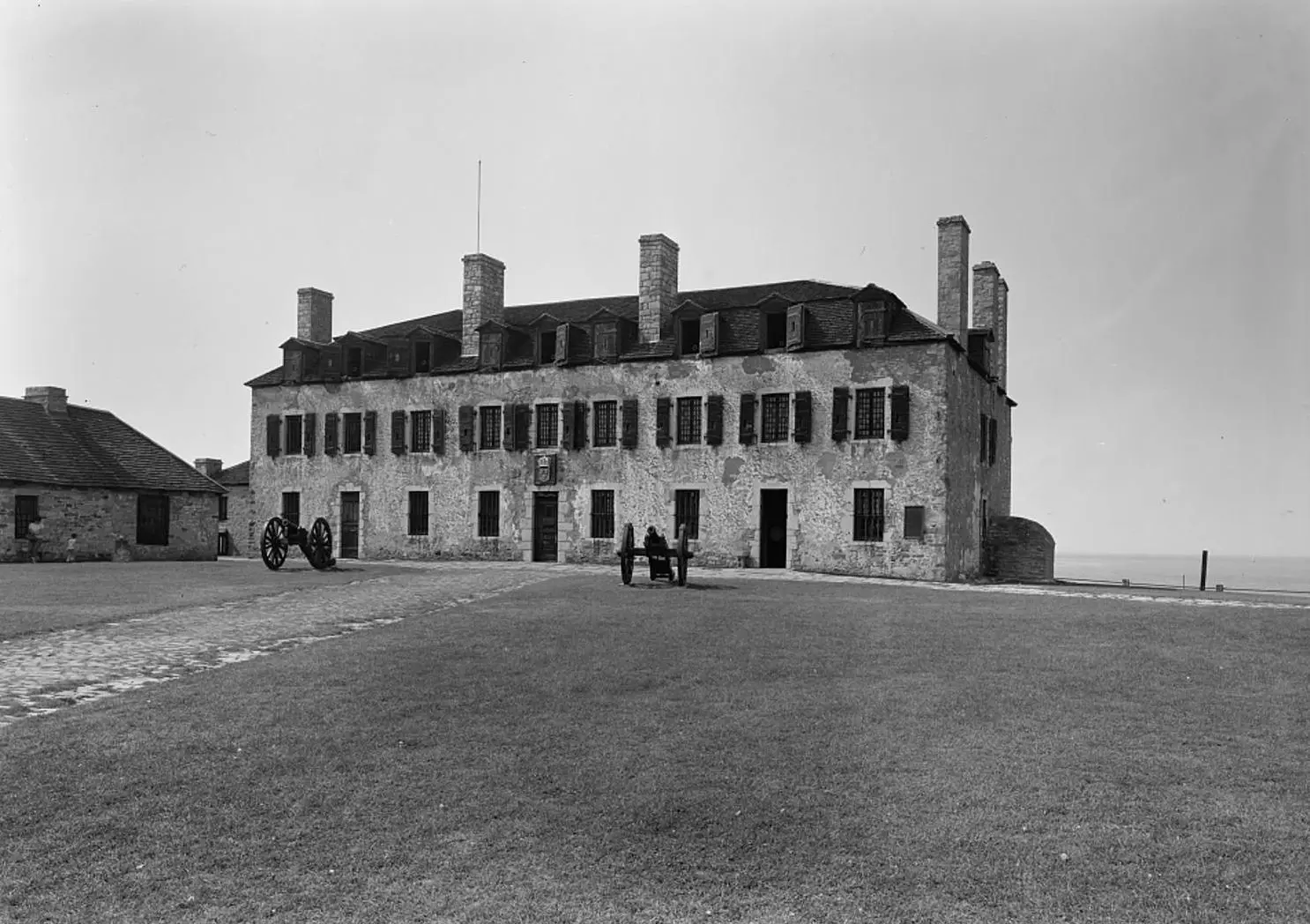
Fort · NY
Old Fort Niagara
Old Fort Niagara guards the mouth of the Niagara River; its French Castle, built in 1726–27, is the oldest masonry building in the Great Lakes basin.
Documented AccountsOpen to visitorsAlso a fort
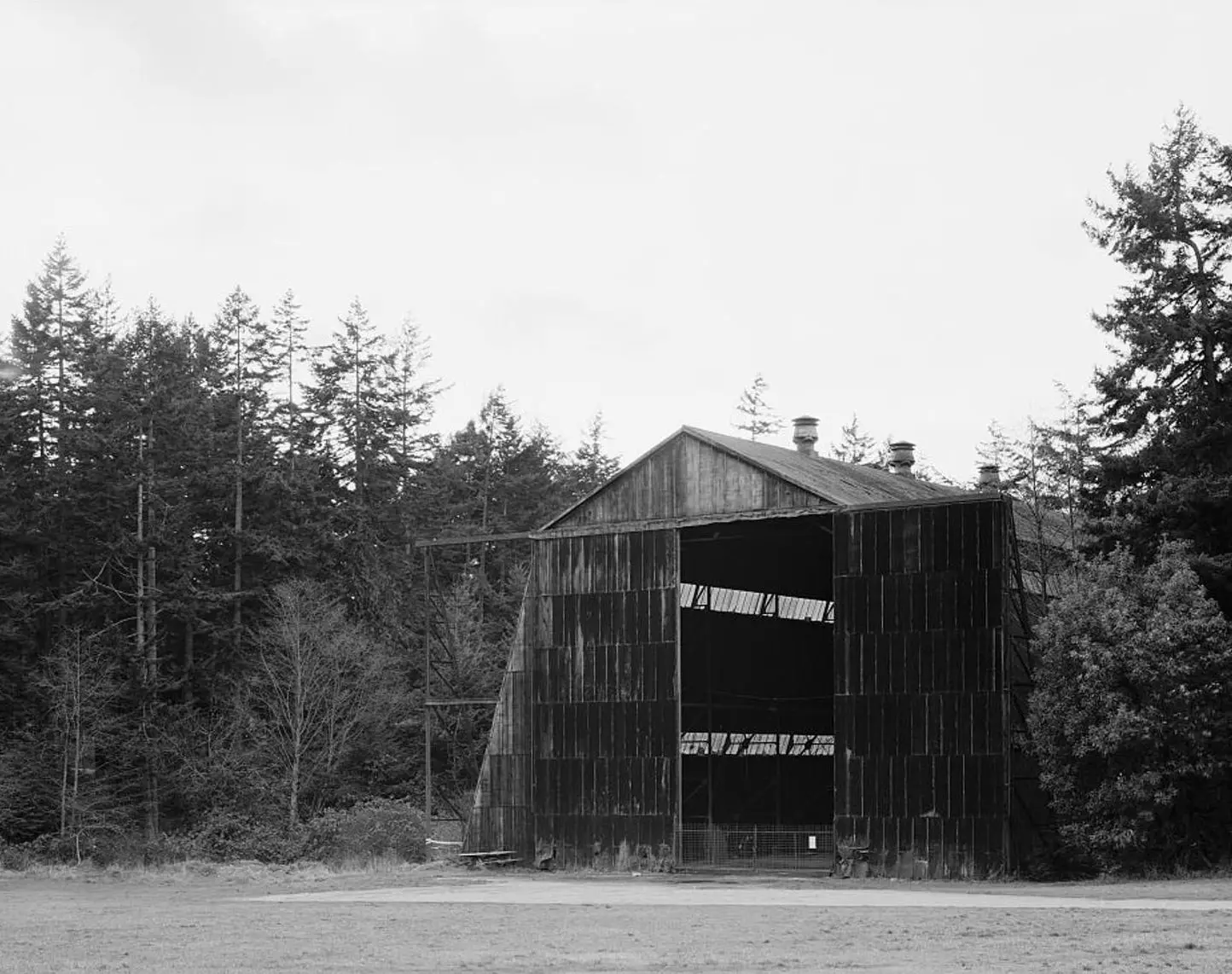
Fort · Port Townsend, WA
Fort Worden Historical State Park
Fort Worden is a 1902 coast artillery fort at Port Townsend, later a state juvenile treatment center and, since 1973, a state park.
Documented AccountsOutside onlyAlso a fort
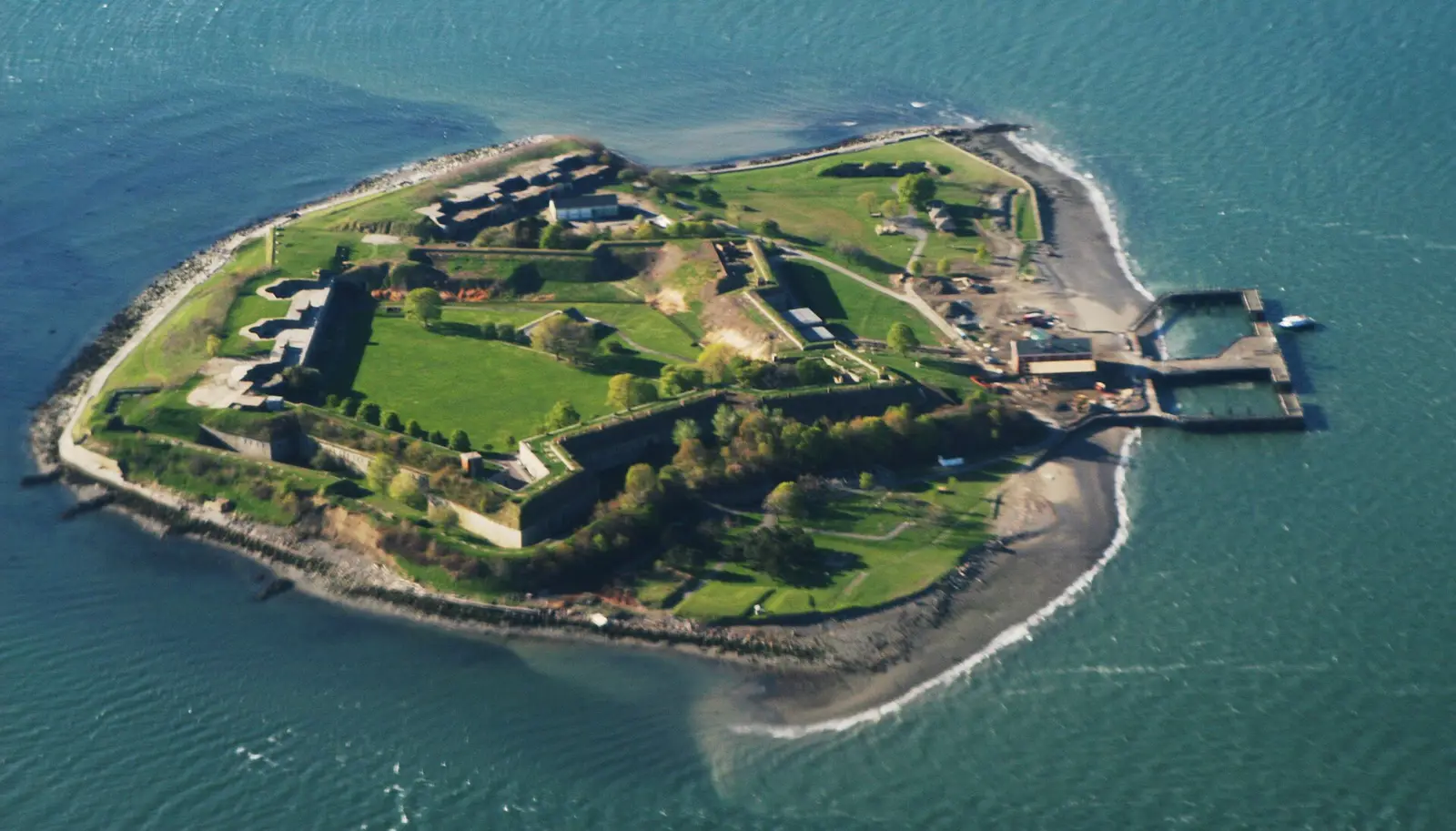
Fort · Boston, MA
Fort Warren
Fort Warren is a Civil War-era granite fort on Georges Island in Boston Harbor, where the Union held Confederate prisoners.
Documented AccountsOpen to visitorsAlso a fort
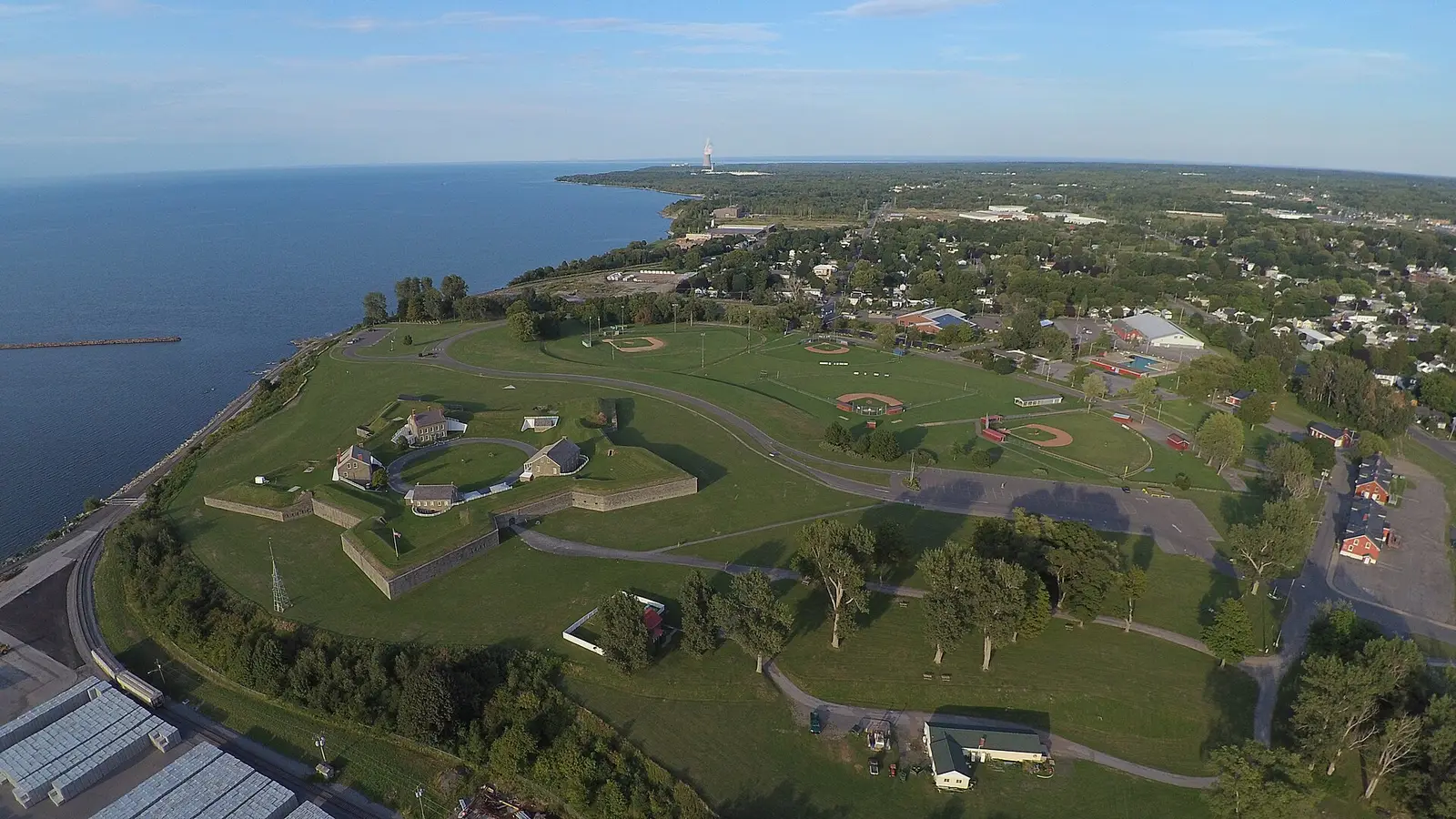
Fort · Oswego, NY
Fort Ontario State Historic Site
Fort Ontario in Oswego guarded the mouth of the Oswego River from 1755 and, in 1944–46, sheltered 982 refugees fleeing the Holocaust.
Documented AccountsOpen to visitors