← Salem Joshua Ward House
Joshua Ward House
Washington's lodging and a sheriff's ghost story
Salem, Massachusetts
The Joshua Ward House is a 1780s brick mansion in downtown Salem where George Washington slept in 1789, now a boutique hotel.
What do we know about Joshua Ward House?
The ghost stories are thinner. The best-traced item is a photograph taken in the 1980s, while a real estate firm had offices in the house, which Salem State University's archives blog and a ghost-tour company both describe as showing a ghostly woman. The ghost-tour company says it first appeared in a book by Robert Ellis Cahill, which we could not access.
Our rating of the reports about Joshua Ward House: Unverified. A haunted reputation or legend, but no traceable account of an experience so far. The rating describes the evidence for the reports, not whether the place is haunted.
- Reported accounts
- 4
- Counted for the rating
- 0
- Research sources
- 6
Counted for the rating: independent accounts we could trace to a witness. Retellings of the same story count once, and staff passing on what visitors said aren’t counted. How we count
Reported experiences don’t establish a supernatural cause.
Read our evidence assessment →The hauntings
Accounts, encounters and stories associated with Joshua Ward House.
What has been reported?
- Apparitions
- Being touched
- Cold spots
- Moving objects
Phenomena described in accounts associated with this location — not independently verified events.
Reported experiences
4 published and reported accounts, each assessed by its source.
Account 01 · April 11, 2023
Salem State University Archives and Special Collections, 2023
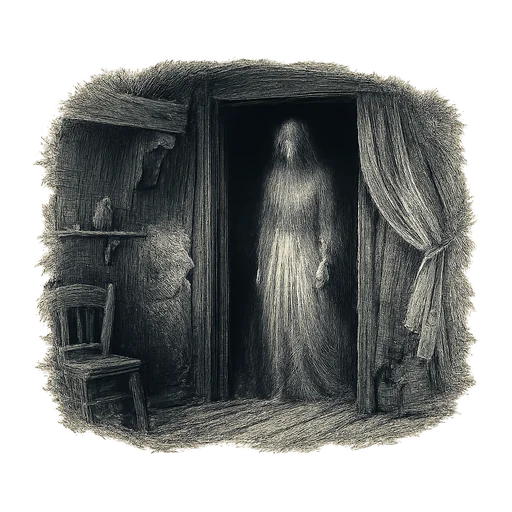
Salem State University's archives say that in the 1980s a photograph from an employee picture day at the house allegedly showed a ghostly woman, later called the "Lady in Black". A ghost-tour company describes it as a Polaroid taken at a real estate firm's holiday party…
- Apparitions
Published accountReported by An unnamed employee of a firm with offices in the house (via Salem State University Archives and Ghost City Tours, citing Robert Ellis Cahill)Note: The photographer and the woman photographed are not named, and a photograph is not itself an account of a sensory experience. We could not access Cahill's book (the Internet Archive copy is lending-only), so its date and wording are unchecked.
Read full account ›
Salem State University's archives say that in the 1980s a photograph from an employee picture day at the house allegedly showed a ghostly woman, later called the "Lady in Black". A ghost-tour company describes it as a Polaroid taken at a real estate firm's holiday party that showed a dark-haired, pale woman instead of the light-haired employee expected, and says it was first published in Robert Cahill's book Ghostly Haunts.[2][4][6]
Account 02
Ghost City Tours
A ghost-tour company says Robert Cahill's Ghostly Haunts tells of an unnamed visitor on the second floor who felt something tighten around his throat and turned to find the hallway empty; the company links the story to George Corwin.[6]
- Being touched
No traceable witnessNote: Known to us only secondhand; no witness name or date. The same page says there is no evidence Corwin ever harmed anyone at this house.
Read full account ›
A ghost-tour company says Robert Cahill's Ghostly Haunts tells of an unnamed visitor on the second floor who felt something tighten around his throat and turned to find the hallway empty; the company links the story to George Corwin.[6]
Account 03
Ghost City Tours
The same ghost-tour company says employees have found books pulled from shelves, cold spots in warm rooms and candles melted out of shape though never lit, and that men visiting the upper floor report a dark-haired woman and scratches on the chest.[6]
- Being touched
- Cold spots
- Apparitions
- Moving objects
No traceable witnessNote: No named witnesses or dates; a ghost-tour business's marketing.
Read full account ›
The same ghost-tour company says employees have found books pulled from shelves, cold spots in warm rooms and candles melted out of shape though never lit, and that men visiting the upper floor report a dark-haired woman and scratches on the chest.[6]
Account 04
The Merchant
The hotel that now occupies the house says its staff have never seen or felt anything unusual there. This is a report, but not an account of an experience.[4]
Published accountReported by The Merchant (Lark Hotels)Read full account ›
The hotel that now occupies the house says its staff have never seen or felt anything unusual there. This is a report, but not an account of an experience.[4]
Legends & disputed stories
Stories told about the place that the records don’t confirm.
- Legend
Local legend ties the haunting to Sheriff George Corwin and to the people persecuted in 1692. Some tellings say Corwin kept a jail on the site or was buried in its cellar; the National Register nomination says only that he once owned the site, and a ghost-tour company itself says he was buried in a family tomb.[4][6]
Before you go
Planning a visit?
By permission
Visits need permission from the owner or managers.
Access details ›
A working boutique hotel, The Merchant. Its rooms, including the room where Washington stayed, are for overnight guests; the brick front can be seen from Washington Street. Check the official site for bookings.
Entry
Paid entry
Access last checked November 17, 2026. Confirm times and prices before you travel.
Approximate location, within about 1 km.
The history of Joshua Ward House
The Joshua Ward House is a 1780s brick mansion in downtown Salem where George Washington slept in 1789, now a boutique hotel. Its ghost stories grow from the site's link to Sheriff George Corwin of the 1692 witch trials and from a 1980s photograph said to show a dark-haired woman. No witness is named, and the hotel says its staff have noticed nothing. Rooms are for overnight guests.
- Established
- 1784–1787
- Also known as
- The Merchant
A merchant's mansion
Joshua Ward, a prosperous Salem merchant and shipowner, bought the property on August 11, 1781, removed the house standing there and built the present mansion between 1784 and 1787. It is a square, three-story Federal house of brick laid in Flemish bond, and its interior, including Salem's oldest surviving box stairway of its kind, is believed to be the work of Samuel McIntire. When new it looked straight down the harbor; landfill has since left it at the gateway to downtown.
Washington's visit
On October 29, 1789, George Washington, touring New England, retired to Ward's house at his own request, as the Reverend William Bentley noted in his diary.
Boarding house, hotel and offices
In 1855 a dentist who owned the house added a large brick storehouse, and from 1891 to 1937, according to the National Register nomination, the joined buildings were a boarding house and hotel, known in turn as the Fisk House, the Washington House and the New Washington House. Salem State University's archives say the house was already a hotel and tavern after Ward's death in 1825. Storefronts hid the mansion, it was slated for demolition after 1937, and the 1938 hurricane brought down its chimneys. It was listed on the National Register in 1978 and restored in 1978–79, later housing a real estate office and a bookseller. In 2015 it reopened as a boutique hotel, The Merchant.
The sheriff's shadow
The National Register nomination notes that the site was once owned by George Corwin, the sheriff of Essex County during the 1692 witch trials. That link is the root of the house's ghost lore. Retellings say that Corwin, or people he persecuted, haunt the building, and the hotel repeats a story that he kept a jail there; the nomination says only that he owned the site.
The photograph and other stories
Salem State University's archives say that in the 1980s a photo from an employee picture day was said to show a ghostly woman, later called the "Lady in Black". A ghost-tour company describes it as a Polaroid taken at a real estate firm's holiday party and credits its first publication to the author Robert Ellis Cahill. The same company adds unnamed visitors feeling hands at their throats on the second floor, and employees finding books pulled from shelves and candles melted out of shape. The hotel says its own staff have never seen or felt anything.
Through the years
1784–1787
Joshua Ward builds his mansion
Joshua Ward, a Salem merchant and shipowner, bought the property on August 11, 1781, removed an existing house and built the present three-story Federal brick mansion between 1784 and 1787. Its interior, including Salem's oldest surviving box stairway…
Read more ›
Joshua Ward, a Salem merchant and shipowner, bought the property on August 11, 1781, removed an existing house and built the present three-story Federal brick mansion between 1784 and 1787. Its interior, including Salem's oldest surviving box stairway of its type, is believed to have been designed by Samuel McIntire. The house first looked down the harbor; landfill later left it facing downtown.[1]
Caveat: The nomination says McIntire 'is believed' to have designed the interior.
1891–1937
Boarding house and hotel
In 1855 Dr. Joseph E. Fisk, a dentist, added a brick storehouse that was later joined to the house, and from 1891 to 1937, according to the nomination, the buildings were used as a boarding house and hotel…
Read more ›
In 1855 Dr. Joseph E. Fisk, a dentist, added a brick storehouse that was later joined to the house, and from 1891 to 1937, according to the nomination, the buildings were used as a boarding house and hotel known as the Fisk House, the Washington House and the New Washington House. Storefronts were added in 1855 and 1921; the building was vacated in 1937 and slated for demolition, and the 1938 hurricane blew down its chimneys.[1]
Caveat: Salem State's archives say the house became a hotel and tavern after Ward's death in 1825, earlier than the nomination's 1891.
The research conclusion

Why it has this rating
No account of an experience: the best-known item is a 1980s photograph said to show a woman, by an unnamed photographer, and a photograph isn't an account. Other stories are anonymous, and the hotel says its staff have noticed nothing.
Read the full written assessment ›
The house's history is well recorded. Its 1977 National Register nomination records Joshua Ward's purchase in 1781, construction between 1784 and 1787, Washington's 1789 stay, and the site's earlier ownership by George Corwin.
The ghost stories are thinner. The best-traced item is a photograph taken in the 1980s, while a real estate firm had offices in the house, which Salem State University's archives blog and a ghost-tour company both describe as showing a ghostly woman. The ghost-tour company says it first appeared in a book by Robert Ellis Cahill, which we could not access. Other stories, of a choking presence on the second floor, books pulled from shelves and melted candles, come with no named witnesses or dates. The hotel says its staff have never seen or felt anything. None of this shows more than that people read meaning into a photograph and into the site's grim associations.
The sources behind the story
6 research references support this entry.
1National Park Service (NPGallery)National Register of Historic Places Inventory–Nomination Form: Joshua Ward House (ref. 78000481) Register or nomination · Reference 01
Blaine Mallory and Joseph Orfant (Massachusetts Historical Commission), National Register of Historic Places Inventory–Nomination Form: Joshua Ward House (ref. 78000481). National Park Service (NPGallery), 1977-06-14.
Nomination prepared June 14, 1977, entered February 8, 1978; read as a scanned PDF. Gives Ward's purchase on August 11, 1781, construction 1784–1787, McIntire attribution ('believed'), Washington's stay on October 29, 1789 with Bentley's diary, Dr. Joseph E. Fisk's 1855 storehouse, the boarding house and hotel of 1891–1937, the 1921 storefronts, the 1937 vacancy and the 1938 hurricane, and that 'the site was once owned by George Corwin'. Nothing about ghosts.
Accessed November 17, 2026.
2Salem State University Archives and Special Collections (blog)Joshua Ward House Archive or collection · Reference 02
Susan Edwards, Joshua Ward House. Salem State University Archives and Special Collections (blog), 2023-04-11.
University archives blog post: Corwin's ownership of the land, Washington's 1789 stay, the hotel and tavern after Ward's death in 1825, the 1940s store, the late-1970s restoration, later use as a real estate office and bookseller, The Merchant from 2015, and the 1980s photo from an 'employee picture day' that allegedly showed a ghostly 'Lady in Black'. Names no photographer.
Accessed November 17, 2026.
3Salem Witch Trials Documentary Archive and Transcription Project, University of VirginiaCourt of Oyer and Terminer: List of Judges (The Salem Witchcraft Papers) Archive or collection · Reference 03
Court of Oyer and Terminer: List of Judges (The Salem Witchcraft Papers). Salem Witch Trials Documentary Archive and Transcription Project, University of Virginia.
University archive's list of the court's officers: the court sat from May 27 to October 29, 1692; lists Jonathan Corwin of Salem among the associate judges and George Corwin as 'Sheriff of the County of Essex'. The page does not name its compiler.
Accessed November 17, 2026.
4Lark Hotels (The Merchant)About The Merchant Official or site history · Reference 04
About The Merchant. Lark Hotels (The Merchant).
Hotel's own page, checked for access: a working boutique hotel at 148 Washington Street; Washington's 1789 stay in what is now a named guest room. Repeats a legend that Corwin's victims haunt the building and that a former tenant's photo shows a woman with wild black hair, and says staff have never seen or felt anything. Its statement that Corwin kept a jail on the site in the 1680s is not supported by the National Register form.
Accessed November 17, 2026.
5ClioJoshua Ward House Website · Reference 05
Amanda Kimler, Joshua Ward House. Clio, 2014-11-19.
Educational site entry (updated October 8, 2026) with a bibliography including the National Register form and MACRIS. Gives the 1978–79 restoration, Carlson Real Estate offices and the 2015 conversion by Lark Hotels; says only that paranormal tales 'flourished' during the office years. Used for the later history.
Accessed November 17, 2026.
6Ghost City ToursThe Ghosts of the Joshua Ward House Website · Reference 06
Tim Nealon, The Ghosts of the Joshua Ward House. Ghost City Tours.
Commercial ghost-tour company's page (undated). Describes a 1980s Polaroid from a real estate firm's holiday party and credits it, and an anonymous choking account, to Robert Cahill's 'Ghostly Haunts'; adds unnamed employees' reports of books pulled from shelves, cold spots and melted candles, and a dark-haired female figure. Itself says some tour tales are 'more founded in rumor and legend'. Marketing, not evidence.
Accessed November 17, 2026.
More haunted places
Explore nearby
Museum
The Witch House (Jonathan Corwin House)
Salem, Massachusetts · under 1 mile away · Open to visitors
Cemetery
Howard Street Cemetery
Salem, Massachusetts · under 1 mile away · Outside only
Hotel
Hawthorne Hotel
Salem, Massachusetts · under 1 mile away · Open to visitors
Hotel
Omni Parker House
Boston, Massachusetts · 14 miles away · Open to visitors
Similar places
Also a hotel · also reported: being touched, moving objects
Hotel · Charleston, SC
Battery Carriage House Inn
The Battery Carriage House Inn is the guesthouse at 20 South Battery, an 1843 mansion facing White Point Garden that was remodeled in 1870.
Documented AccountsBy permissionAlso a historic house · also reported: cold spots, moving objects
Historic house · Denver, CO
Croke-Patterson-Campbell Mansion
The Croke-Patterson-Campbell Mansion is an 1890–91 sandstone 'castle' in Denver's Capitol Hill, built for Thomas Croke and later home to Senator Thomas Patterson; it is now the Patterson Inn.
Documented AccountsOutside onlyAlso a hotel · also reported: moving objects
Hotel · MA
Longfellow's Wayside Inn
Longfellow's Wayside Inn is a working inn on the old Boston Post Road in Sudbury, licensed since 1716 and made famous by Longfellow's Tales of a Wayside Inn.
Documented AccountsOpen to visitorsAlso a hotel · also reported: moving objects
Hotel · IN
Story Inn
Story Inn is a country inn and restaurant in the 1916 general store of Story, a tiny Brown County village founded on Dr. George Story's 1850s farm.
UnverifiedOpen to visitors