← Salem Howard Street Cemetery
Howard Street Cemetery
Giles Corey's death and the curse legend
Salem, Massachusetts
Howard Street Cemetery is a city burial ground opened in 1801 beside Salem's old jail.
What do we know about Howard Street Cemetery?
The ghost story is folklore with an early source. Samuel Adams Drake wrote in 1884 that Salem had long held that Corey's ghost appeared where he died before a calamity, and that the belief had already faded. The curse on Salem's sheriffs, and the claim that his ghost was seen before the 1914 fire, appear only in modern ghost-tour and local-history pages with no named witness. Nothing here is evidence of a haunting.

Our rating of the reports about Howard Street Cemetery: Unverified. A haunted reputation or legend, but no traceable account of an experience so far. The rating describes the evidence for the reports, not whether the place is haunted.
- Reported account
- 1
- Counted for the rating
- 0
- Research sources
- 6
Counted for the rating: independent accounts we could trace to a witness. Retellings of the same story count once, and staff passing on what visitors said aren’t counted. How we count
Reported experiences don’t establish a supernatural cause.
Read our evidence assessment →The hauntings
Accounts, encounters and stories associated with Howard Street Cemetery.

What has been reported?
- Apparitions
Phenomena described in accounts associated with this location — not independently verified events.
Reported experiences
1 published and reported account, each assessed by its source.
- Apparitions
No traceable witnessNote: No named witness, date of sighting or original source; the blog itself notes that many of those buried here died in accidents, which could explain the coincidences people noticed.
Legends & disputed stories
Stories told about the place that the records don’t confirm.

- Legend
Corey's last words are traditionally given as "More weight!", a line already printed in an old ballad by 1884; historians say the tradition cannot be confirmed.[2][3]
- Legend
In 1884 Samuel Adams Drake wrote that a tradition had long been current in Salem that Corey's ghost appeared at stated times on the spot where he suffered, to announce a coming calamity, and that it had long since stopped appearing.[2]
What the research shows: Drake gives no witness and does not say where 'the spot' was.
- Legend
Modern retellings say Corey cursed the sheriff and the town of Salem as he died, and that later Essex County sheriffs died or retired with heart or blood ailments; local legend also links the curse to the Great Salem Fire of 1914 and to the early retirement of Sheriff Robert Cahill.[6][1]
What the research shows: No 1692 record of a curse is cited by any of these sources, and Baker's account of the pressing does not mention one.
Before you go

Planning a visit?
Outside only
You can see it from public land; the inside isn’t open.
Access details ›
A city-owned historic cemetery beside the old Salem jail. The City of Salem says its cemeteries are closed from dusk until dawn, so night visits are not allowed. Please treat the graves with respect.
Entry
Cost not confirmed
Access last checked November 19, 2026. Confirm times and prices before you travel.
Approximate location, within about 1 km.
The history of Howard Street Cemetery
Howard Street Cemetery is a city burial ground opened in 1801 beside Salem's old jail. Tradition places the 1692 pressing to death of Giles Corey, accused of witchcraft, in the field here, though the exact spot is undocumented. By 1884 a Salem tradition said his ghost appeared before disasters; later tellings add a curse on Salem's sheriffs. No named witness has been traced. Open by day.
- Established
- 1801
- Also known as
- Branch Street Cemetery
Giles Corey in 1692
Giles Corey was an elderly farmer of Salem Village caught up in the witchcraft accusations of 1692. On September 9 he pleaded not guilty, but he refused to say he would accept trial by a jury, and he was sent back to the Salem jail. Under the English procedure called peine forte et dure, he was pressed under heavy weights to force a plea. He died on September 19, 1692, the only person in New England known to have died this way. Samuel Sewall, one of the judges, recorded it in his diary, and Sheriff George Corwin carried out the sentence. His wife, Martha Corey, was hanged as a witch three days later.
No eyewitness description survives. Robert Calef's 1700 account is the only detailed one and cannot be checked, and his famous last words, "more weight", are a tradition, already printed in an old ballad by 1884.
Where it happened
The exact place is not recorded. The historian Emerson Baker says Corey was presumably pressed near the jail, and Marilynne Roach has suggested a vacant lot behind it. Local tradition puts it in the open field that later became this cemetery.
The cemetery
Salem opened the burial ground in 1801 as the Branch Street Cemetery. It took its present name in 1828, when the street was renamed, and grew westward in 1841. The Salem jail was built next door in 1813. The last burial was in 1953.
We haven’t found an openly licensed photograph of Howard Street Cemetery yet. If you took one and are happy to share it, tell us.
Through the years
1692
Giles Corey pressed to death
Under the procedure called peine forte et dure, Corey was pressed under heavy weights to force a plea and died on September 19, 1692. Judge Samuel Sewall recorded it in his diary, and Sheriff George Corwin carried out…
Read more ›
Under the procedure called peine forte et dure, Corey was pressed under heavy weights to force a plea and died on September 19, 1692. Judge Samuel Sewall recorded it in his diary, and Sheriff George Corwin carried out the sentence. It is the only known case of this punishment in New England.[4][1][2][3]
Caveat: No eyewitness description survives. Robert Calef's 1700 account is the only detailed one, and Baker says it cannot be verified; we have left out its details.
1692
Martha Corey hanged
Corey's wife, Martha Corey, was hanged as a witch three days after his death.[1]
1801
Cemetery opens as Branch Street Cemetery
Salem opened the burial ground in 1801 as the Branch Street Cemetery and renamed it Howard Street Cemetery in 1828, when the street was renamed after a local sailmaker; it was enlarged to the west in 1841. The…
Read more ›
Salem opened the burial ground in 1801 as the Branch Street Cemetery and renamed it Howard Street Cemetery in 1828, when the street was renamed after a local sailmaker; it was enlarged to the west in 1841. The Salem jail was built next door in 1813, and the last burial took place in 1953. It covers about 2.5 acres with about 1,100 headstones.[5]
Also recorded
Where Corey was pressed is not recorded. Historians presume it was near the Salem jail, and Marilynne Roach has suggested a vacant lot directly behind it, then owned by Thomas Putnam. Local tradition places it in the open field that later became Howard Street Cemetery.[5][3]
Caveat: The cemetery's connection to the pressing is tradition, not documented history.
The research conclusion

Why it has this rating
Giles Corey's death by pressing in 1692 is documented; where it happened is not recorded. The ghost and the curse are folklore: in 1884 Samuel Adams Drake recorded a tradition that had already died out. Corey and his wife Martha were victims and are not ghost material.
Read the full written assessment ›
Giles Corey's death is documented history. Court records, Samuel Sewall's diary and later historians agree that he refused to accept trial and was pressed to death on September 19, 1692. Where it happened is not recorded: historians presume it was near the Salem jail, and the cemetery's link is a tradition.
The ghost story is folklore with an early source. Samuel Adams Drake wrote in 1884 that Salem had long held that Corey's ghost appeared where he died before a calamity, and that the belief had already faded. The curse on Salem's sheriffs, and the claim that his ghost was seen before the 1914 fire, appear only in modern ghost-tour and local-history pages with no named witness. Nothing here is evidence of a haunting.
The sources behind the story
6 research references support this entry.

1Massachusetts Historical Society (The Beehive blog)Giles Corey, pressed to death Website · Reference 01
Heather Rockwood, Giles Corey, pressed to death. Massachusetts Historical Society (The Beehive blog), 2021-09-17.
Historical society blog post built on Samuel Sewall's diary entry for September 19, 1692, held by the society. Gives the pressing on that date by Sheriff George Corwin and Martha Corey's hanging three days later. Also repeats, without a source, that 'some witnesses' said Corey cursed the sheriff and Salem, and the later sheriffs' ailments; those parts are folklore.
Accessed November 17, 2026.
2Roberts Brothers, BostonA Book of New England Legends and Folk Lore in Prose and Poetry Book · Reference 02
Samuel Adams Drake, A Book of New England Legends and Folk Lore in Prose and Poetry. Roberts Brothers, Boston, 1884.
Folklore anthology read in full text on the Internet Archive (public domain). The chapter 'Giles Corey, the Wizard' (pp. 194–197) prints the old ballad with 'More weight!' and says a tradition was 'long current in Salem' that Corey's ghost appeared on the spot where he suffered before a calamity, adding that it had long since ceased. The earliest ghost reference we found; gives no witness or place beyond 'the spot'.
Accessed November 17, 2026.
3OUPblog (Oxford University Press)Pressing Giles Cory Website · Reference 03
Emerson W. Baker, Pressing Giles Cory. OUPblog (Oxford University Press), 2015-10-20.
Blog essay by a historian of the trials and author of an Oxford University Press book on them. Gives the September 9 plea, the refusal to accept trial, the pressing about noon on September 19, 1692, and says the place, method and duration are undocumented: 'presumably' near the jail, with Marilynne Roach's suggestion of a lot behind it. Says Calef's 1700 account and the 'more weight' tradition cannot be verified. Does not mention a curse.
Accessed November 17, 2026.
4Salem Witch Trials Documentary Archive and Transcription Project, University of VirginiaCourt of Oyer and Terminer: List of Judges (The Salem Witchcraft Papers) Archive or collection · Reference 04
Court of Oyer and Terminer: List of Judges (The Salem Witchcraft Papers). Salem Witch Trials Documentary Archive and Transcription Project, University of Virginia.
University archive's list of the court's officers: the court sat from May 27 to October 29, 1692; lists Jonathan Corwin of Salem among the associate judges and George Corwin as 'Sheriff of the County of Essex'. The page does not name its compiler.
Accessed November 17, 2026.
5History of Massachusetts BlogHoward Street Cemetery in Salem, Massachusetts Website · Reference 05
Rebecca Beatrice Brooks, Howard Street Cemetery in Salem, Massachusetts. History of Massachusetts Blog, 2020-12-19.
Local-history blog (updated May 25, 2026) with a bibliography including Roach and the 1853 city ordinances. Gives the 1801 founding as the Branch Street Cemetery, the 1828 renaming, the 1841 expansion, the 1813 jail next door, the last burial in 1953, about 2.5 acres and 1,100 headstones, and the address. Says Corey is 'believed' to have been pressed in the field, and repeats the legend of his ghost before disasters and a 1914 sighting without naming a witness.
Accessed November 17, 2026.
6Ghost City ToursThe Haunted Howard Street Cemetery Website · Reference 06
Tim Nealon, The Haunted Howard Street Cemetery. Ghost City Tours.
Commercial ghost-tour company's page (undated, no bibliography). Says 'some say' Corey cursed the sheriff and Salem, that sheriffs died or resigned with heart complaints, that local legend blames the 1914 fire and Sheriff Robert Cahill's early retirement on the curse, and that 'others say' his apparition appears to skeptics. No named witnesses; marketing, not evidence.
Accessed November 17, 2026.
More haunted places

Explore nearby
Hotel
Hawthorne Hotel
Salem, Massachusetts · under 1 mile away · Open to visitors
Hotel
Joshua Ward House
Salem, Massachusetts · under 1 mile away · By permission
Museum
The Witch House (Jonathan Corwin House)
Salem, Massachusetts · under 1 mile away · Open to visitors
Fort
Fort Warren
Boston, Massachusetts · 14 miles away · Open to visitors

Similar places
Also a cemetery
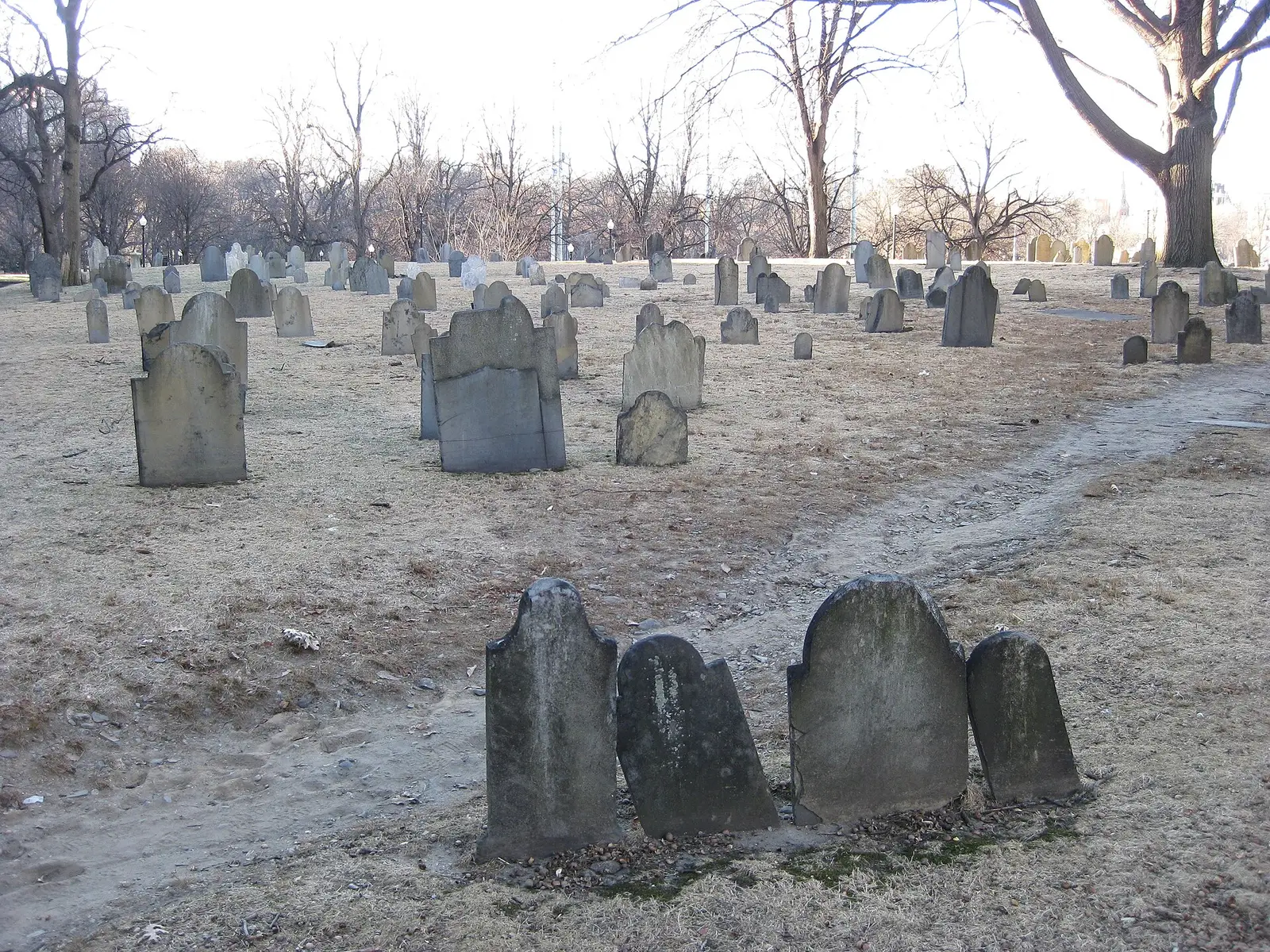
Cemetery · Boston, MA
Boston Common and the Central Burying Ground
The Central Burying Ground is the 1756 graveyard on the Boylston Street edge of Boston Common, the city's oldest park and once a place of public hangings.
UnverifiedOutside onlyAlso a cemetery
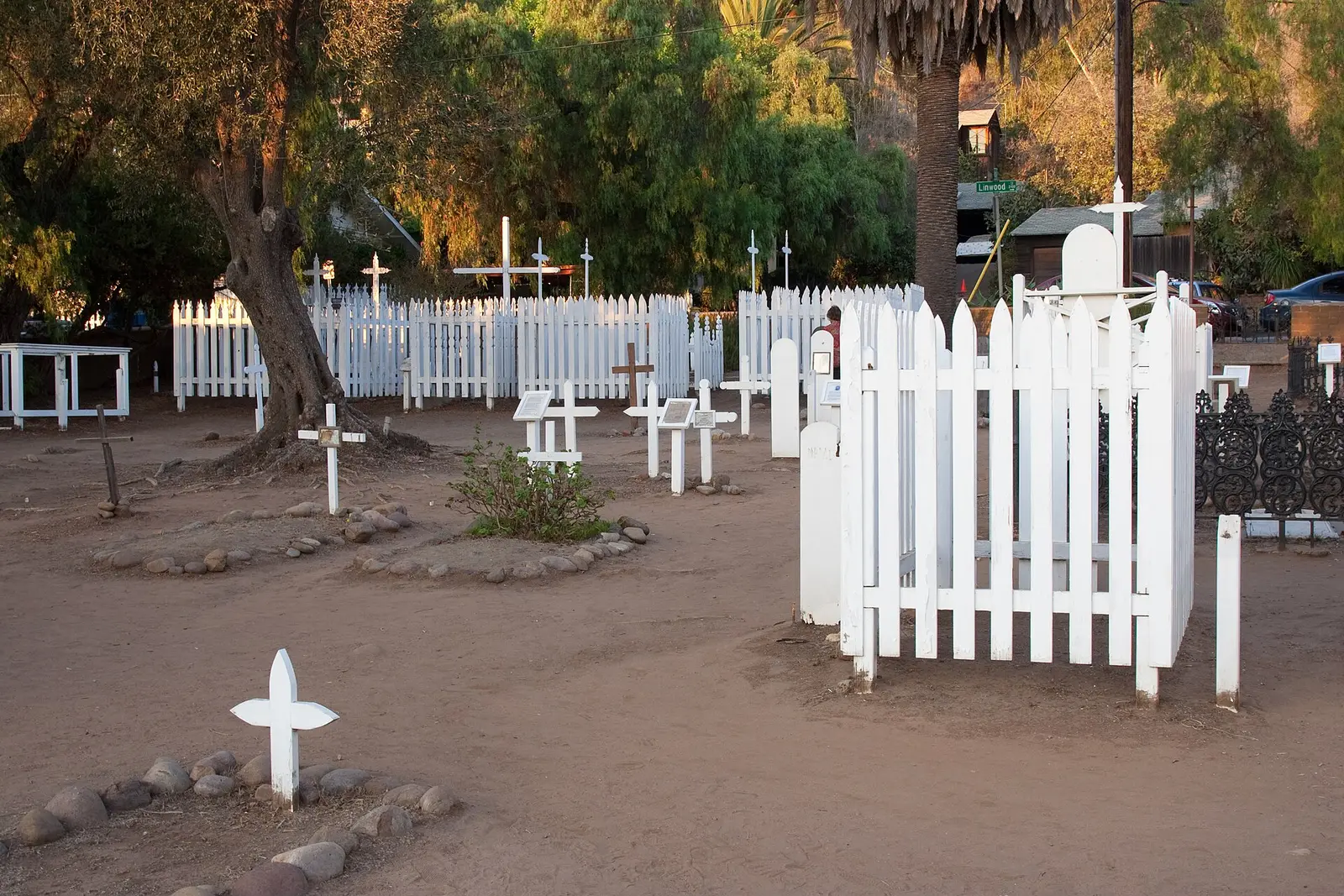
Cemetery · San Diego, CA
El Campo Santo Cemetery
El Campo Santo is Old Town San Diego's Catholic cemetery, opened in 1849, where about 477 people were buried, including many Native Americans and Yankee Jim Robinson.
UnverifiedOutside onlyAlso a cemetery
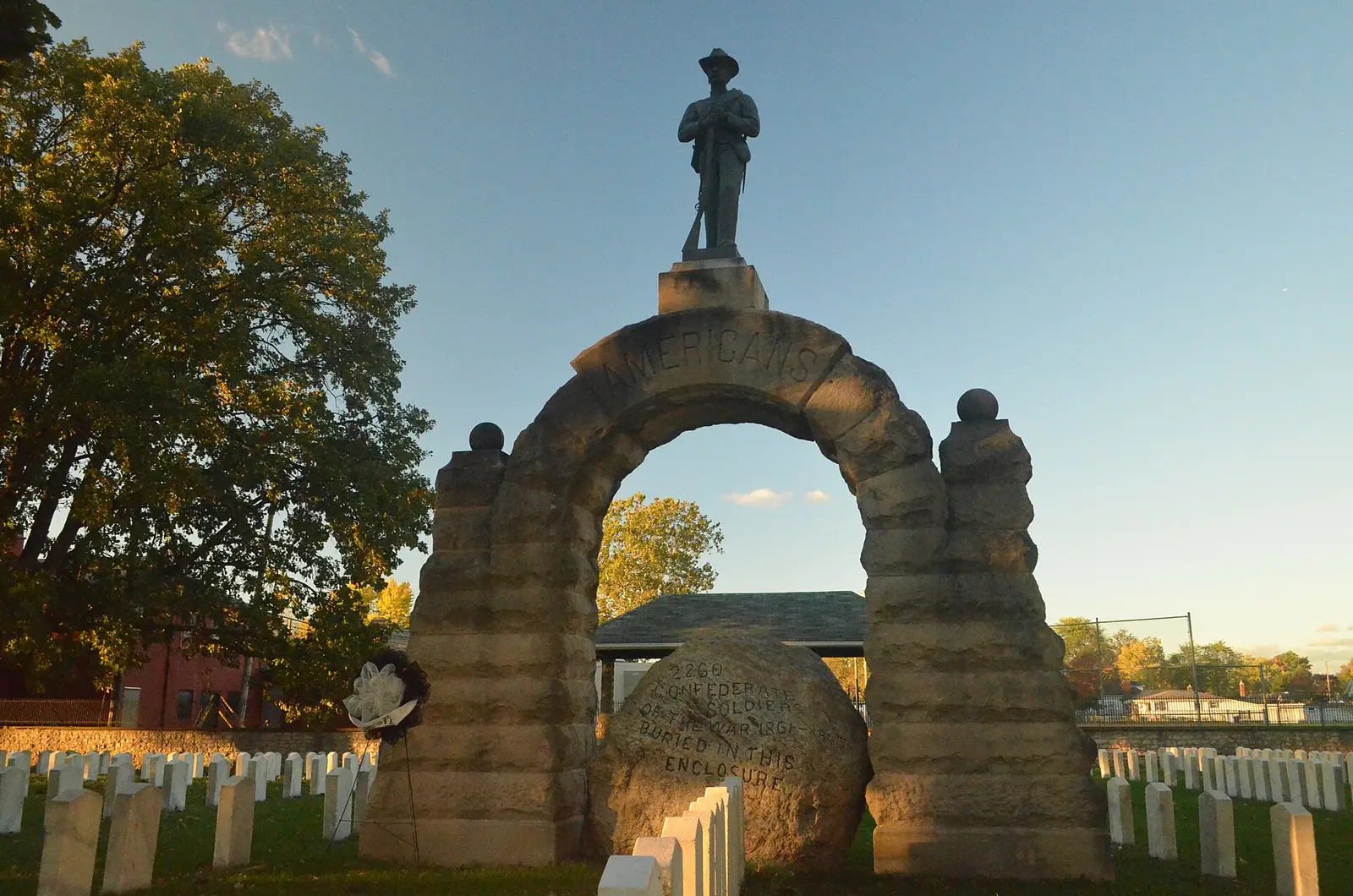
Cemetery · Columbus, OH
Camp Chase Confederate Cemetery
Camp Chase Confederate Cemetery holds more than 2,000 Confederate prisoners who died at a Union prison camp in Columbus between 1861 and 1865.
Documented AccountsOutside onlyAlso a cemetery
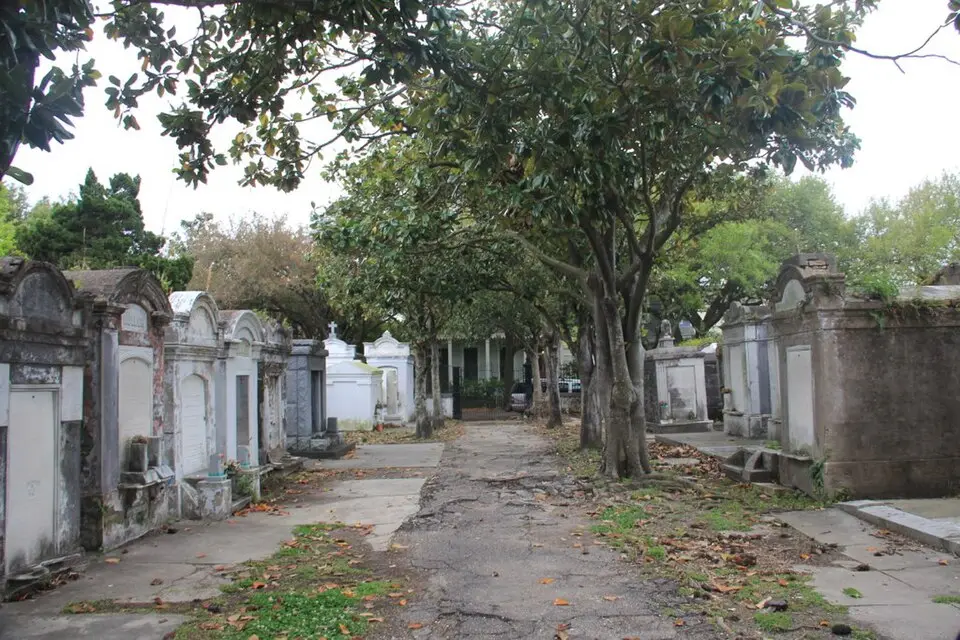
Cemetery · New Orleans, LA
Lafayette Cemetery No. 1
Lafayette Cemetery No. 1 is an above-ground cemetery in the Garden District, founded in 1833, where many yellow fever victims were buried.
UnverifiedTours only