← Charleston Old City Jail
Old City Jail
Charleston, South Carolina
Charleston's Old City Jail on Magazine Street held prisoners from 1802 to 1939, including Denmark Vesey in 1822 and John and Lavinia Fisher, hanged in 1820 for highway robbery.
What do we know about Old City Jail?
The ghost stories are almost all told by people who run tours or ghost investigations there. The two named accounts, from a TV reporter in 2012 and a ghost-investigation business owner in 2022, both describe being pushed or touched, but the reporter herself offered ordinary explanations and the business owner's guest reports are secondhand. The Lavinia Fisher ghost is a legend: historians now say there is no evidence she killed anyone.
Our rating of the reports about Old City Jail: Documented Accounts. At least one traceable published or first-hand account of an unexplained experience. We check that the reports exist, not the supernatural. The rating describes the evidence for the reports, not whether the place is haunted.
- Reported accounts
- 3
- Counted for the rating
- 3
- Research sources
- 9
Counted for the rating: independent accounts we could trace to a witness. Retellings of the same story count once, and staff passing on what visitors said aren’t counted. How we count
Reported experiences don’t establish a supernatural cause.
Read our evidence assessment →The hauntings
Accounts, encounters and stories associated with Old City Jail.
What has been reported?
- Being touched
- Moving objects
- Voices
- Apparitions
Phenomena described in accounts associated with this location — not independently verified events.
Reported experiences
3 published and reported accounts, each assessed by its source.
Account 01 · October 30, 2012
Crystal Bruce, 2012
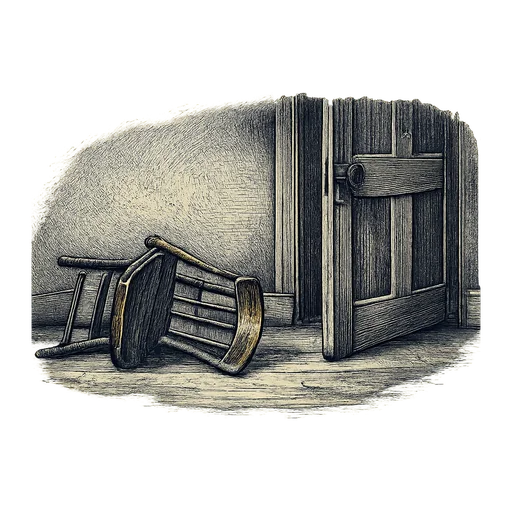
WCIV reporter Crystal Bruce wrote that on a 2012 Bulldog tour she sat in an old wooden wheelchair in a second-floor room and its back lifted and tipped her onto the floor; her gut reaction was that she had been pushed. She also photographed what she…
- Being touched
- Moving objects
Published accountReported by Crystal Bruce, WCIV reporter (her own account)Note: She wondered whether she had tipped the chair herself and said the photo could be light and shadow; the guide, not she, identified the figure as a ghost. A photograph is not counted as an account.
Read full account ›
WCIV reporter Crystal Bruce wrote that on a 2012 Bulldog tour she sat in an old wooden wheelchair in a second-floor room and its back lifted and tipped her onto the floor; her gut reaction was that she had been pushed. She also photographed what she read as a figure on the spiral staircase.[7]
Account 02 · October 31, 2022
A ghost-investigation business owner, 2022
The owner of a ghost-investigation business told WCIV that during an investigation a team member passed out, recovered and passed out again in the same spot within about a minute and a half, and that many guests had told him of being pushed and scratched in…
- Being touched
Published accountReported by A ghost-investigation business owner (via WCIV)Note: The guests' reports are secondhand and he runs a paid ghost business; the spirit-box output is device output and is not counted.
Read full account ›
The owner of a ghost-investigation business told WCIV that during an investigation a team member passed out, recovered and passed out again in the same spot within about a minute and a half, and that many guests had told him of being pushed and scratched in the jail. He also reported names from a spirit box used outside the building.[1]
Account 03 · December 28, 2011
Southern Spirit Guide, 2011
A Bulldog Tours guide told blogger Lewis Powell that she had heard men talking and her name called in the empty building and had been touched, and that other guides had quit or felt sick there; Bulldog's founder attributes footprints that workers found in sawdust each…
- Being touched
- Voices
No traceable witnessNote: The guide and the workers are unnamed and all come through the tour company; Powell's own report is of no experience.
Read full account ›
A Bulldog Tours guide told blogger Lewis Powell that she had heard men talking and her name called in the empty building and had been touched, and that other guides had quit or felt sick there; Bulldog's founder attributes footprints that workers found in sawdust each morning during renovations to spirits. Powell himself experienced nothing on the tour, and called a photographed orb possibly dust.[4][8]
Legends & disputed stories
Stories told about the place that the records don’t confirm.
- Legend
Local legend says Lavinia Fisher asked to be hanged in her wedding dress and that her ghost, dressed in white, has walked the jail since soon after her death; guides also name other spirits, such as a man called Thomas on the stairs. The jail has been featured on Ghost Adventures, Ghost Hunters and other Travel Channel programs.[1][4][7][5][9]
What the research shows: The wedding-dress story is not documented in any historical source we consulted.
Before you go

Planning a visit?
Tours only
Visits are by guided tour or organized event.
Access details ›
The former jail is now an event venue with offices on its upper floors. The public usually sees inside on night-time ghost tours of the ground floor run by Bulldog Tours, which runs the building as a paid ghost attraction; its marketing is not evidence. We could not access the tour company's site or a working official site for the building, so check current arrangements before visiting.
Entry
Paid entry
Access last checked November 17, 2026. Confirm times and prices before you travel.
Approximate location, within about 1 km.
The history of Old City Jail
Charleston's Old City Jail on Magazine Street held prisoners from 1802 to 1939, including Denmark Vesey in 1822 and John and Lavinia Fisher, hanged in 1820 for highway robbery. Tour guides say Lavinia haunts it in white. A WCIV reporter published her own account of being tipped from a wheelchair there, and a ghost-investigation business owner reports guests being pushed. You can see inside on paid night tours.
- Established
- 1802
- Also known as
- Old Charleston Jail
A state jail on the edge of town
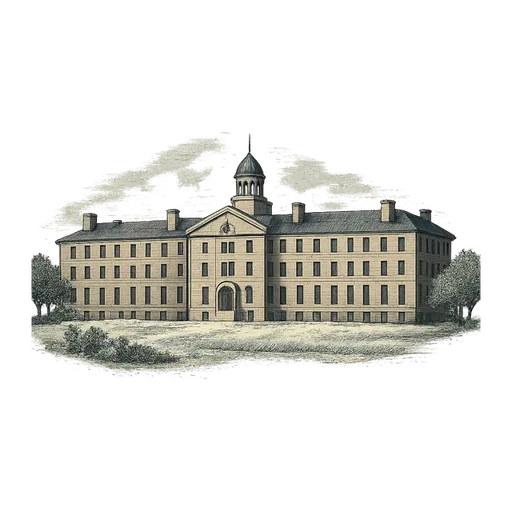
The Charleston District Jail opened in 1802 on a public square at Magazine and Franklin streets that also held a workhouse, a poorhouse and a hospital. In the early 1820s Robert Mills designed a fireproof wing of solitary cells. In 1855 the firm of Barbot & Seyle replaced that wing with the octagonal rear wing that stands today and added Romanesque Revival details. The 1886 earthquake damaged the tower and top story, which were removed.
Who was held here
The jail held debtors, people accused of crimes and, during the Civil War, Union prisoners of war. The neighboring workhouse was used to confine and punish enslaved people, and in the late 1820s enslavers kept enslaved people awaiting sale in the jail yard. After authorities uncovered Denmark Vesey's planned uprising in 1822, the date most accounts give (a National Park Service page says 1821), several hundred Black Charlestonians were jailed; Vesey spent his last days in the jail's tower before he was hanged.
John and Lavinia Fisher
John and Lavinia Fisher, who kept an inn north of the city, were convicted of highway robbery in 1819 and hanged in February 1820. Later retellings made them serial killers, but a Charleston County Public Library historian says there is no evidence they killed anyone.
Through the years
1820
John and Lavinia Fisher hanged
John and Lavinia Fisher, who kept an inn north of Charleston, were convicted in 1819 of highway robbery, not murder, held in the jail, and hanged in February 1820. Historian Nic Butler of the Charleston County Public Library…
Read more ›
John and Lavinia Fisher, who kept an inn north of Charleston, were convicted in 1819 of highway robbery, not murder, held in the jail, and hanged in February 1820. Historian Nic Butler of the Charleston County Public Library says there is no evidence they killed anyone; the serial-killer story grew from later retellings.[5][6][3]
Caveat: Charleston Magazine notes the Fishers maintained their innocence.
1822
Robert Mills addition
In the early 1820s Robert Mills, then on South Carolina's Board of Public Works, designed a fireproof addition with cells for solitary confinement; in 1855 the Charleston firm Barbot & Seyle replaced it with the present octagonal rear…
Read more ›
In the early 1820s Robert Mills, then on South Carolina's Board of Public Works, designed a fireproof addition with cells for solitary confinement; in 1855 the Charleston firm Barbot & Seyle replaced it with the present octagonal rear wing, enlarged the main block and added Romanesque Revival details.[2][3]
Caveat: HABS dates the Mills plans from a Charleston Courier advertisement of March 1822; the NPS gives 1822 for his design.
1822
Denmark Vesey imprisoned
After authorities uncovered Denmark Vesey's planned uprising, several hundred free and enslaved Black Charlestonians were jailed; 35 men were hanged, and Vesey spent his last days in the jail's tower.[5][3]
Caveat: The NPS page dates the discovery of the plot to 1821; Charleston Magazine and most accounts give 1822.
1827–1828
1827–1828
The neighboring workhouse was used to confine and punish enslaved people, and in the late 1820s enslavers paid about 20 cents a day to hold enslaved people in the jail yard until they were sold; the traveler Basil…
Read more ›
The neighboring workhouse was used to confine and punish enslaved people, and in the late 1820s enslavers paid about 20 cents a day to hold enslaved people in the jail yard until they were sold; the traveler Basil Hall described some 300 men, women and children held there.[4][2][3]
Caveat: Robert Mills wrote in 1826 that the workhouse was used entirely for confining and punishing enslaved people.
1939
Jail closes
The jail closed in 1939, when the county gave it to the city and the city sold it to the Housing Authority for $5. It later housed a museum (leased from 1975), the American College of the Building…
Read more ›
The jail closed in 1939, when the county gave it to the city and the city sold it to the Housing Authority for $5. It later housed a museum (leased from 1975), the American College of the Building Arts (from 2000), and since 2016 has been redeveloped as an event venue with offices.[1][5][2]
The research conclusion

Why it has this rating
Three traceable accounts: a TV reporter's 2012 account of being tipped from a wheelchair, which she hedged; a tour guide who told a blogger she had heard voices and been touched in the empty building; and a ghost-investigation owner's report of a team member fainting twice in one spot (2022). They describe different things, so this is Documented Accounts. Lavinia Fisher was convicted of highway robbery, not murder.
Read the full written assessment ›
The jail's history, from its 1802 construction to its 1939 closing, is documented by the Historic American Buildings Survey and the National Park Service, including its role in holding enslaved people and Union prisoners.
The ghost stories are almost all told by people who run tours or ghost investigations there. The two named accounts, from a TV reporter in 2012 and a ghost-investigation business owner in 2022, both describe being pushed or touched, but the reporter herself offered ordinary explanations and the business owner's guest reports are secondhand. The Lavinia Fisher ghost is a legend: historians now say there is no evidence she killed anyone.
The sources behind the story
9 research references support this entry.
1WCIV (published on WLOS)Creepy Carolina: The legend of Lavinia Fisher and the Old Charleston Jail Television or radio · Reference 01
Charistin Clark, Creepy Carolina: The legend of Lavinia Fisher and the Old Charleston Jail. WCIV (published on WLOS), 2022-10-31.
TV feature quoting a Bulldog Tours guide manager on history and the owner of a ghost-investigation business on incidents during his investigations. Says the legend's details are unverified. His spirit-box results are device output.
Accessed November 17, 2026.
2Historic American Buildings Survey, National Park Service (Library of Congress)Charleston County Jail (Charleston District Jail), HABS No. SC-688: Written Historical and Descriptive Data Archive or collection · Reference 02
Christine Trebellas, Charleston County Jail (Charleston District Jail), HABS No. SC-688: Written Historical and Descriptive Data. Historic American Buildings Survey, National Park Service (Library of Congress), 1994.
Detailed footnoted history from the 1994 HABS documentation, read by OCR. Gives the 1802 construction, the Mills addition (advertised in the Charleston Courier, March 1822), Barbot & Seyle's 1855 remodeling, Basil Hall's account of about 300 enslaved people held for sale in the jail yard in the late 1820s, Union prisoners in 1861-1864, the 1886 earthquake damage, and the January 7, 1939 sale to the Housing Authority for $5. Says nothing about Lavinia Fisher or ghosts. Exact publication date of the written data is not stated in what we read.
Accessed November 17, 2026.
3National Park ServiceOld Jail Official or site history · Reference 03
Old Jail. National Park Service, 2018-02-22.
NPS place page (last updated date given). Summarizes the 1802 building, the Fishers, Denmark Vesey, the Mills wing, the 1855 alterations, Civil War prisoners, the 1886 earthquake and the 1939 closing; says the jail is one of more than 1,400 significant buildings in the Charleston Old and Historic District. Dates Vesey's plot to 1821, where other sources give 1822. No ghosts.
Accessed November 17, 2026.
4South Carolina History Newsletter#119: History of Charleston's Old City Jail, more Ghost Tours, and the murderess Lavinia Fisher Website · Reference 04
Kate Fowler, #119: History of Charleston's Old City Jail, more Ghost Tours, and the murderess Lavinia Fisher. South Carolina History Newsletter, 2024-10-28.
Newsletter compiled from secondary and ghost-tour sources; quotes Robert Mills's 1826 Statistics of South Carolina on the workhouse. Repeats the legend that prisoners saw Lavinia's ghost after her death and the Bulldog founder's story of footprints in sawdust. Not independent of the tour company.
Accessed November 17, 2026.
5Charleston MagazineOld Jail Magazine · Reference 05
Suzannah Smith Miles, Old Jail. Charleston Magazine, 2015-10.
Local magazine history feature. Gives 1802-1939 operation, the 1822 Vesey arrests (67 convicted, 35 hanged), the Fishers' 1820 hanging, the American College of the Building Arts' ownership from 2000, and says many believe ghosts linger, naming Lavinia Fisher, without any named witness.
Accessed November 17, 2026.
6A&E (aetv.com)Was Lavinia Fisher America's First Female Serial Killer? Website · Reference 06
Jordan Friedman, Was Lavinia Fisher America's First Female Serial Killer?. A&E (aetv.com), 2026-02-02.
Broadcaster's article quoting historian Nic Butler (Charleston County Public Library) and the books of Mark R. Jones and Bruce Orr. Says the Fishers were convicted of highway robbery in May 1819, sentenced in January 1820 and hanged in February 1820, and that Butler finds no evidence they killed anyone. Title taken from the page's URL and heading as fetched.
Accessed November 17, 2026.
7ABC News 4 (WCIV)BLOG: Old City Jail tour leads to catching ghosts on camera Television or radio · Reference 07
Crystal Bruce, BLOG: Old City Jail tour leads to catching ghosts on camera. ABC News 4 (WCIV), 2012-10-30.
First-person account by a TV reporter on a Bulldog tour. She describes being tipped out of a wheelchair, specks she thought were dust, and a staircase photo she says may be light and shadow; the guide supplied the ghost names. Her own published account.
Accessed November 17, 2026.
8Southern Spirit Guide'Just Visiting'—Old Jail Tour, Charleston, South Carolina Website · Reference 08
Lewis O. Powell IV, 'Just Visiting'—Old Jail Tour, Charleston, South Carolina. Southern Spirit Guide, 2011-12-28.
Blogger's first-person account of a night tour (revised 2019). He experienced nothing himself and reports two photo anomalies he does not claim as paranormal; he relays his guide's own experiences. A ghost blog, used only as the place these stories were published.
Accessed November 17, 2026.
9South Carolina ETVGhosts of Charleston's Old City Jail Television or radio · Reference 09
Tabitha Safdi, Ghosts of Charleston's Old City Jail. South Carolina ETV, 2019-08-13.
Public broadcaster's short feature. Gives history, says Bulldog Tours began ghost tours there in 2003 and that the building has featured on Ghost Adventures, Ghost Hunters and the Travel Channel; says many visitors claim encounters but describes none.
Accessed November 17, 2026.
More haunted places
Explore nearby
Theater
Dock Street Theatre
Charleston, South Carolina · under 1 mile away · Open to visitors
Museum
Old Exchange and Provost Dungeon
Charleston, South Carolina · under 1 mile away · Open to visitors
Church
Unitarian Church in Charleston and churchyard
Charleston, South Carolina · under 1 mile away · Open to visitors
Hotel
Battery Carriage House Inn
Charleston, South Carolina · under 1 mile away · By permission
Similar places
Also a prison · also reported: being touched, moving objects
Prison · Yuma, AZ
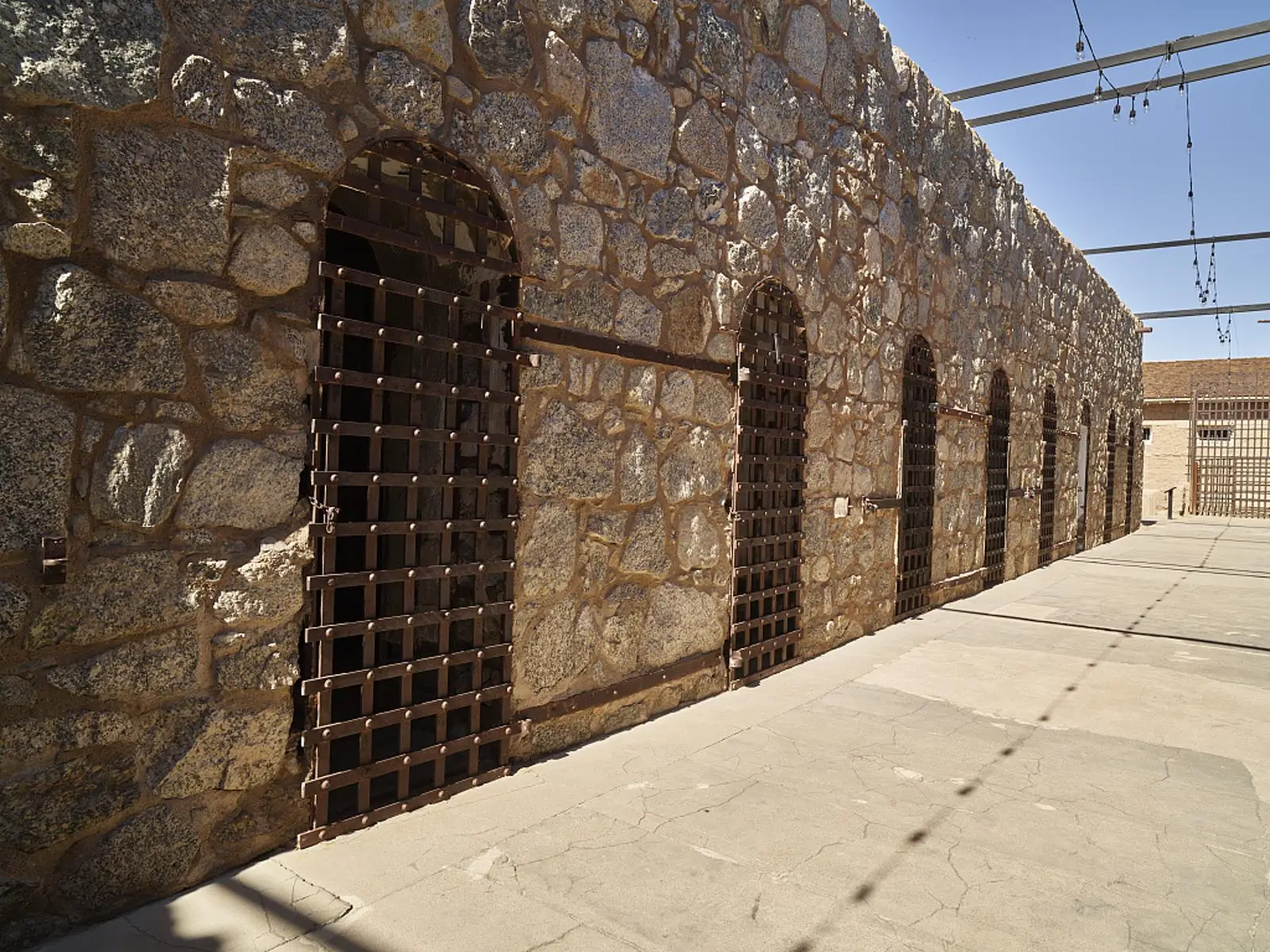
Yuma Territorial Prison State Historic Park
Yuma Territorial Prison held 3,069 people convicted in the Arizona Territory from 1876 to 1909 and is now a state historic park.
Documented AccountsOpen to visitorsAlso a prison · also reported: being touched, moving objects
Prison · Cañon City, CO
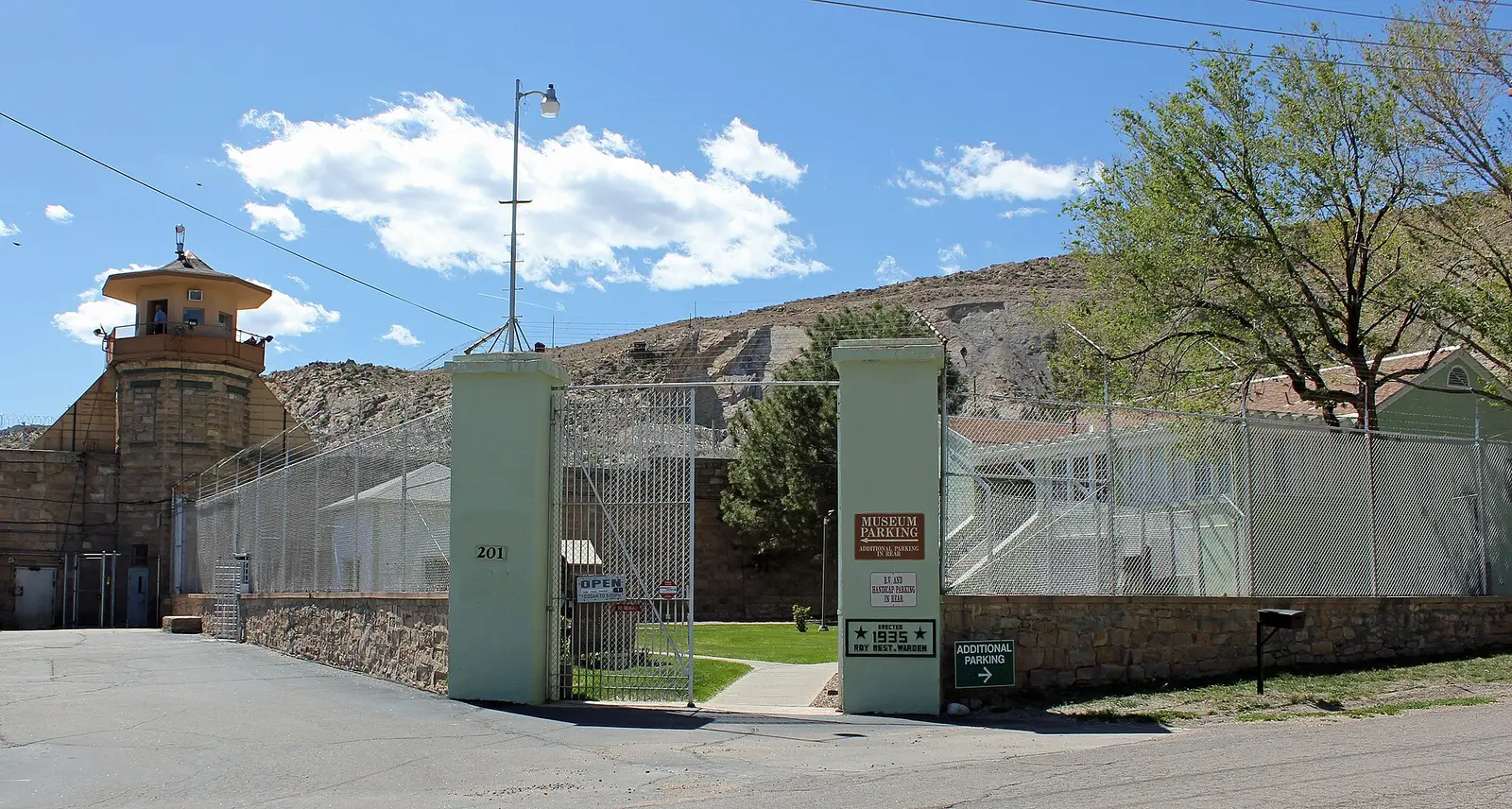
Museum of Colorado Prisons
The Museum of Colorado Prisons occupies Colorado's 1935 women's prison, beside the still-operating Territorial Correctional Facility in Cañon City.
Documented AccountsOpen to visitorsAlso a prison · also reported: being touched, moving objects
Prison · Mansfield, OH
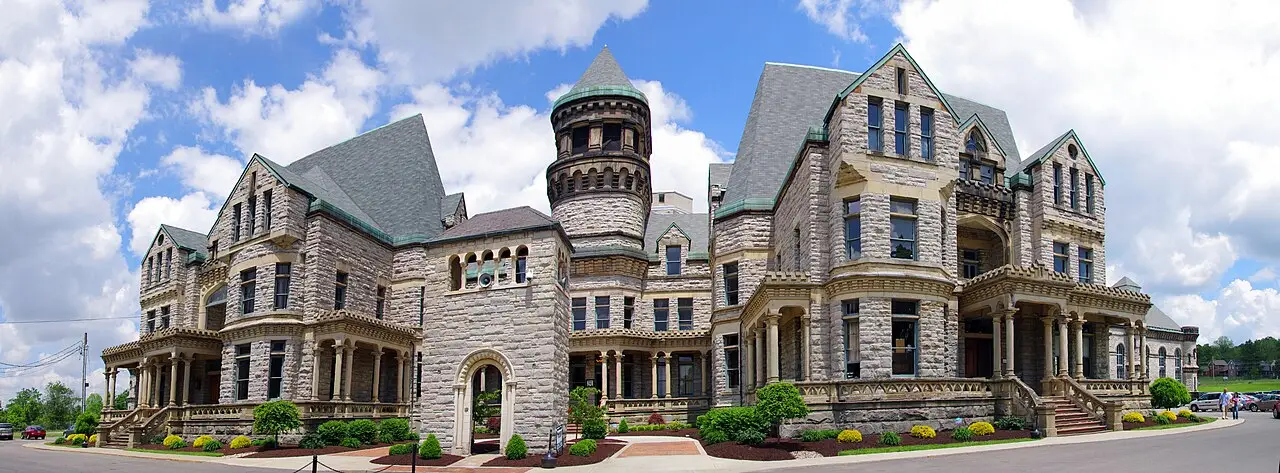
Ohio State Reformatory
The Ohio State Reformatory in Mansfield opened in 1896 and closed in 1990.
Documented AccountsOpen to visitorsAlso a prison · also reported: being touched
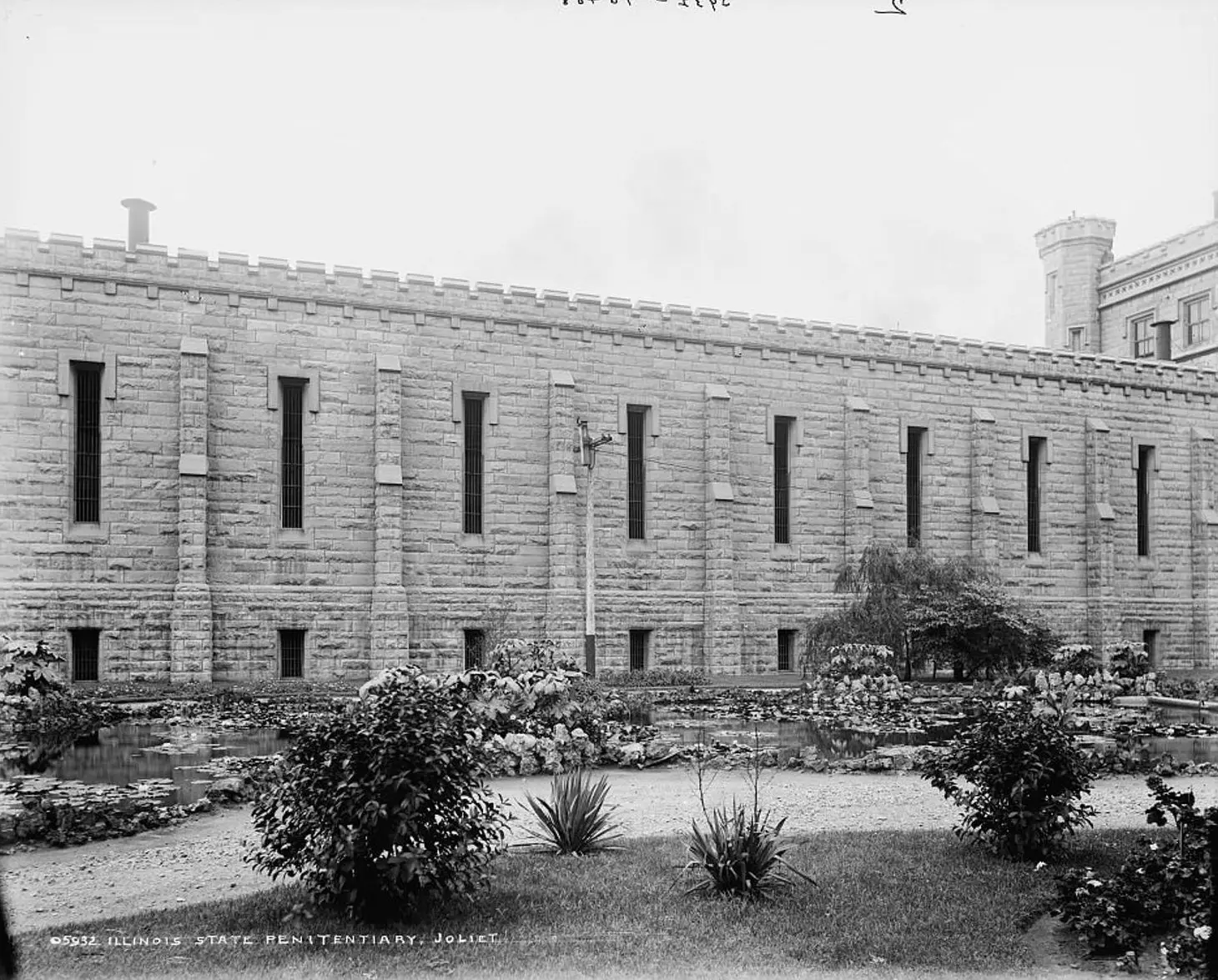
Prison · Joliet, IL
Old Joliet Prison
Old Joliet Prison is the limestone state penitentiary, opened in 1858 and closed in 2002, that people imprisoned there built themselves.
UnverifiedTours only