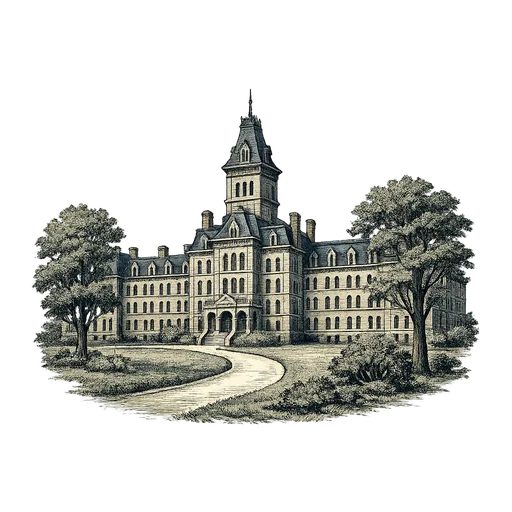
← Traverse City The Village at Grand Traverse Commons (former Traverse City State Hospital)
The Village at Grand Traverse Commons (former Traverse City State Hospital)
A Kirkbride asylum and the legends around it
Traverse City, Michigan
The Village at Grand Traverse Commons occupies the former Traverse City State Hospital, a state psychiatric hospital that opened in 1885 as the Northern Michigan Asylum and closed in 1989.
What do we know about The Village at Grand Traverse Commons (former Traverse City State Hospital)?
The ghost material is folklore. News features and a university library blog repeat general claims (faces at windows, voices, footsteps) and an internet legend about the Hippie Tree, but none names a witness. Local tour guides and a newspaper say the Hippie Tree stories are not true. No traceable account of an experience was found.

Our rating of the reports about The Village at Grand Traverse Commons (former Traverse City State Hospital): Unverified. A haunted reputation or legend, but no traceable account of an experience so far. The rating describes the evidence for the reports, not whether the place is haunted.
- Reported accounts
- 2
- Counted for the rating
- 0
- Research sources
- 9
Counted for the rating: independent accounts we could trace to a witness. Retellings of the same story count once, and staff passing on what visitors said aren’t counted. How we count
Reported experiences don’t establish a supernatural cause.
Read our evidence assessment →The hauntings
Accounts, encounters and stories associated with The Village at Grand Traverse Commons (former Traverse City State Hospital).

What has been reported?
- Apparitions
- Voices
- Footsteps
- Phantom lights

Phenomena described in accounts associated with this location — not independently verified events.
Reported experiences
2 published and reported accounts, each assessed by its source.
Account 01 · October 25, 2016
WDIV ClickOnDetroit, 2016
Features by a Detroit TV station (2016) and a Central Michigan University library blog (2022) repeat general claims that visitors to the empty buildings saw faces at windows and heard bodiless voices and footsteps, and that construction workers saw figures, without naming any witness.[7][8]
- Apparitions
- Voices
- Footsteps
- Phantom lights
No traceable witnessReported by Unnamed visitors and workers, as retold by WDIV (2016) and the Clarke Historical Library blog (2022)Note: No named or traceable witness; both rely on anonymous posts and hearsay.
Read full account ›
Account 02 · January 25, 2025
Catherine Allen-Goodwin and Kate Angove, 2025
Village tour guide Catherine Allen-Goodwin told the Northern Express that being a state hospital gives the site its ghostly mystique, and Kate Angove of the Minervini Group said the tours are educational and honor patients and staff rather than seek out spectral encounters.[2][6]
Published accountReported by Catherine Allen-Goodwin and Kate Angove, Village at Grand Traverse CommonsNote: Statements about the stories, not accounts of experiences.

Legends & disputed stories
Stories told about the place that the records don’t confirm.

- Legend
The best-known legend calls a tree in the woods west of the hospital, the "Hippie Tree," a portal to hell, and an internet story links it to the steam tunnels; the Northern Express says these stories are not true, and WWJ notes that some reported sightings there were probably a bear.[6][9][7][8]
Before you go

Planning a visit?
Open to visitors
Parts of the inside are open to the public.
Access details ›
The former hospital is now a mixed-use development with shops, restaurants and homes; the shops in Building 50 and the grounds are open to the public, and guided history tours (including the steam tunnels) must be booked through the Village. Tours are historical, not ghost tours. Parts of the buildings are private homes, so respect residents' privacy.
Entry
Cost not confirmed
Access last checked November 19, 2026. Confirm times and prices before you travel.
Approximate location, within about 1 km.
See The Village at Grand Traverse Commons (former Traverse City State Hospital) on the full map →
The history of The Village at Grand Traverse Commons (former Traverse City State Hospital)
The Village at Grand Traverse Commons occupies the former Traverse City State Hospital, a state psychiatric hospital that opened in 1885 as the Northern Michigan Asylum and closed in 1989. Its size, tunnels and abandonment fed ghost legends, especially about the 'Hippie Tree,' but no named person's account was found. The site is now shops, restaurants and homes, with paid history tours.
- Established
- 1883–1885
- Also known as
- Northern Michigan Asylum
A state hospital
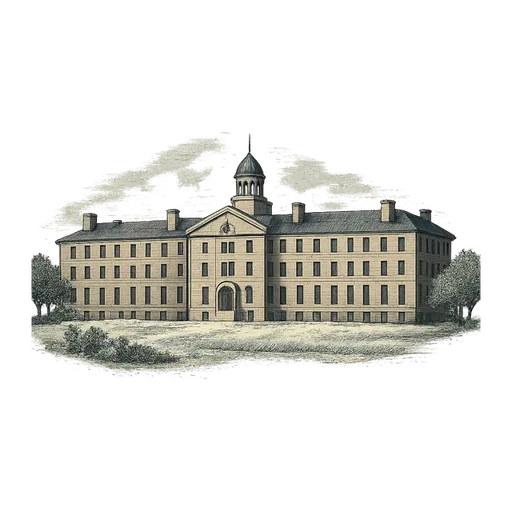
In January 1882 Detroit architect Gordon W. Lloyd was chosen to design a new state asylum for northern Michigan. Construction began in April 1883, and the Northern Michigan Asylum opened on November 30, 1885, the state's third such hospital. Its main building, Building 50, followed the Kirkbride plan: a central administration section with patient wings on either side, each patient room with a window.
Dr. James Decker Munson led the hospital from 1885 until 1924. He favored "moral treatment" and the idea that "beauty is therapy," avoided physical restraints, and had patients work on the farm and grounds, which was then considered treatment. The hospital was renamed Traverse City State Hospital in 1911 and later Traverse City Regional Psychiatric Hospital.
Growth and change
The hospital grew to nearly 3,000 people by 1959 and served more than 50,000 patients over its history. By the 1940s, insulin shock, electroshock and lobotomy had become standard treatments there. In 1963 the central section of Building 50 was demolished over fire-code concerns. The hospital closed in October 1989, and in 1993 the state transferred the property to a redevelopment corporation. The surviving buildings are now the Village at Grand Traverse Commons. The asylum district has been on the National Register of Historic Places since 1978.
The legends
The empty buildings and steam tunnels became the setting for stories. A 2016 TV station feature and a 2022 university library blog repeat claims of faces at windows, bodiless voices, footsteps and lights, without naming witnesses. The best-known legend calls a tree west of the hospital, the "Hippie Tree," a portal to hell, and an internet story ties it to the tunnels. A tour guide quoted by the Northern Express in 2025 said such stories come from the mystique of a state hospital, and the paper said the Hippie Tree tales are not true. The developer's tour staff say their tours honor patients and staff rather than seek ghosts.
Through the years
1883
Construction begins
Detroit architect Gordon W. Lloyd was chosen in January 1882 to design the Northern Michigan Asylum; construction began in April 1883, and its main building, Building 50, followed the Kirkbride plan of a central administration section with patient…
Read more ›
Detroit architect Gordon W. Lloyd was chosen in January 1882 to design the Northern Michigan Asylum; construction began in April 1883, and its main building, Building 50, followed the Kirkbride plan of a central administration section with patient wings on either side, each patient room having a window.[1][2][3]
1885
Asylum opens
The Northern Michigan Asylum, Michigan's third state psychiatric hospital, received its first patients on November 30, 1885, under its first medical superintendent, Dr. James Decker Munson, who served until 1924.[4][3][5]
Caveat: Sources differ on how many people arrived at opening: 43 (Northern Michigan History) or 300 (TADL).
1911
Renamed Traverse City State Hospital
The asylum was renamed Traverse City State Hospital in July 1911 under Act No. 21 of the Public Acts of 1911, and was later called Traverse City Regional Psychiatric Hospital.[4]
1959
1959
The hospital housed nearly 3,000 people by 1959 and served more than 50,000 patients over its history; by the 1940s insulin shock, electroshock and lobotomy had become standard treatments there.[5]
Caveat: Single unsigned regional history source for these figures.
1978
National Register listing
The Northern Michigan Asylum is listed on the National Register of Historic Places (reference 78001499) for its significance in health and medicine, social history, architecture and landscape architecture; the record is dated October 3, 1978.[1]
The research conclusion

Why it has this rating
A strong reputation built on legend and anonymous retellings; no traceable account of an experience. The site's own guides call the stories mystique, and the hospital's patients are not treated as ghost material.
Read the full written assessment ›
The history is well recorded by the developer's history page, a Traverse Area District Library article based on the hospital's own reports, a regional history site and the National Register record. They differ on how many people arrived in 1885.
The ghost material is folklore. News features and a university library blog repeat general claims (faces at windows, voices, footsteps) and an internet legend about the Hippie Tree, but none names a witness. Local tour guides and a newspaper say the Hippie Tree stories are not true. No traceable account of an experience was found.
The sources behind the story
9 research references support this entry.

1National Park Service, NPGalleryNorthern Michigan Asylum (NRIS 78001499) Register or nomination · Reference 01
Northern Michigan Asylum (NRIS 78001499). National Park Service, NPGallery, 1978-10-03.
National Register database record: architect Gordon W. Lloyd, Italianate, significance in health/medicine, social history, architecture, landscape architecture and education; record dated 10/3/1978. Nomination PDFs are placeholders, so the text was not read.
Accessed November 16, 2026.
2Traverse City TourismTraverse City asylum tour guide: history, tours and what to know Website · Reference 02
Traverse City asylum tour guide: history, tours and what to know. Traverse City Tourism, 2026-07-29.
Tourism bureau guide. Confirms the redevelopment, tour types and that 'paranormal claims are not independently verified'. Used for access only.
Accessed November 16, 2026.
3The Village at Grand Traverse Commons (The Minervini Group)About: History Official or site history · Reference 03
About: History. The Village at Grand Traverse Commons (The Minervini Group).
Developer's own history page, checked 2026-11-16. Source for the 1882 design by Gordon W. Lloyd, April 1883 start, first patients in November 1885, the Kirkbride plan, Munson and 'Beauty is Therapy', and the 1963 demolition of Old Center. No ghost content; no street address or tour prices.
Accessed November 16, 2026.
4Traverse Area District LibraryPicnicking at the State Hospital: Treatment and Tourism at the Traverse City State Hospital Website · Reference 04
Zoë Schwartz, Picnicking at the State Hospital: Treatment and Tourism at the Traverse City State Hospital. Traverse Area District Library, 2025-07.
Public library local-history article based on the asylum's board reports and library collections. Source for the November 30, 1885 opening, the 1911 renaming under Act 21, work as treatment, avoidance of restraints and the October 1989 closure. Says 300 patients arrived at opening, which conflicts with 43 in other sources.
Accessed November 16, 2026.
5Northern Michigan History (Up North Entertainment Group)Traverse City Regional Psychiatric Hospital: A Historical Overview Website · Reference 05
Traverse City Regional Psychiatric Hospital: A Historical Overview. Northern Michigan History (Up North Entertainment Group).
Regional history site, unsigned and undated. Source for 43 residents at opening, nearly 3,000 by 1959, over 50,000 patients served, mid-century treatments, 1989 closure and the 1993 transfer. No ghost content.
Accessed November 16, 2026.
6Northern ExpressHistories and mysteries of Grand Traverse Commons Newspaper · Reference 06
Greg Tasker, Histories and mysteries of Grand Traverse Commons. Northern Express, 2025-01-25.
Regional weekly feature with a Village tour guide. Says the Hippie Tree paranormal stories are not true and quotes guide Catherine Allen-Goodwin on why the stories persist.
Accessed November 16, 2026.
7WDIV ClickOnDetroitMichigan's most haunted: Traverse City State Hospital Television or radio · Reference 07
Ken Haddad, Michigan's most haunted: Traverse City State Hospital. WDIV ClickOnDetroit, 2016-10-25.
TV station Halloween feature. Repeats anonymous blog and forum posts and unattributed claims (voices, lights, footsteps, construction workers seeing figures); names no witnesses. Includes an unsourced suicide rumor, not used.
Accessed November 16, 2026.
8Clarke Historical Library, Central Michigan UniversityTales of Hauntings in Michigan Website · Reference 08
Aubrey Dickens and Sara Daniels, Tales of Hauntings in Michigan. Clarke Historical Library, Central Michigan University, 2022-10-28.
University special-collections blog post by student writers. Retells visitors' reported experiences and an 'internet urban legend' about the tunnels and the Hippie Tree, without named witnesses; cites the 1908 board report for unrelated context.
Accessed November 16, 2026.
9WWJ Newsradio 950 (Audacy)Is the Hippie Tree in Traverse City a portal to hell? Television or radio · Reference 09
WWJ Newsroom, Is the Hippie Tree in Traverse City a portal to hell?. WWJ Newsradio 950 (Audacy), 2023-10-04.
Radio station feature that presents the Hippie Tree stories as unverified legend, gives the 1200 West 11th Street address and the 1989 closure, and notes some 'sightings' were probably a bear.
Accessed November 16, 2026.
More haunted places
Similar places
Also a former asylum · also reported: phantom lights
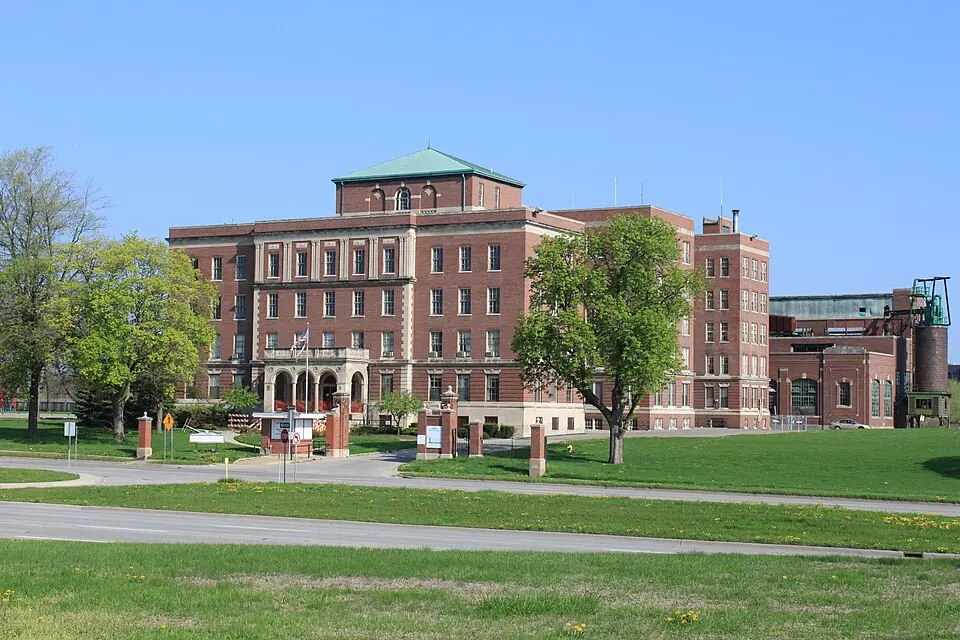
Former asylum · Westland, MI
Eloise
Eloise was Wayne County's poorhouse and later a vast hospital complex in Westland, where about 10,000 people lived at its peak.
Documented AccountsTours onlyAlso a former asylum · also reported: phantom lights
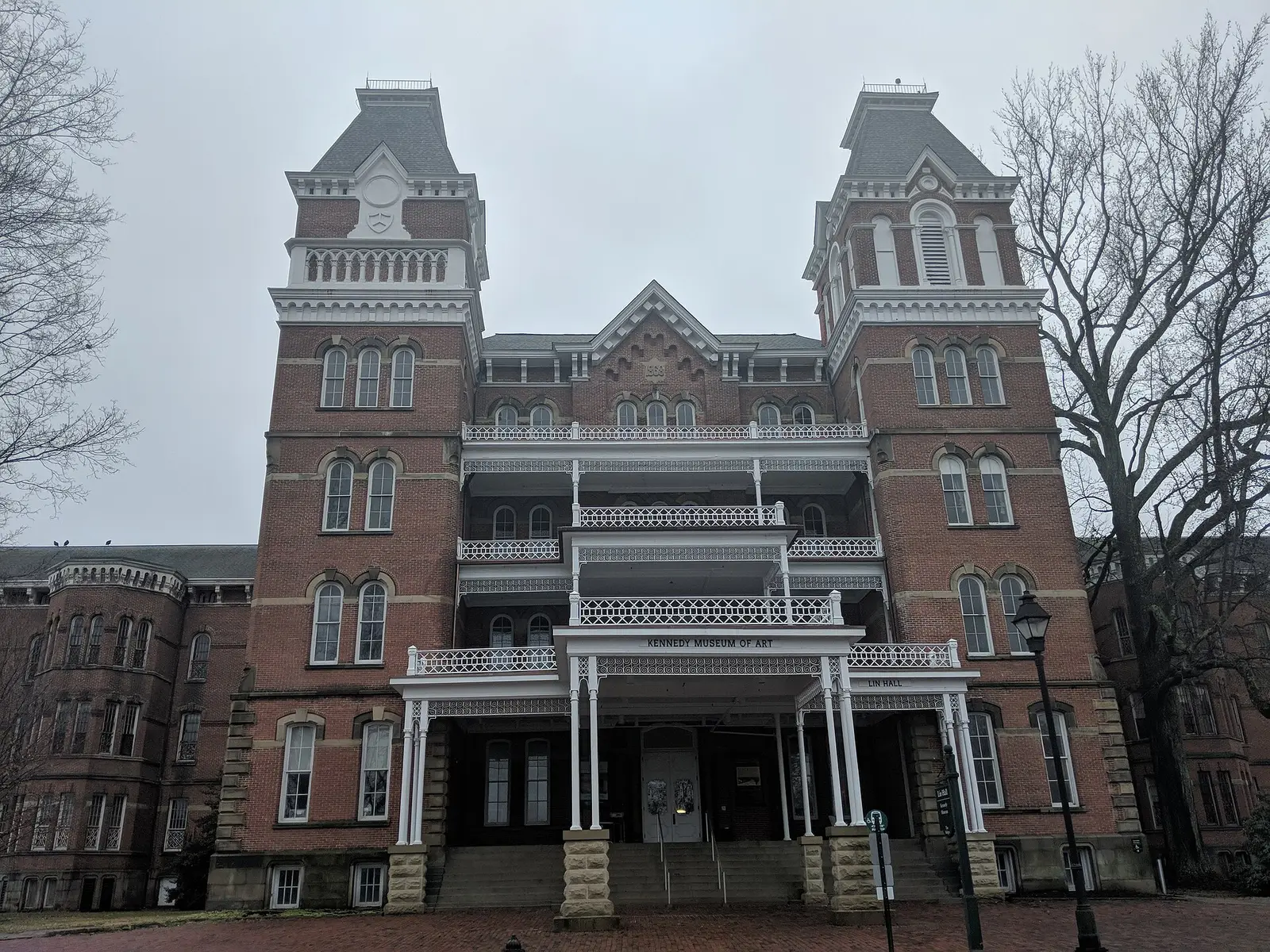
Former asylum · Athens, OH
The Ridges (former Athens Lunatic Asylum)
The Ridges is the former Athens State Hospital, a Kirkbride-plan psychiatric hospital that served southeastern Ohio from 1874 to 1993 and now belongs to Ohio University.
UnverifiedOpen to visitorsAlso a former asylum · also reported: phantom lights
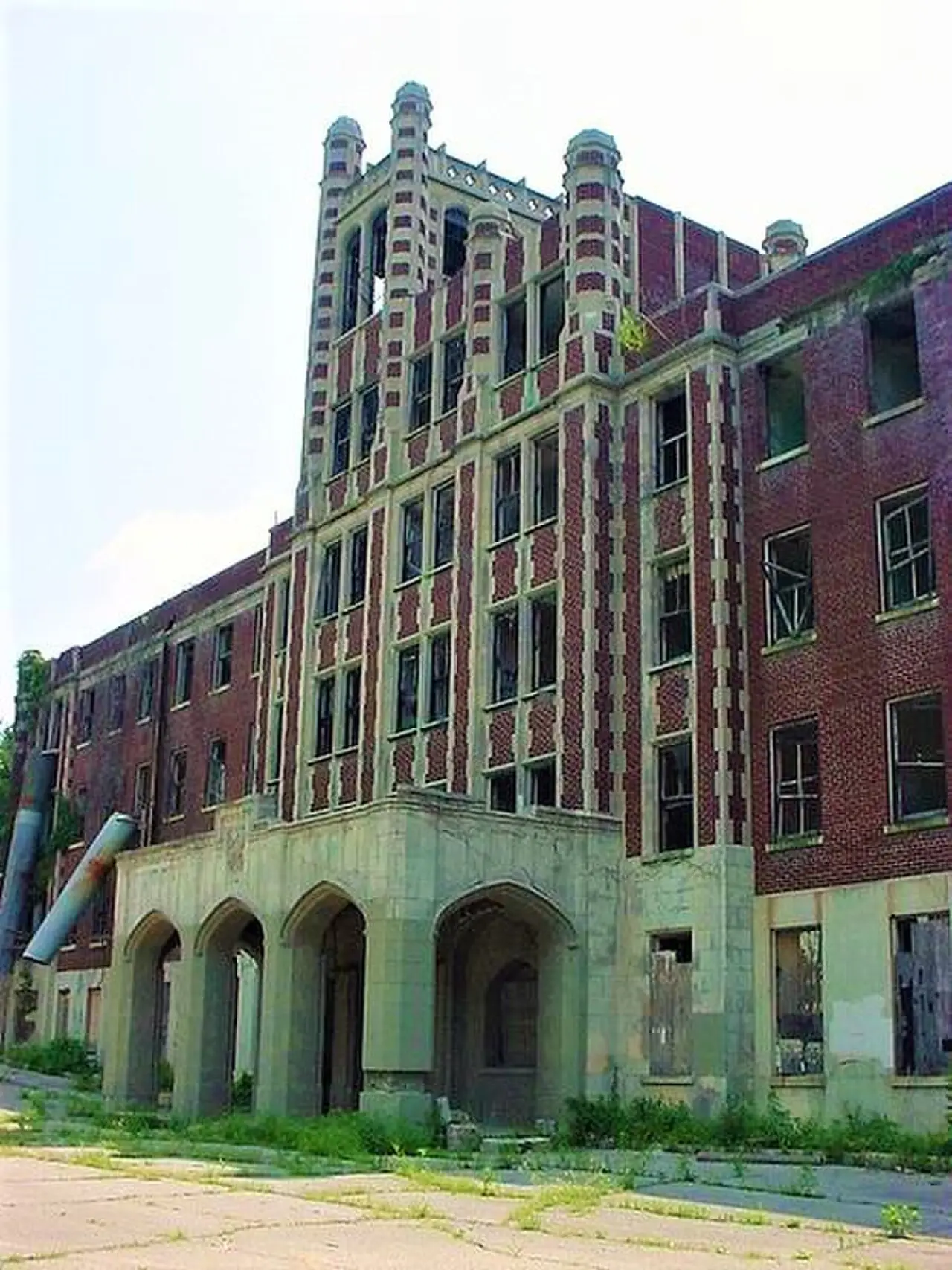
Former asylum · Louisville, KY
Waverly Hills Sanatorium
Shadowy figures in the long corridors, described by tour staff, a ghost-story writer and a TV investigation team.
Well DocumentedTours onlyAlso a former asylum · also reported: footsteps
IllustrationFormer asylum · PA
Hill View Manor (former Lawrence County Home)
Hill View Manor opened in 1926 as Lawrence County's home for older and poor residents, became a county nursing home and closed in 2004.
Documented AccountsTours only