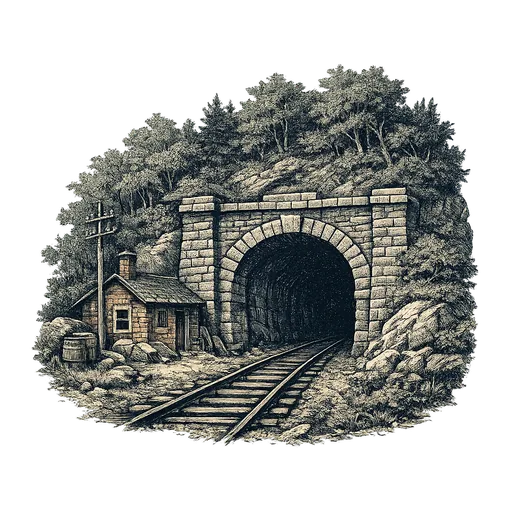
← South Carolina Poinsett Bridge
Poinsett Bridge
History and legends
South Carolina
Poinsett Bridge is a stone bridge with a Gothic arch built in 1820 on the old State Road through the Saluda Mountains, thought to be South Carolina's oldest surviving bridge.
What do we know about Poinsett Bridge?
The ghost stories are legends. The earliest we could trace is a 1955 newspaper article about Irish masons and a buried worker, known to us only through the 2004 report. Later versions add an enslaved woman and a headless man, but no record of any of these deaths has been found. Reports of screams, lights and stalled cars have no named witness.

Our rating of the reports about Poinsett Bridge: Unverified. A haunted reputation or legend, but no traceable account of an experience so far. The rating describes the evidence for the reports, not whether the place is haunted.
- Reported account
- 1
- Counted for the rating
- 0
- Research sources
- 6
Counted for the rating: independent accounts we could trace to a witness. Retellings of the same story count once, and staff passing on what visitors said aren’t counted. How we count
Reported experiences don’t establish a supernatural cause.
Read our evidence assessment →The hauntings
Accounts, encounters and stories associated with Poinsett Bridge.

What has been reported?
- Apparitions
- Voices
- Electrical
- Phantom lights


Phenomena described in accounts associated with this location — not independently verified events.
Reported experiences
1 published and reported account, each assessed by its source.
- Voices
- Electrical
- Phantom lights
No traceable witnessNote: No witness is named. Orbs in photographs are camera artifacts, not accounts, and are not counted.
Legends & disputed stories
Stories told about the place that the records don’t confirm.

- Legend
The earliest ghost stories we could trace come from a 1955 Greenville News article: that two Irish masons, Denny and Danny, were so pleased with their work that they came back to haunt the bridge at night, and that a man killed during construction was buried in the abutments and also returned at night.[2][4]
What the research shows: Known only through the 2004 report's summary of the article; we could not access the 1955 newspaper.
- Legend
An area historian traces the story of a dead mason's ghost to visitors in the early and mid-1800s who speculated, after sickness among the masons, that one had died and been buried in the bridge; he suggests the eerie sounds people heard were wind through the arch.[5]
What the research shows: His dating of the tale is not tied to any document he cites.
- Legend
A second legend, which the same historian says was popular in the late 19th and early 20th centuries and has since been revived, says an enslaved woman was killed at the bridge in the 1860s and that her ghost remains there.[5]
What the research shows: No record of such a death has been found in any source we read; the story uses an enslaved woman's death as a ghost-story hook.
- Legend
Other versions say a headless man shot on the bridge in 1861 returns on rainy nights at midnight, and that the bridge is among the most haunted places in the country; Condé Nast Traveler included it in a 2019 list of 30 most haunted places in America.[4]
What the research shows: No record of an 1861 shooting has been found in any source we read.
Before you go

Not open to visitors
Location
South Carolina
Closed
Closed to visitors, or demolished.
Access details ›
Outdoor site in a state heritage preserve owned by the SC Department of Natural Resources. The preserve was closed for preservation work from September 29, 2025 to March 31, 2026, with reopening planned for April 1, 2026; we could not find a DNR notice confirming that it reopened, and visitors reported in May 2026 that it was still fenced off. Heritage preserves are generally open in daylight only, and the county discourages visits after dark. We list it as closed until SCDNR confirms it has reopened; check with SCDNR before visiting.
Access last checked November 19, 2026.
Please visit responsibly
This place isn’t open to visitors. Don’t trespass: view it from public land, or learn about it from local museums and archives.
The history of Poinsett Bridge
Poinsett Bridge is a stone bridge with a Gothic arch built in 1820 on the old State Road through the Saluda Mountains, thought to be South Carolina's oldest surviving bridge. Since at least 1955 it has gathered ghost legends: Irish masons, a worker buried in the stonework, an enslaved woman and a headless man. Visitors are said to hear screams and see lights, but no witness is named. It sits in a state heritage preserve.
- Established
- 1820
- Also known as
- Poinsett Bridge Heritage Preserve
A bridge for the State Road
Poinsett Bridge carries the old Saluda Mountain Road over Little Gap Creek in northern Greenville County. Its pointed Gothic arch of rough stone was laid without concrete, and the keystone is carved with the year 1820. It was part of the State Road that linked Charleston and Columbia with the mountains and Tennessee, and it is thought to be the oldest surviving bridge in the state. It is named for Joel Poinsett, who led the state Board of Public Works. Architect Robert Mills drew it and may have designed it, but no plans survive.
A hard summer
Work began on July 17, 1820, with about 500 workers under Abram Blanding. Malaria had struck the state that year, and in the first few weeks 40 to 50 laborers were in the hospital, cared for by local families. A 2004 study found the workforce was mostly hired white laborers, though local tradition says Native people or enslaved people helped. Tolls were collected from November 1820. The road was rerouted in 1955, and the bridge is now in a state heritage preserve.
The legends
The earliest ghost story we could trace is a 1955 Greenville News article: two Irish masons, Denny and Danny, so proud of their work that they came back at night, and a worker killed during construction and buried in the abutments. A local historian thinks a dead-mason tale was already told in the 1800s, inspired by the sick masons and by the wind moaning through the arch.
Later tellings add an enslaved woman said to have been killed at the bridge in the 1860s, and a headless man said to have been shot there in 1861 who returns on rainy midnights. No record of either death has been found. Visitors are said to hear screams, see lights and have trouble starting their cars, and a travel magazine called the bridge one of the most haunted places in America in 2019, but no witness is named.
Through the years
1820
Bridge built
Poinsett Bridge, a stone bridge with a pointed Gothic arch over Little Gap Creek, was built without concrete in 1820, the date carved on its keystone, as part of the Saluda Mountain Road section of the State Road…
Read more ›
Poinsett Bridge, a stone bridge with a pointed Gothic arch over Little Gap Creek, was built without concrete in 1820, the date carved on its keystone, as part of the Saluda Mountain Road section of the State Road linking Charleston and Columbia with western North Carolina and eastern Tennessee. It is thought to be the oldest surviving bridge in South Carolina.[1][2][3]
1820
1820
Malaria had struck the state early in 1820, and many workers were already sick when they arrived. In the first three to four weeks 40 to 50 laborers were in the hospital, and local residents gave room, board and care to the sick.[2]
Caveat: No death on the project is recorded in the sources we read.
1820
1820
The 2004 historical report found that most of the labor force appears to have been hired white workers, not enslaved people, recruited by newspaper advertisement. Local tradition, recorded in 1970 and 1971, says Native people, and in one…
Read more ›
The 2004 historical report found that most of the labor force appears to have been hired white workers, not enslaved people, recruited by newspaper advertisement. Local tradition, recorded in 1970 and 1971, says Native people, and in one version enslaved people, helped build the bridge.[1][2]
Caveat: The report says 'most appear to have been'; it does not rule out enslaved labor.
1820
Work begins on the Saluda Mountain Road
Work on the Saluda Mountain Road and its three bridges formally began on July 17, 1820, with about 500 workers supervised by Abram Blanding, and tolls were first collected on November 1, 1820. The bridge is named for…
Read more ›
Work on the Saluda Mountain Road and its three bridges formally began on July 17, 1820, with about 500 workers supervised by Abram Blanding, and tolls were first collected on November 1, 1820. The bridge is named for Joel Poinsett, president of the state Board of Public Works. Architect Robert Mills drew it and may have designed it, but no plans survive to prove it.[1][2][3]
Caveat: The 1970 nomination and the 2025 DNR release state the Mills attribution more firmly than the 2004 report, which says it cannot be proved.
1955
Road realigned; bridge abandoned
The bridge stayed in use until the road was realigned in 1955–56, after which people began carrying off its stones. It was listed on the National Register in 1970 and is now in the Poinsett Bridge Heritage Preserve,…
Read more ›
The bridge stayed in use until the road was realigned in 1955–56, after which people began carrying off its stones. It was listed on the National Register in 1970 and is now in the Poinsett Bridge Heritage Preserve, owned by the SC Department of Natural Resources, which closed the preserve from September 2025 to March 2026 for repairs to the stonework.[1][2][3]

The research conclusion

Why it has this rating
Legends going back at least to 1955, with no named witness; no record supports the deaths they describe.
Read the full written assessment ›
The bridge's construction in 1820, the sickness among its workers and its later history are well recorded in the National Register nomination and a 2004 historical report for the state.
The ghost stories are legends. The earliest we could trace is a 1955 newspaper article about Irish masons and a buried worker, known to us only through the 2004 report. Later versions add an enslaved woman and a headless man, but no record of any of these deaths has been found. Reports of screams, lights and stalled cars have no named witness.
The sources behind the story
6 research references support this entry.

1National Park Service (NPGallery)National Register of Historic Places Inventory–Nomination Form: Poinsett Bridge (NRIS 70000590) Register or nomination · Reference 01
National Register of Historic Places Inventory–Nomination Form: Poinsett Bridge (NRIS 70000590). National Park Service (NPGallery), 1970-08-29.
Four-page 1970 nomination by Mary Schuette, SC Department of Archives and History. Stone bridge with pointed Gothic arches over Little Gap Creek, built without concrete in 1820 (date on the keystone), part of the State Road from Charleston to North Carolina; named for Joel Poinsett; possibly finished under Abram Blanding; local legend that Native people helped build it; Mills drawing at Tulane. Center point 35°07'44.52" N, 82°23'13.4" W. No ghosts.
Accessed November 17, 2026.
2New South Associates for the SC Department of Natural Resources (hosted by the SC Department of Archives and History)Poinsett Bridge: A Historic Context and Archaeological Survey, Greenville County, South Carolina (New South Associates Technical Report 1171) Archive or collection · Reference 02
Mary Beth Reed, Mark Swanson, Brad Botwick and J. W. Joseph, Poinsett Bridge: A Historic Context and Archaeological Survey, Greenville County, South Carolina (New South Associates Technical Report 1171). New South Associates for the SC Department of Natural Resources (hosted by the SC Department of Archives and History), 2004-07-07.
Professional historic-context report citing Blanding's 1820 report, newspapers and local histories. Gives the construction chronology, about 500 workers, malaria among them, a mostly hired (not enslaved) labor force, the uncertain Mills attribution, abandonment with the 1955 road realignment, and the earliest ghost stories we found: a 1955 Greenville News article by Mann Batson (which we could not access) telling of Irish masons 'Denny and Danny' and a worker buried in the abutments.
Accessed November 17, 2026.
3SC Department of Natural ResourcesPoinsett Bridge Heritage Preserve Closed for Preservation Project Official or site history · Reference 03
Poinsett Bridge Heritage Preserve Closed for Preservation Project. SC Department of Natural Resources, 2025-08-28.
News release: preserve closed from September 29, 2025 to March 31, 2026 for repointing, stone replacement and a guardrail, reopening April 1, 2026. Bridge built 1820, named for Joel Roberts Poinsett, design attributed by historians to Robert Mills.
Accessed November 17, 2026.
4Tryon Daily BulletinLife in our Foothills October 2024 – Poinsett Bridge – The History and Haunting of a Local Landmark Newspaper · Reference 04
Clay Johnson, Life in our Foothills October 2024 – Poinsett Bridge – The History and Haunting of a Local Landmark. Tryon Daily Bulletin, 2024-10-12.
Feature quoting a Greenville County Library manager. Lists the legends (a headless man shot on the bridge in 1861 who returns on rainy midnights, a sick worker buried in the bridge, Irish masons), reports of screams, orbs and lights and of cars failing, Condé Nast Traveler's 2019 ranking, and the county's discouraging of night visits. No named witness.
Accessed November 17, 2026.
5Tryon Daily BulletinPoinsett Bridge has been doubly 'haunted' Newspaper · Reference 05
Dean Campbell, Poinsett Bridge has been doubly 'haunted'. Tryon Daily Bulletin, 2015-01-13.
Column by an area historian on how the bridge's two ghost tales grew: a dead mason's ghost, kept alive by early and mid-19th-century visitors (he attributes the sounds to wind through the arch), and a later tale of a murdered enslaved woman popular in the late 19th and early 20th centuries and since revived. Cites no documents; the dating of the tales is his own.
Accessed November 17, 2026.
6South Carolina Public RadioSouth of Spooky: The Haunting of Poinsett Bridge Television or radio · Reference 06
Gavin Jackson and A. T. Shire, South of Spooky: The Haunting of Poinsett Bridge. South Carolina Public Radio, 2022-10-21.
Public-radio podcast episode page (Gavin Jackson and A. T. Shire). Says believers report forces that keep cars from starting, screams and lights, and that the hosts look into the legends' origins. We read only the episode page, not the 35-minute audio.
Accessed November 17, 2026.
More haunted places
Similar places
Also a bridge · also reported: phantom lights
Bridge · TX
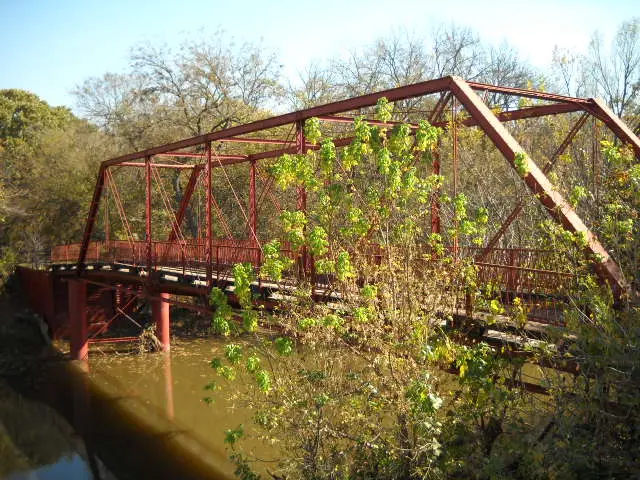
Old Alton Bridge
The Old Alton Bridge is an 1884 iron truss bridge over Hickory Creek in Denton County, now on a public trail.
UnverifiedOutside onlyAlso a road · also reported: electrical
IllustrationTunnel · TN
Sensabaugh Tunnel
Sensabaugh Tunnel is a 1920s road tunnel under a railroad just outside Kingsport, named for landowner Edward Sensabaugh.
UnverifiedOutside onlyAlso a road · also reported: phantom lights
IllustrationForest · MI
The Paulding Light
The Paulding Light is a light seen at night over a valley from the end of Robbins Pond Road near Paulding, in the Ottawa National Forest.
Documented AccountsOutside onlyAlso a bridge
Ship · Chicago, IL
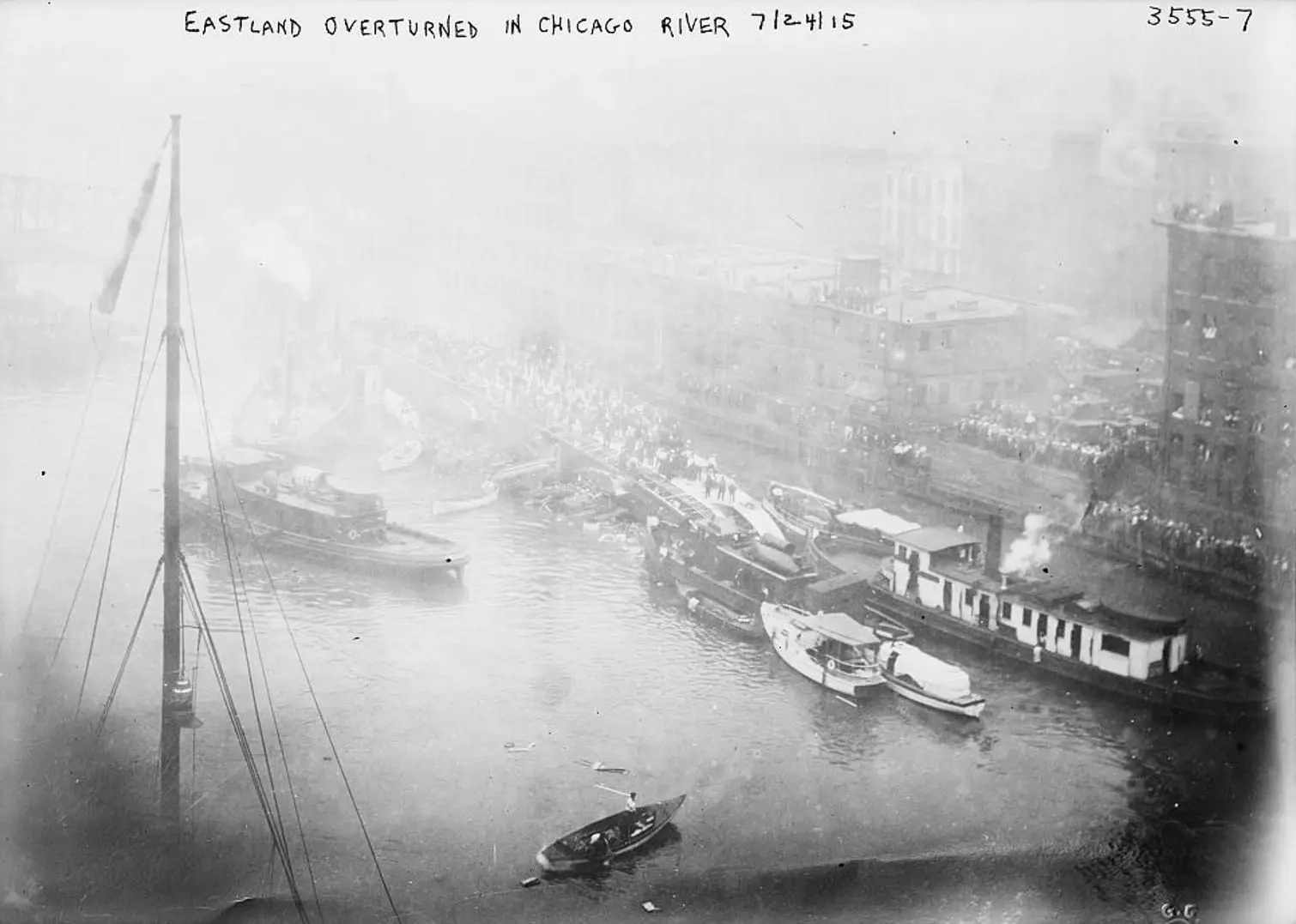
Eastland Disaster Site
On July 24, 1915, the steamer Eastland rolled over at its dock on the Chicago River by the Clark Street bridge, and 844 passengers died, according to the Smithsonian and CBS (WBEZ gives 848), most of them young Western Electric workers and their families.
UnverifiedOutside only