← Galveston Ashton Villa
Ashton Villa
Galveston, Texas
Ashton Villa is a brick mansion in Galveston, built about 1859 by merchant James Moreau Brown partly with the labor of enslaved people; its 1969 National Register form gives 1858.
What do we know about Ashton Villa?
The best-known claim, that Bettie Brown plays the piano, is undercut by writers who find no sign she played. The Galveston Historical Foundation runs ghost tours but leaves visitors to judge for themselves.
Our rating of the reports about Ashton Villa: Documented Accounts. At least one traceable published or first-hand account of an unexplained experience. We check that the reports exist, not the supernatural. The rating describes the evidence for the reports, not whether the place is haunted.
- Reported account
- 1
- Counted for the rating
- 1
- Research sources
- 9
Counted for the rating: independent accounts we could trace to a witness. Retellings of the same story count once, and staff passing on what visitors said aren’t counted. How we count
Reported experiences don’t establish a supernatural cause.
Read our evidence assessment →The hauntings
Accounts, encounters and stories associated with Ashton Villa.

What has been reported?
- Electrical
- Moving objects
- Apparitions
- Music
Phenomena described in accounts associated with this location — not independently verified events.
Reported experiences
1 published and reported account, each assessed by its source.
Account 01 · July 3, 2013 · 4 versions
A former Ashton Villa manager, 2013
A ghost blog says a former manager told a reporter in 1993 that on February 18, 1991, the alarm went off without cause, and that a ceiling fan at the top of the stairs she had switched off after closing was running again the next morning;…
- Electrical
- Moving objects
- Apparitions
- Music
Published accountReported by A former Ashton Villa manager, as retold by blogger Virginia LamkinNote: Second-hand: the blog does not name the 1993 publication, and we could not trace it. Staff accounts at the house count as one origin.
Read full account ›
A ghost blog says a former manager told a reporter in 1993 that on February 18, 1991, the alarm went off without cause, and that a ceiling fan at the top of the stairs she had switched off after closing was running again the next morning; she later learned the date was Bettie Brown's birthday.[5]
A night watchman is said to have heard piano music early one morning and, entering the room, to have seen the figure of a woman in 19th-century clothing fade away as the music stopped.[5][6]
Volunteers are said to have seen a woman in a turquoise Victorian dress, said to be Bettie Brown's favorite color, at the top of the grand staircase or on the second-floor landing.[7][5][6]
Docents are said to find an ornate trunk whose key has long been lost sometimes locked and sometimes unlocked, and a bed in Bettie Brown's former room rumpled soon after it is made; Montrose Star reported that unnamed custodians say activity increased after the house's restoration.[8][7][5][6]
Note: The watchman is never named. Clay Coppedge notes there is no sign Bettie Brown played the piano; some writers credit the music to her sister Matilda (Tilly) instead, without a source.
Note: No witness is named. The blog dates one sighting to the 1991 Dickens on the Strand festival.
Note: No named witnesses or dates. The Austin Chronicle mentions the trunk without calling it a ghost sighting.
Legends & disputed stories
Stories told about the place that the records don’t confirm.

- Disputed
The best-known claim, that Bettie Brown's ghost plays the piano, is questioned by writers who note no evidence that she played; Coppedge says she was an accomplished painter, and both he and Montrose Star suggest her sister Matilda (Tilly) was the pianist.[8][7]
What the research shows: Neither source cites evidence for Matilda's playing.
Before you go

Planning a visit?
Tours only
Visits are by guided tour or organized event.
Access details ›
Managed by the Galveston Historical Foundation. It is not currently listed among the foundation's regularly open sites; the house opens for ticketed events and venue rentals, including paid staff-led ghost tours in October. These tours are a paid attraction and are not evidence. Check the official site for current events.
Entry
Paid entry
Access last checked November 16, 2026. Confirm times and prices before you travel.
The history of Ashton Villa
Ashton Villa is a brick mansion in Galveston, built about 1859 by merchant James Moreau Brown partly with the labor of enslaved people; its 1969 National Register form gives 1858. Its ghost stories center on his daughter Bettie Brown: staff are said to have seen a woman in turquoise on the stairs and heard piano music. Only one account, from a former manager, carries a name. The house opens for ticketed events, including October ghost tours.
- Established
- 1859
- Also known as
- 1859 Ashton Villa
The house
James Moreau Brown, a Galveston hardware merchant, bought four lots at Broadway and Twenty-fourth Street in January 1859 and built a three-story brick house in the Italianate style, though the 1969 National Register form gives 1858 as the year it was built. The Handbook of Texas records that the labor of enslaved people, along with skilled European craftsmen, went into building it. His wife, Rebecca Ashton Stoddart Brown, named it Ashton Villa. Brown later ran a railroad and served the Confederacy as a purchasing agent in Mexico, and the 1969 National Register form says the house served as a headquarters for Confederate and then Union forces. Brown died in December 1895.
The house came through the 1900 hurricane, though its basement filled with sand. A granddaughter sold it to El Mina Shrine in 1927, and the Shriners used it for about forty years. After they put it up for sale in 1968, the Galveston Historical Foundation raised $125,000 to buy it, and it opened as a museum in 1974. The house was listed on the National Register in October 1969.
Miss Bettie
The ghost stories center on Bettie Brown, one of Brown's daughters, whom the foundation calls a Galveston icon. A ghost blog says a former manager told a reporter in 1993 that on February 18, 1991, the alarm went off for no reason and a ceiling fan she had switched off was running the next morning; she later learned it was Bettie's birthday. The original 1993 report has not been traced.
Other stories name no witnesses. A night watchman is said to have heard piano music and seen a woman in 19th-century clothing fade away. Volunteers are said to have seen a woman in turquoise, Bettie's favorite color, at the top of the stairs. Docents tell of a keyless trunk that locks and unlocks and a bed that will not stay made. All of these come from the house's own staff, so they count as one origin.
The piano question
Writers including Clay Coppedge point out there is no sign that Bettie played the piano; she was a painter. Some suggest her sister Matilda, known as Tilly, was the pianist, though no source is given.
Through the years
1859
Ashton Villa built
James Moreau Brown bought four lots at Broadway and Twenty-fourth Street on January 7, 1859, and built a three-story brick Italianate house there, using the labor of enslaved people together with skilled European craftsmen. His wife, Rebecca Ashton…
Read more ›
James Moreau Brown bought four lots at Broadway and Twenty-fourth Street on January 7, 1859, and built a three-story brick Italianate house there, using the labor of enslaved people together with skilled European craftsmen. His wife, Rebecca Ashton Stoddart Brown, named it Ashton Villa after an ancestor.[1][2]
Caveat: The 1969 National Register form gives 1858 as the build year; the Handbook gives the 1859 purchase.
1861–1865
1861–1865
The 1969 National Register form states that the house served as a headquarters for Confederate and later Union forces during the Civil War.[2]
Caveat: The form gives no dates or source for this, and its wording about the Battle of Galveston is brief.
1900
Survives the 1900 storm
The house survived the Galveston hurricane of 1900, but its basement filled with sand and silt and its grounds were raised about two feet during the island's grade raising.[1]
1974
Opens as a museum
After the Shriners put the property up for sale in June 1968, a campaign led by the Galveston Historical Foundation raised $125,000 to buy it; restored, it opened to the public as a museum on July 25, 1974.…
Read more ›
After the Shriners put the property up for sale in June 1968, a campaign led by the Galveston Historical Foundation raised $125,000 to buy it; restored, it opened to the public as a museum on July 25, 1974. The foundation still manages it and calls it the home of 'Galveston icon' Bettie Brown.[1][4]
2026
Ghost tours
The Galveston Historical Foundation sells staff-led evening ghost tours of the house each October, inviting visitors to judge for themselves whether Bettie Brown's spirit remains, without claiming that it does.[9]
The research conclusion

Why it has this rating
One traceable account, weakly sourced: a former manager's 1991 experiences (an alarm, a ceiling fan), known through a 2013 blog citing a 1993 article. The other stories come unattributed from staff and docents, and the piano story is disputed.
Read the full written assessment ›
The house's history is well recorded by its 1969 National Register form and the Handbook of Texas. The ghost evidence is thin and comes from the house's own staff and volunteers, who count as one origin. Only one account names its witness, a former manager, and it reaches us second-hand through a ghost blog.
The best-known claim, that Bettie Brown plays the piano, is undercut by writers who find no sign she played. The Galveston Historical Foundation runs ghost tours but leaves visitors to judge for themselves.
The sources behind the story
9 research references support this entry.

1Texas State Historical Association, Handbook of Texas OnlineAshton Villa Website · Reference 01
Judy D. Schiebel, Ashton Villa. Texas State Historical Association, Handbook of Texas Online.
Scholarly state encyclopedia entry. Reliable for the 1859 purchase, use of enslaved labor, the 1900 storm, the 1927 sale to El Mina Shrine, the 1968 rescue campaign and the 1974 museum opening. Its note of 'daily public tours' is out of date. No ghost content.
Accessed November 16, 2026.
2Texas State Historical Survey Committee for the National Park Service (copy on Texas Historical Commission Atlas)National Register of Historic Places Inventory-Nomination Form: Ashton Villa (El Mina Shrine Temple; The J. M. Brown House) Register or nomination · Reference 02
Wayne Bell, Project Director, National Register of Historic Places Inventory-Nomination Form: Ashton Villa (El Mina Shrine Temple; The J. M. Brown House). Texas State Historical Survey Committee for the National Park Service (copy on Texas Historical Commission Atlas), 1969-10-28.
Federal nomination form (NRIS 69000204), read in its scanned text layer. Reliable for the listing date, the 1969 owner (El Mina Shrine Temple), Brown's career and the building's form. It gives 1858 as the build year, where the Handbook of Texas gives 1859. Says nothing about ghosts.
Accessed November 16, 2026.
3Texas State Historical Association, Handbook of Texas OnlineBrown, James Moreau Website · Reference 03
Jeanette H. Flachmeier, Brown, James Moreau. Texas State Historical Association, Handbook of Texas Online, 1952.
Scholarly biography (first published 1952, revised 1994). Reliable for Brown's business, Confederate service and death on December 24, 1895. Does not name his children.
Accessed November 16, 2026.
4Galveston Historical FoundationGHF Managed Properties Official or site history · Reference 04
GHF Managed Properties. Galveston Historical Foundation.
Official list of properties the foundation manages, checked 16 November 2026. Lists the 1859 Ashton Villa at 2328 Broadway as 'home to Galveston icon Ms. Bettie Brown'. Ashton Villa is not among the sites the foundation lists for regular visiting.
Accessed November 16, 2026.
5Seeks Ghosts (blog)The ghost of Miss Bettie Website · Reference 05
Virginia Lamkin, The ghost of Miss Bettie. Seeks Ghosts (blog), 2013-07-03.
Ghost blog. Used only as the place where these stories were published. It names a former manager, says she described her experience to an unnamed reporter in 1993, and credits several stories to D. S. Williams's book Ghosts Along the Texas Coast, which we could not access.
Accessed November 16, 2026.
6The Austin ChronicleDay Trips: Wanna see some ghosts? Galveston is the town for you Newspaper · Reference 06
Gerald E. McLeod, Day Trips: Wanna see some ghosts? Galveston is the town for you. The Austin Chronicle, 2006-10-27.
Travel column. The earliest dated publication we consulted with Ashton Villa ghost reports; its witnesses (volunteers, a night watchman, docents) are not named.
Accessed November 16, 2026.
7Montrose StarAn island full of Halloween spirits Newspaper · Reference 07
Forest Riggs, An island full of Halloween spirits. Montrose Star, 2019-10-16.
Seasonal feature in a Houston community paper. Repeats the turquoise-dress and piano stories and says unnamed custodians report more activity since restoration. No named witnesses.
Accessed November 16, 2026.
8Texas Escapes (Letters from Central Texas column)Miss Bettie Brown and the Haunting of Ashton Villa Website · Reference 08
Clay Coppedge, Miss Bettie Brown and the Haunting of Ashton Villa. Texas Escapes (Letters from Central Texas column), 2014-10-12.
Popular history column. Summarizes the ghost claims without witnesses or dates and questions the piano story, noting no sign that Bettie played; cites no source for the theory that her sister Matilda did.
Accessed November 16, 2026.
9Galveston Historical FoundationGalveston Ghost Stories (October 23, 2026) Official or site history · Reference 09
Galveston Ghost Stories (October 23, 2026). Galveston Historical Foundation, 2026.
Official event listing for a paid, staff-led evening ghost tour of Ashton Villa, checked 16 November 2026 (the event had passed). It invites visitors to 'judge for yourself' whether Bettie Brown's spirit remains; it does not claim the house is haunted. Marketing, not evidence.
Accessed November 16, 2026.
More haunted places

Explore nearby
Similar places
Also a historic house · also reported: music, electrical
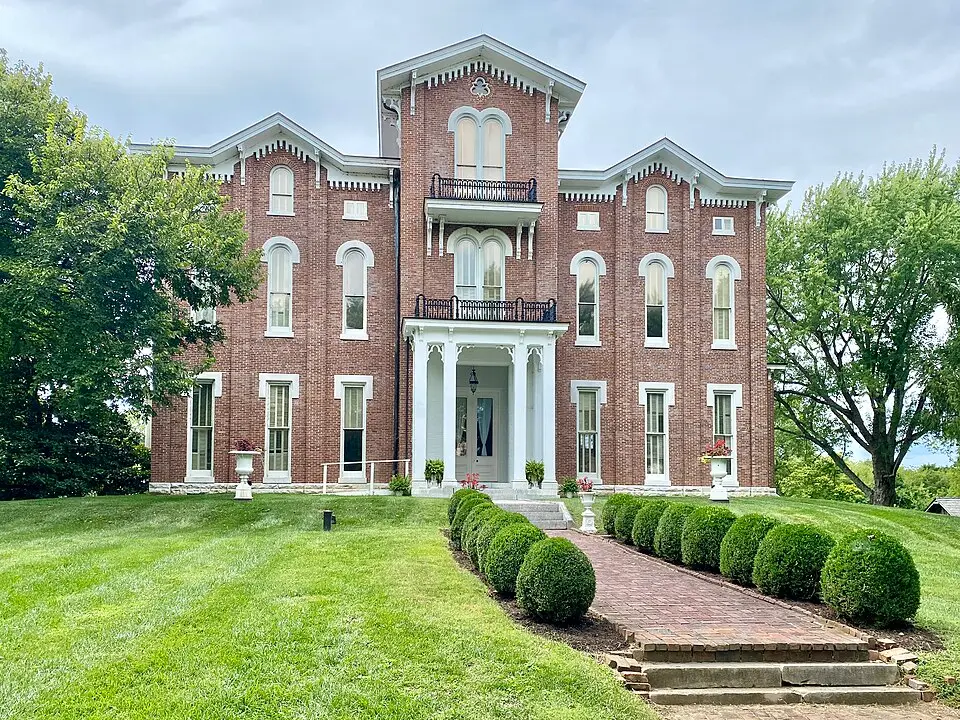
Historic house · KY
White Hall State Historic Site
White Hall, near Richmond, Kentucky, is the home of the antislavery politician Cassius Marcellus Clay, built on a house his father, a major enslaver, finished in 1799.
Documented AccountsTours onlyAlso a historic house · also reported: music, moving objects
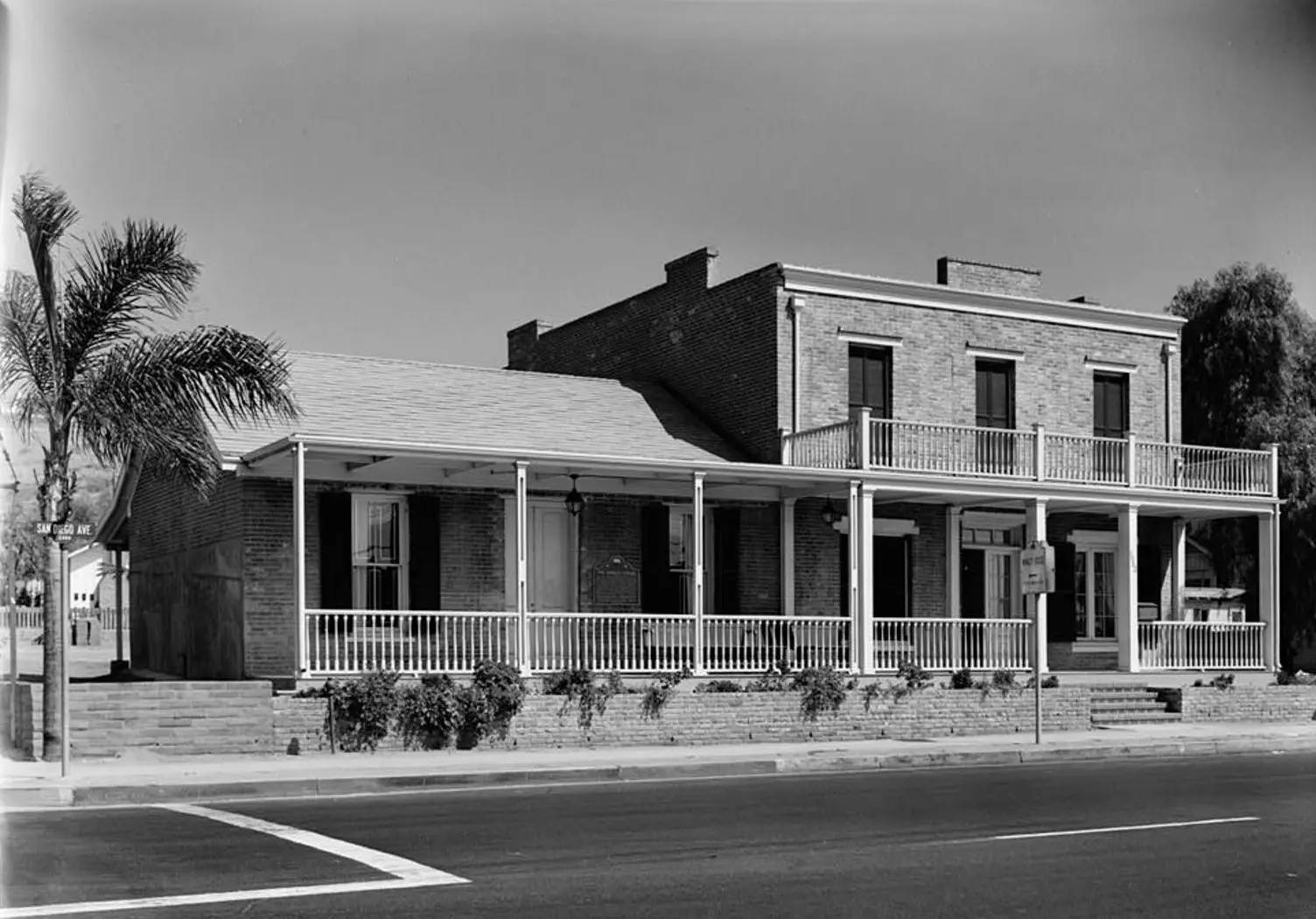
Historic house · San Diego, CA
Whaley House
Footsteps, slamming doors and figures reported by museum staff since the 1960s, on the site of an 1852 hanging.
Documented AccountsOpen to visitorsAlso a historic house · also reported: electrical, moving objects
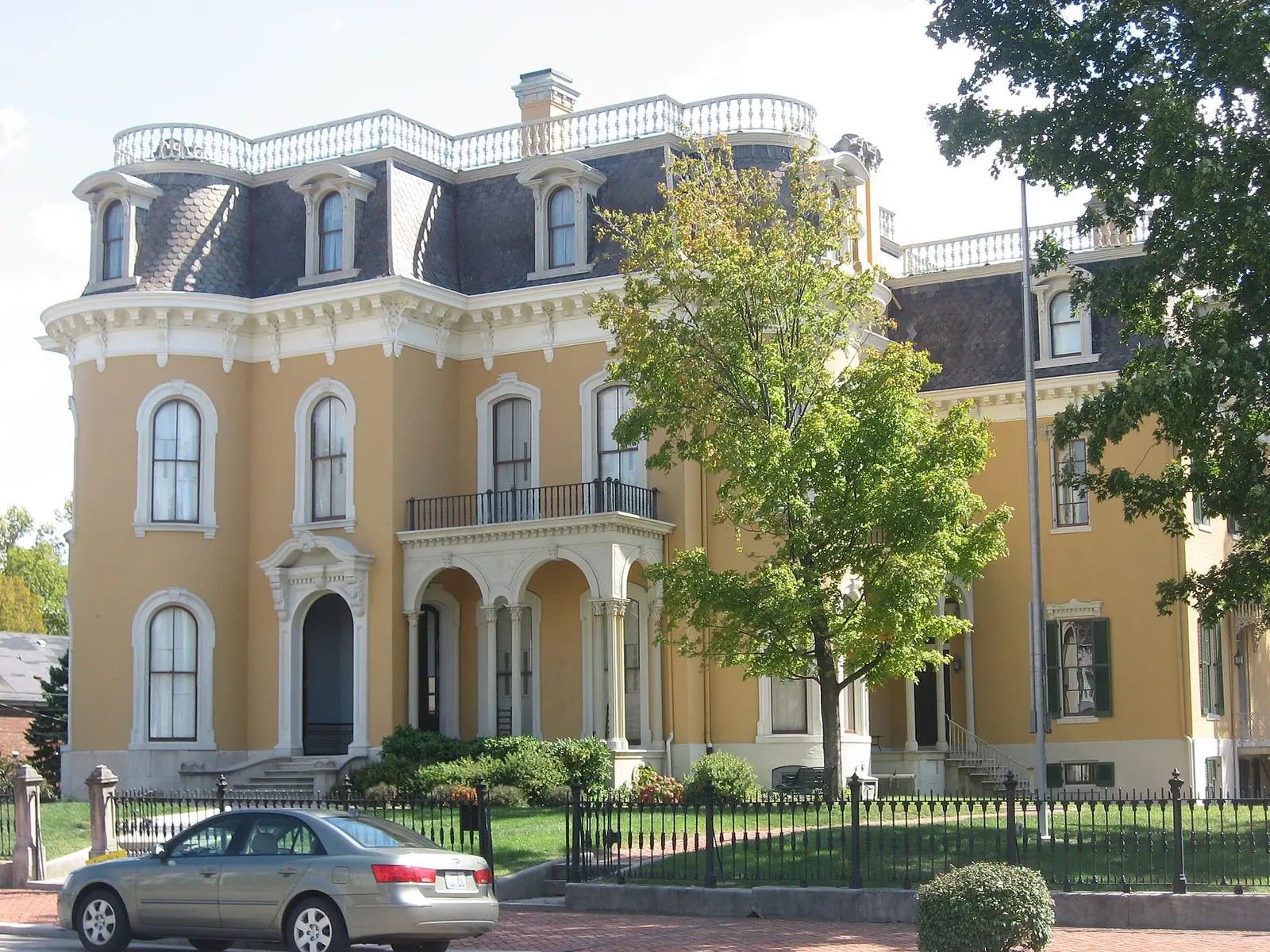
Historic house · New Albany, IN
Culbertson Mansion State Historic Site
Culbertson Mansion is a Second Empire house built just after the Civil War for William S. Culbertson, one of Indiana's wealthiest men, and now a state historic site.
Documented AccountsTours onlyAlso a historic house · also reported: electrical, moving objects
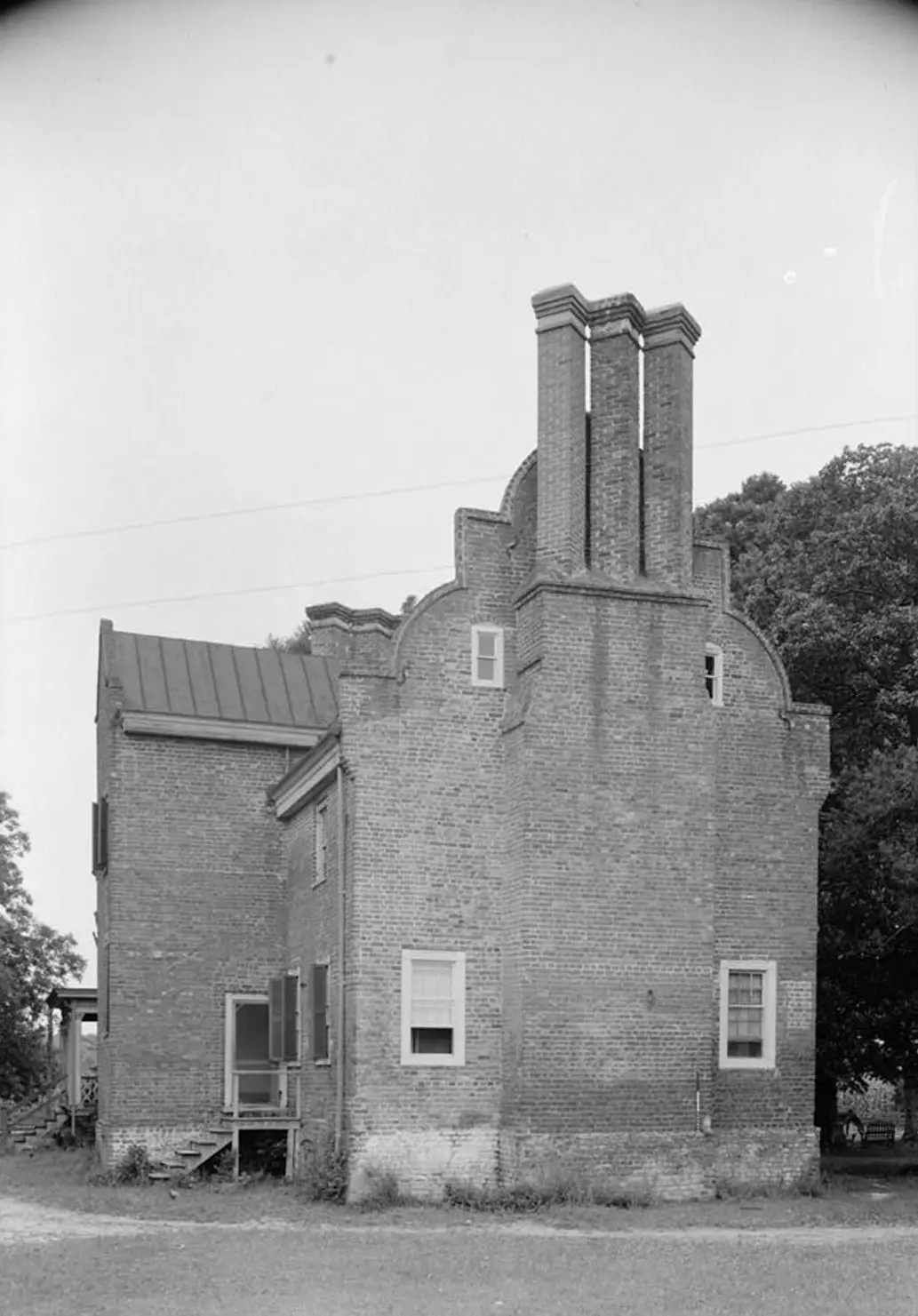
Historic house · VA
Bacon's Castle
Bacon's Castle is Virginia's oldest documented house, built in 1665 by current dating (older sources say about 1655) and seized by Bacon's rebels in 1676; its 19th-century owners, the Hankins family, enslaved people there.
Documented AccountsTours only