← Gettysburg Pennsylvania Hall, Gettysburg College
Pennsylvania Hall, Gettysburg College
Gettysburg, Pennsylvania
Pennsylvania Hall, Gettysburg College's original 1830s building, served as a hospital after the 1863 battle and now holds administrative offices.
What do we know about Pennsylvania Hall, Gettysburg College?
The ghost evidence rests on two accounts: Nesbitt's anonymous administrators of the 1980s, known to us through a quotation in the student newspaper, and a former student worker identified only as "Jon," who described an almost identical scene to the same paper in 2014. The second may have been shaped by the first. Neither witness is fully named.
Our rating of the reports about Pennsylvania Hall, Gettysburg College: Documented Accounts. At least one traceable published or first-hand account of an unexplained experience. We check that the reports exist, not the supernatural. The rating describes the evidence for the reports, not whether the place is haunted.
- Reported accounts
- 2
- Counted for the rating
- 2
- Research sources
- 9
Counted for the rating: independent accounts we could trace to a witness. Retellings of the same story count once, and staff passing on what visitors said aren’t counted. How we count
Reported experiences don’t establish a supernatural cause.
Read our evidence assessment →The hauntings
Accounts, encounters and stories associated with Pennsylvania Hall, Gettysburg College.

What has been reported?
- Apparitions
Phenomena described in accounts associated with this location — not independently verified events.
Reported experiences
2 published and reported accounts, each assessed by its source.
Account 01 · November 3, 2014 · 2 versions
Mark Nesbitt, 2014
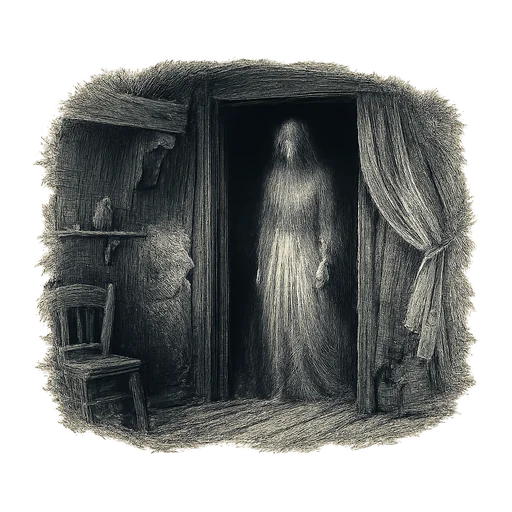
Mark Nesbitt's Ghosts of Gettysburg, as quoted by The Gettysburgian, tells of two campus administrators who in the 1980s took the elevator down to the basement and saw a scene of bloodied patients and doctors like a Civil War hospital.[4][6]
- Apparitions
Published accountReported by Mark Nesbitt, Ghosts of Gettysburg, as quoted in The Gettysburgian (2014)Note: The administrators are not named. Nesbitt's book was not consulted; volume and year of first publication are not confirmed (the series began in 1991).
Read full account ›
Mark Nesbitt's Ghosts of Gettysburg, as quoted by The Gettysburgian, tells of two campus administrators who in the 1980s took the elevator down to the basement and saw a scene of bloodied patients and doctors like a Civil War hospital.[4][6]
History.com retold the story in 2024: two administrators riding the hall's elevator saw what looked like a Civil War hospital, with wounded soldiers, blood-covered doctors and frantic nurses, which vanished when the doors closed and reopened.[7]
Note: A retelling of the same account, with no source given.
Account 02 · November 3, 2014
"Jon", 2014
A 2004 graduate identified as "Jon" told The Gettysburgian that in 2003, while working as a student secretary in the hall, he took the elevator and found the basement looking like a working Civil War hospital with lights, staff and soldiers, which was ordinary again when…
- Apparitions
Published accountReported by "Jon", Gettysburg College class of 2004, to The Gettysburgian (2014)Note: First name only, and the account closely mirrors the published administrators' story, which may have shaped it.
Read full account ›
A 2004 graduate identified as "Jon" told The Gettysburgian that in 2003, while working as a student secretary in the hall, he took the elevator and found the basement looking like a working Civil War hospital with lights, staff and soldiers, which was ordinary again when the doors reopened; he said no one else saw it.[4]
Before you go
Planning a visit?
Location
Gettysburg, Pennsylvania
Outside only
You can see it from public land; the inside isn’t open.
Access details ›
An active campus building housing college administrative offices, including the president's office; it is not a visitor attraction and there are no ghost tours inside. The exterior can be seen from the campus grounds, and the college offers admissions tours for prospective students. Visitors need a parking permit on weekdays. Please respect staff and students and do not try to enter offices, the elevator or the basement.
Entry
Cost not confirmed
Access last checked November 19, 2026. Confirm times and prices before you travel.
The history of Pennsylvania Hall, Gettysburg College
Pennsylvania Hall, Gettysburg College's original 1830s building, served as a hospital after the 1863 battle and now holds administrative offices. Its famous ghost story, published by Mark Nesbitt, tells of two administrators in the 1980s whose elevator opened on a Civil War hospital scene in the basement. A student-newspaper source described a similar sight in 2003. The building is not open to tourists; its exterior can be seen from campus.
- Established
- 1836–1837
- Also known as
- Old Dorm
The building
Pennsylvania Hall is the oldest building of Gettysburg College, which was founded as Pennsylvania College. In 1834 Thaddeus Stevens, then a state legislator, argued for state funding for the young college, which he said had students but no building to house them. According to the college, construction began in April 1836 and the college moved in in 1837; a 2014 student article gives 1832 instead.
For decades the building was the center of college life. Students lived there, giving it the nickname Old Dorm, and it held classrooms, the president's home, the library and the bookstore. The first college bell hung in its cupola until 1889.
1863
During the Battle of Gettysburg two professors directed a Union signal officer to the cupola for its view, according to the student newspaper. During and after the fighting the building served as a hospital for wounded soldiers of both armies; a 2014 student article adds that it was also used as a morgue.
Later years
Around 1970 the hall was renovated into administrative offices as new residence halls opened elsewhere. It houses the president's office and is the focus of Convocation and Commencement. It was listed on the National Register of Historic Places in 1972.
The elevator story
The hall's ghost story was published by Mark Nesbitt, a former Gettysburg park ranger who has written a series of ghost books since 1991. As quoted in The Gettysburgian in 2014, he tells of two campus administrators who, in the 1980s, took the elevator to the basement and saw wounded patients and doctors covered in blood, as if in a working Civil War hospital. History.com repeated the story in 2024.
The same 2014 article quotes "Jon," a 2004 graduate who worked in the building as a student secretary, who said that in 2003 the elevator opened on a basement full of lights, staff and soldiers; when the doors closed and reopened, the basement was ordinary. He insisted it happened.
Through the years
1834
State funding debate
In 1834 Thaddeus Stevens, then a member of the Pennsylvania House of Representatives, argued for state funding for Pennsylvania College, saying it had students but no building to house them; the hall was built soon after.[1]
Caveat: From the abstract of the college's building history; the full text was not read.
1863
July 1863
During the Battle of Gettysburg two professors directed a Union signal officer to the hall's cupola for its view toward Cemetery Ridge.[3]
Caveat: Student-newspaper account; not checked against a primary source.
Also recorded
Over the years the hall served as a student residence, nicknamed Old Dorm, and housed classrooms, the college president's home, the library and the bookstore; the first college bell hung in its cupola until 1889.[2]
The research conclusion

Why it has this rating
Two traceable accounts: Mark Nesbitt's story of two college administrators who saw a Civil War hospital scene from the building's elevator, and a former student worker who told the campus newspaper in 2014 he saw the same thing in 2003. Both are thinly attributed, and the second may echo the first.
Read the full written assessment ›
The building's history, including its use as a hospital in 1863, is documented by the college and the National Register record, though the exact construction and renovation dates vary slightly between college sources.
The ghost evidence rests on two accounts: Nesbitt's anonymous administrators of the 1980s, known to us through a quotation in the student newspaper, and a former student worker identified only as "Jon," who described an almost identical scene to the same paper in 2014. The second may have been shaped by the first. Neither witness is fully named.
The sources behind the story
9 research references support this entry.

1Gettysburg College (The Cupola repository)Yonder Beautiful and Stately College Edifice: A History of Pennsylvania Hall (Old Dorm), Gettysburg College Book · Reference 01
Charles H. Glatfelter, Yonder Beautiful and Stately College Edifice: A History of Pennsylvania Hall (Old Dorm), Gettysburg College. Gettysburg College (The Cupola repository), 1970.
The college's own building history (2nd ed. 2007). Only the repository abstract was read: it covers Thaddeus Stevens's 1834 funding argument. The full PDF sat behind a bot check we did not get around.
Accessed November 16, 2026.
2Gettysburg CollegeTransformative Places, Resilient Spaces Official or site history · Reference 02
Shawna Sherrell, Transformative Places, Resilient Spaces. Gettysburg College, 2022-06-01.
College news feature. Reliable for the start of construction (April 1836), the building's uses, its role as a hospital for both armies, and its 1970s conversion to offices. Does not mention ghosts.
Accessed November 16, 2026.
3The GettysburgianPenn Hall celebrates 175th birthday Newspaper · Reference 03
Bethany Foxx, Penn Hall celebrates 175th birthday. The Gettysburgian, 2012-11-12.
Student newspaper. Useful for the 1837 move-in, the cupola and signal officer, the 1969–70 renovation, current offices and the 1972 National Register listing. Student journalism; not independently checked.
Accessed November 16, 2026.
4The GettysburgianHaunted G-Burg: the paranormal pervades campus Newspaper · Reference 04
Shannon Keeler, Haunted G-Burg: the paranormal pervades campus. The Gettysburgian, 2014-11-03.
Student-newspaper Halloween feature. The only source we consulted that quotes Nesbitt's account of the administrators, and the original publication of 'Jon's' account (first name only). Also says the building was a morgue in 1863 and gives 1832 for its construction, which conflicts with the college.
Accessed November 16, 2026.
5National Park Service, NPGalleryPennsylvania Hall, Gettysburg College (NRIS 72001087), National Register record Register or nomination · Reference 05
Pennsylvania Hall, Gettysburg College (NRIS 72001087), National Register record. National Park Service, NPGallery, 1972-03-16.
Record summary confirming the listing (published 3/16/1972). The linked nomination PDFs are 'not yet digitized' placeholders, so the form was not read.
Accessed November 16, 2026.
6Rambles.NETReview: Mark Nesbitt, Ghosts of Gettysburg: Spirits, Apparitions & Haunted Places of the Battlefield Website · Reference 06
Tom Knapp, Review: Mark Nesbitt, Ghosts of Gettysburg: Spirits, Apparitions & Haunted Places of the Battlefield. Rambles.NET, 2023-07-01.
Book review used only to date Nesbitt's first volume (Thomas Publications, 1991). It does not list the stories, so it does not show which volume holds the Pennsylvania Hall account.
Accessed November 16, 2026.
7History.com (A&E Television Networks)Gettysburg battlefield ghosts Website · Reference 07
Crystal Ponti, Gettysburg battlefield ghosts. History.com (A&E Television Networks), 2024-10-24.
Popular retelling of the administrators' elevator story, without naming a source. Cited only as a later retelling.
Accessed November 16, 2026.
8Gettysburg CollegeCampus Safety Services Official or site history · Reference 08
Campus Safety Services. Gettysburg College.
Checked 16 November 2026 for visitor parking rules (weekday guest permits).
Accessed November 16, 2026.
9Gettysburg CollegePlan Your Visit to Gettysburg College Official or site history · Reference 09
Plan Your Visit to Gettysburg College. Gettysburg College.
Admissions visit page, checked 16 November 2026: campus address and visitor parking; does not say whether campus visits are free.
Accessed November 16, 2026.
More haunted places
Explore nearby
Hotel
Hotel Gettysburg
Gettysburg, Pennsylvania · under 1 mile away · Open to visitors
Hotel
Farnsworth House Inn
Gettysburg, Pennsylvania · under 1 mile away · Open to visitors
Museum
Jennie Wade House
Gettysburg, Pennsylvania · under 1 mile away · Tours only
Battlefield
Devil's Den
Pennsylvania · 3.1 miles away · Outside only
Similar places
Also an university
Former asylum · Athens, OH
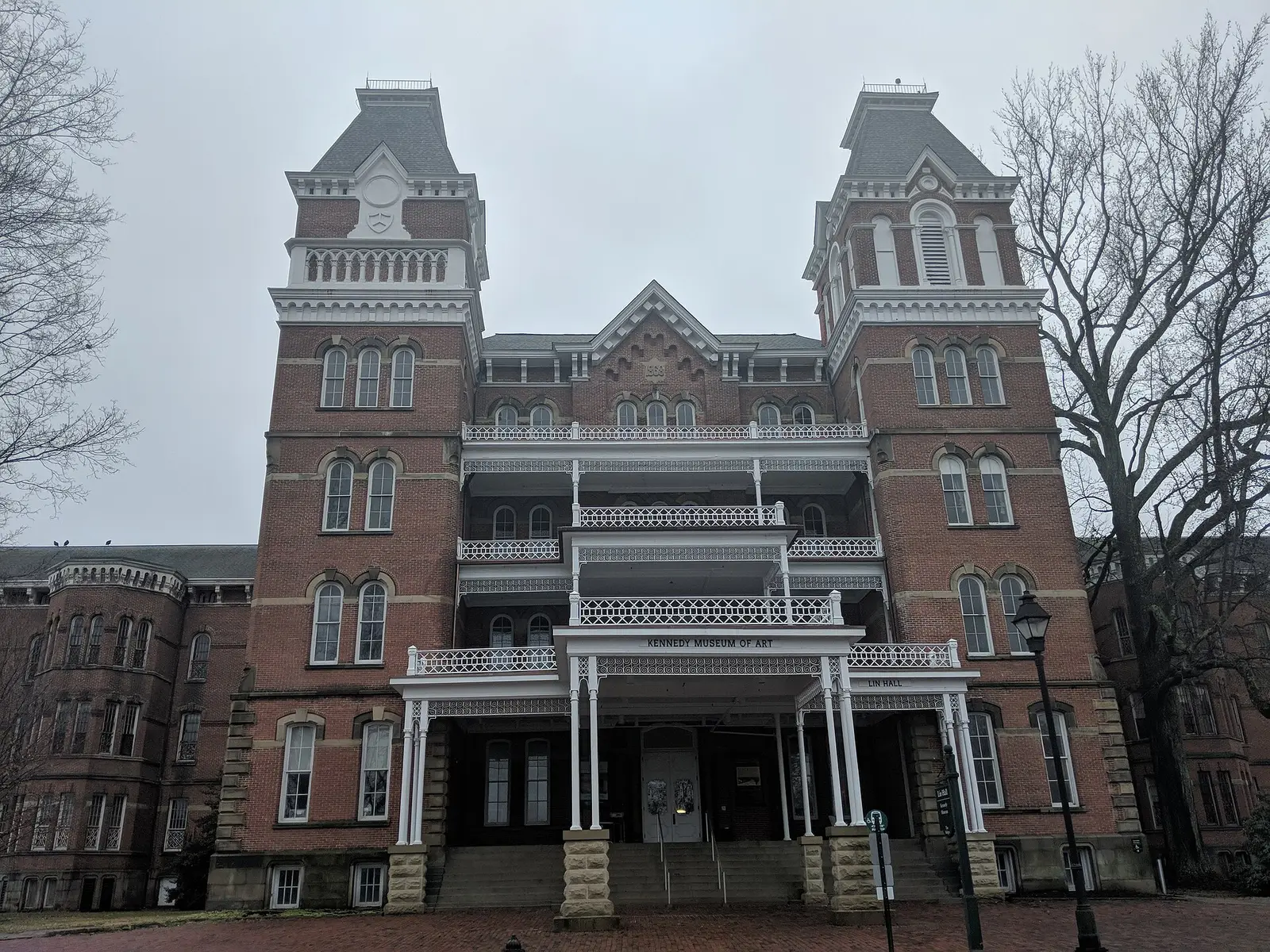
The Ridges (former Athens Lunatic Asylum)
The Ridges is the former Athens State Hospital, a Kirkbride-plan psychiatric hospital that served southeastern Ohio from 1874 to 1993 and now belongs to Ohio University.
UnverifiedOpen to visitors